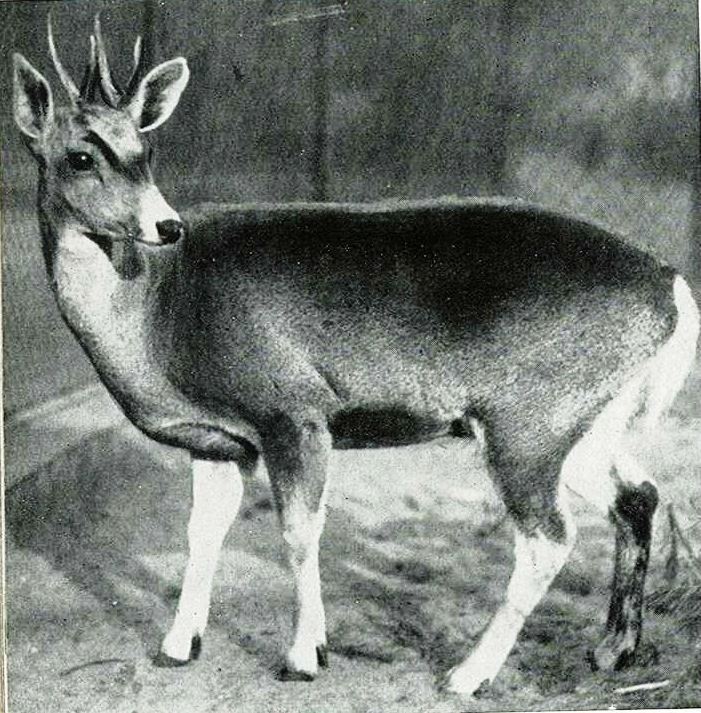
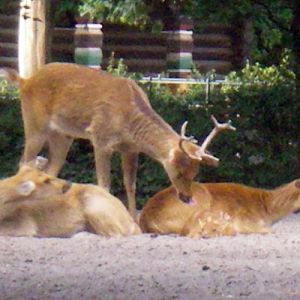
Too bad that there are no Hippocamelus spp. in captivity outside of South America
The only species I know of currently in captivity is the Patagonian huemul (Hippocamelus bisulcus) and they are at a breeding center in Chile, does anyone know if there are still any North andean huemul (Hippocamelus antisensis) in captivity in their home range ? I know that the last one at the Lima Zoo died in 2010
Also, why is there no more Hippocamelus spp. in captivity outside of their home range, does it have anything to do with diet or climate or temperament ?
North andean huemuls and Patagonian huemuls are neat cervids and are interesting in how how they share a similar ecological niche as caprids
And sorry for all these questions but have there been Hippocamelus spp. at any other US zoos besides Bronx Zoo or if any public zoos in their home range other then Lima Zoo had them ?
I just found out that North andean huemul (Hippocamelus antisensis) may not be difficult to breed in captivity, and that the Berlin Zoo actually had 12 births of this cervid species between 1931 and 1941
From 1995 to 1997, 4 births were recorded from a captive population in Puno, Peru and that breeding group started with 1 adult male and 1 adult female in 1994
The North andean huemul (Hippocamelus antisensis) is a vulnerable species and they are badly affected by illegal hunting so it would be nice if they could put more effort into trying ExSitu conservation with them, in order to make it easier for someghing like this to happen, it would also be nice if the United States Department of Agriculture could repeal the ban on the import of Neotropical cervids or at least EAZA should start an EEP for the taxa (I dont really know the current european laws behind imports on Neotropical cervids so I don't know how plausible that idea would be)
Kifaru Bwana seems to be a knowledgable guy when it comes to conservation so id like to hear his take on the issue
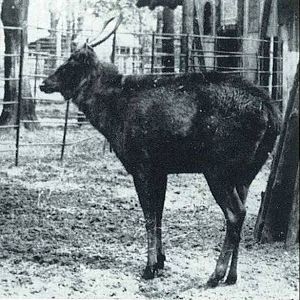
World War II destroyed the old Berlin Zoo. A full list of the animals lost as a result of the bombing raids, and the final Red Army assault on the city simply doesn't bear thinking about. I do know that it included a breeding group of Mountain Nyala.
World War II destroyed the old Berlin Zoo. A full list of the animals lost as a result of the bombing raids, and the final Red Army assault on the city simply doesn't bear thinking about. I do know that it included a breeding group of Mountain Nyala.
Continuing with this digression from Hippocamelus….
Berlin’s mountain nyala were destroyed during an air raid in 1944.
Bernhard Grzimek’s book “Such Agreeable Friends” contains a very upsetting account of the bombing of Berlin Zoo during World War II. Obviously the human tragedy during this terrible war was much worse but I think all zoo enthusiasts, especially those of us that love Berlin Zoo, would find this chapter of Grzimek’s book deeply moving.