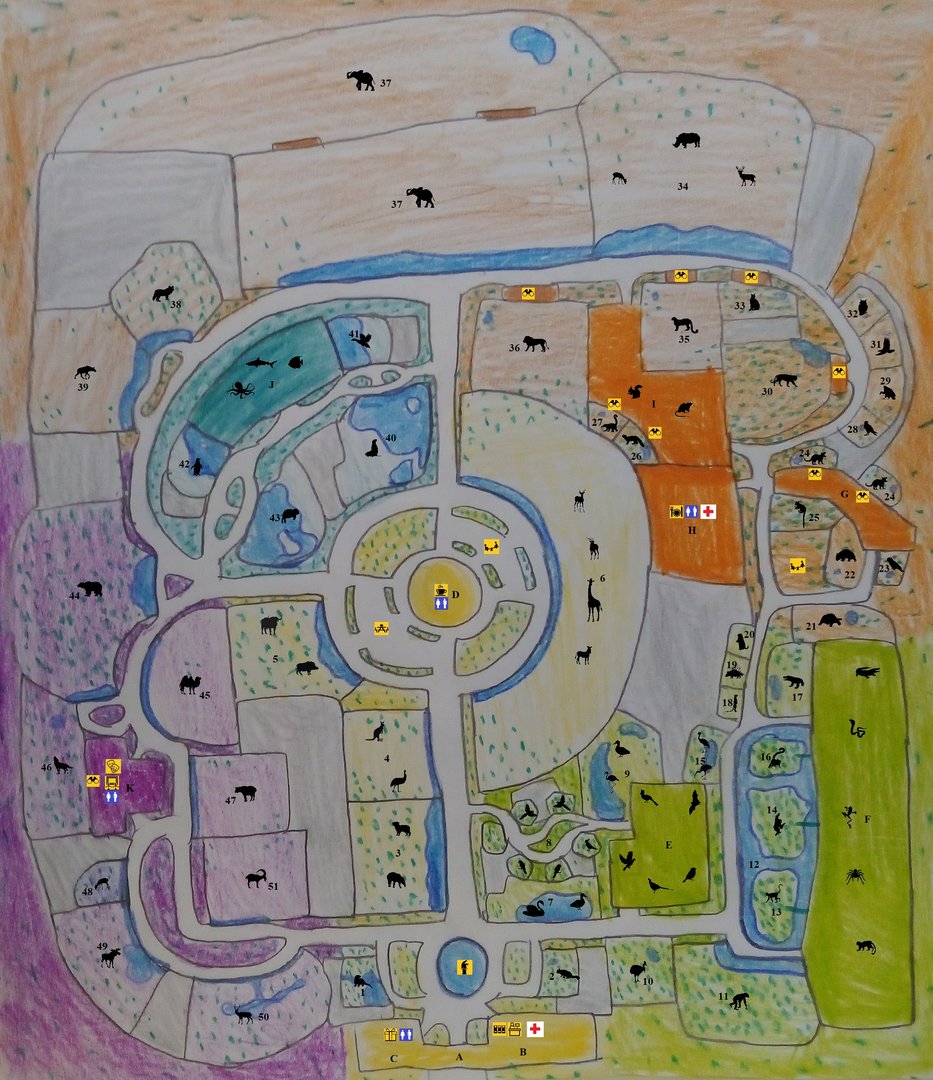
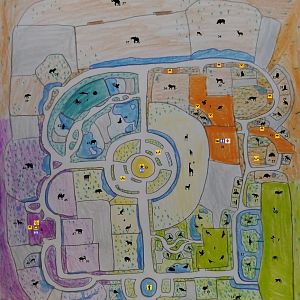
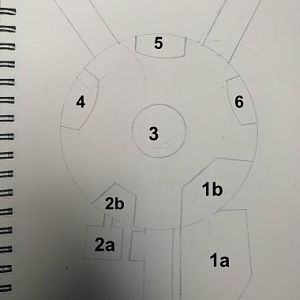
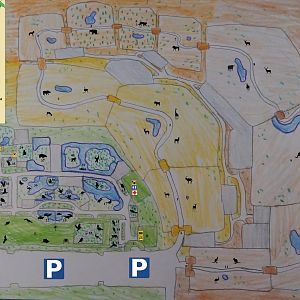
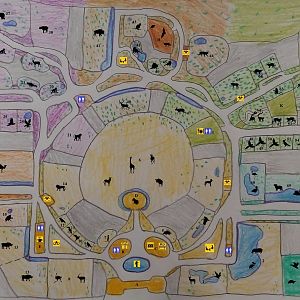
Scale is very important... But at the same time most zoo maps kinda distort things, so don't let it be the end-all be-all.
All outdoor exhibits need a shelter and zookeeper access; either use the staff-only grey areas, or have them be the outdoor exhibits adjacent to a visitable animal house.
Specific colouring of different zones can make the map less boring; try using contrasting colours however; if two areas are coloured in different shades of green, try to keep them apart. Within those areas, I personally paint the outdoor enclosures more lightly, the visitable buildings (shops, animal houses...) More strongly and the zoo grounds at medium strength.
Try to have a concept going in (historical, modern, urban, rural) to make each one unique. Also consider the climate; if it's in a warm climate, you can have reptiles live outdoors year-round, but you'd best forget about polar bears and muskox, for example.
While repeating certain species/subspecies in different maps is nigh unavoidable (meerkat, red panda...), I suggest you try out different species with each map you draw; if n.1 has Chilean flamingos, give n.2 lesser flamingos, for example.
Errr no. The prairie dogs indoor quarters are on the same block as the meerkat, porcupine, giraffe ETC. (they'd most likely sleep in burrows anyway) and the tayra's exhibit is part of the carnivoran and rodent house. The damn numbers are off... Sorry about the confusion. Wish I could edit or delete the comment.