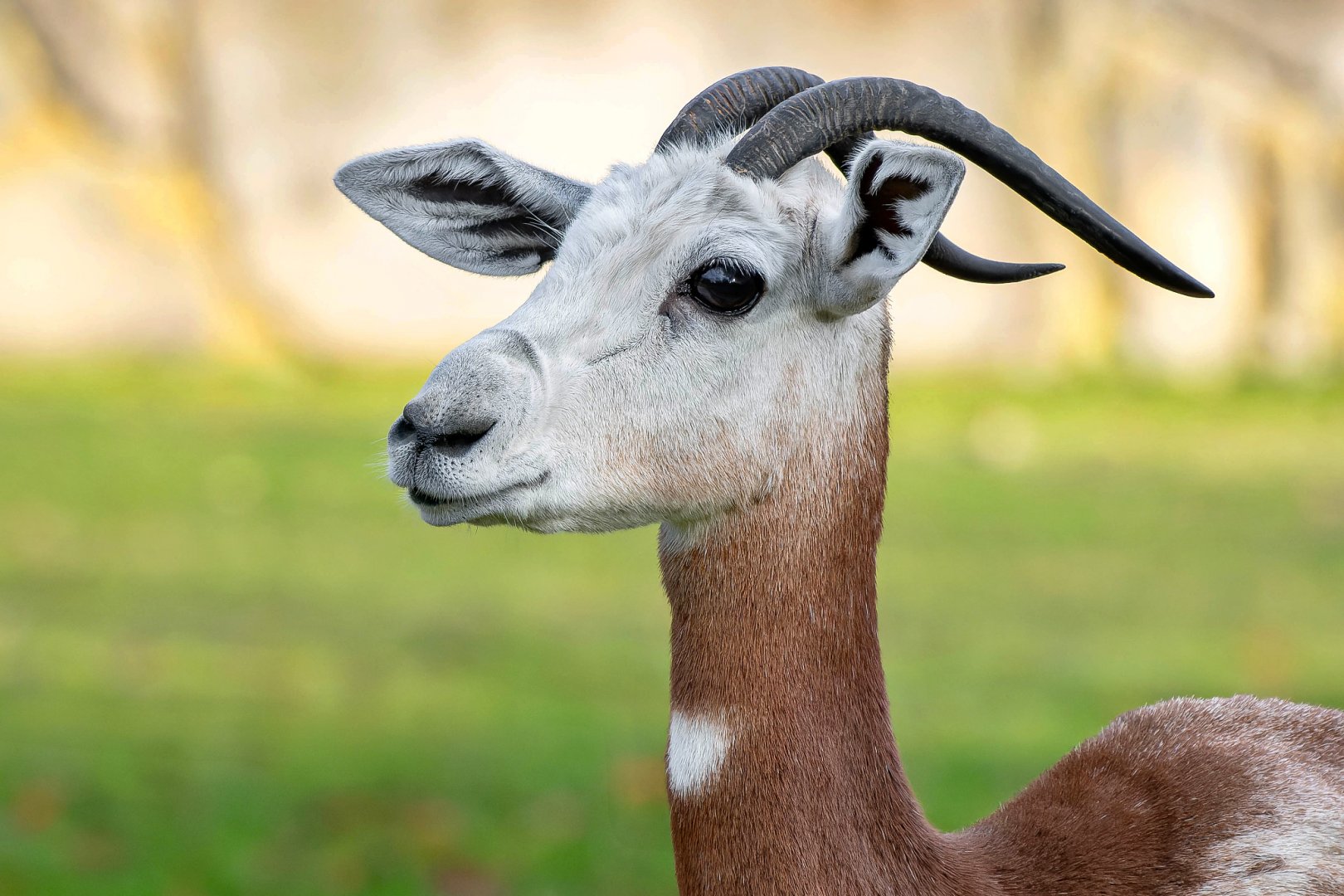
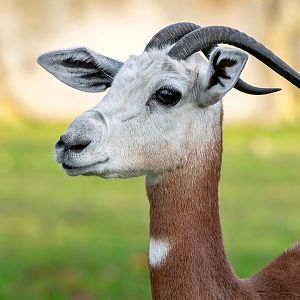
@Summer Tanager Why would you want that? The value of hybrids in a breeding programme is simply useless. Luckily the populations in Europe (Nanger dama mhorr) and America (Nanger dama ruficollis) remain pure.
@Sicarius You're absolutely right! I wrote without thinking this through. Since I'm in the U.S., nearly all of our managed Dama Gazelle's are the ruficollis subspecies and I wasn't aware that just about every Dama Gazelle in Europe was the mhorr subspecies. I assumed that there might be a generic population in Europe like there is in the private sector in the U.S., but it doesn't sound like there is. I jumped to the assumption that this last ruficollis was wild-caught or the last of an important bloodline, but the reality is that she probably came from the U.S. or one of the Middle Eastern collections. You and I are in agreement that a hybrid Dama Gazelle wouldn't be of much value - especially in the managed European population! Thank you for opening my eyes to the different subspecific management programs on each side of the Atlantic.
@Summer Tanager There is actually a paper looking into dama gazelle genetics which fails to find any differences between the subspecies. They hypothesize that the different subspecies are just colour morphs and that for conservation purposes they would maybe better be mixed....
The red-necked gazelle population in Europe originated (mostly?) from US zoos and had been around for over 40 years, but always with just a few breeding groups
@lintworm Thank you for your reply! And thank you for the confirmation that the European ruficollis gazelles are primarily of U.S. zoo origin. I remember reading a second-hand story based on the paper that you cited, but I've not read the original study itself. I haven't followed the Dama Gazelle in captivity closely, but my understanding is that the U.S., our AZA institutions are trying to maintain a reasonably pure ruficollis form/subspecies and that there's a large mixed-form population in the private sector. That seems like a good compromise and I think that it's great (or at least okay) that the European zoos are trying to maintain a pure mhorr population. I haven't studied this situation well enough to advocate for mixing the two forms, but there are many instances in captive animal management where mixing subspecies doesn't worry me because realistically, those animals and their descendants aren't going back into the wild. In the case of the Dama Gazelle, there is a chance that captive animals could be used to re-establish wild populations and for that reason I like keeping the forms pure - at least for now. I need to look for that article - it's great food-for-thought!
@Summer Tanager The mhor gazelle population is growing nicely these days and is in the hundreds of animals, but afaik they all descend from 1.6 animals imported 50 years ago to Almeria. So from a genetic perspective, mixing is something that could be considered.