@lintworm im sorry but your above statements contradict themselves.
Initially you stated as a fact that those animals "are illegally held animals", now you agree that "These certificates are official (and in the database)" which would mean they are not illegal.
I do agree with you that chances likely are higher that their parents or grandparents were laundered at some point. If that were the case, which we however do not know with certainty, then that would still not change the fact that those animals in Uganda are infact 100% legal and official according to Cites.
That is the same case with the vast majority of Australian Varanids held by most European Zoos and many other animals held in Zoos around the world, which have the same uncertain origin.
What i find disturbing is that you claim with 100% certainty that those animals are illegal and post it as a fact and that one can smear campaign an entire facility, which seems to be doing some good work locally, as a full time smuggling operation over a few Iguanas the owner of that facility seems to have brought with him from Europe nearly 10 years ago with what you yourself agree is legitimate legal documentation (thou agreed, possibly with a whitewashing history in the past generations).
While searching the Cites trade database I see there also were 20 Fiji Crested Iguanas imported into the EU (Austria) from Mali.
I would be surprised if the EU didnt cross check those permits before allowing that import in. Maybe there is more to the origin than we know about?
The second link you posted, which you said was the ecuadorian government actually is the page of a freelance reporter. There is a donation button right at the start of the page and the page states to be "independent environmentl news".
Would you agree that a freelance journalist likely requires a certain degree of senstionalism in order to raise donations?
In any case its not the government but an independent journalist with a fairly speculative story and a nice donation button at the very top of the story.
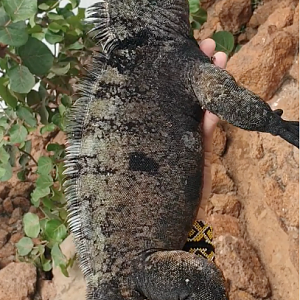
I think nobody condones laundering or whitewashing animals here, but if these guys are actually breeding them, which seems to be the case, and spreading them to other Zoos (i see Izoo in Japan recently had their first offsprings of Land Iguanas from animals originating from this facility) then i think at least the best is made out of this situation. It looks like these animals are likely to become more common in Zoos around the globe as others start having offsprings too, which itself, at the end of the day, seems like a positive turn of events.
@Fred Gahl You deliberately seem to want to misunderstand me, so this will be my last reply to you.
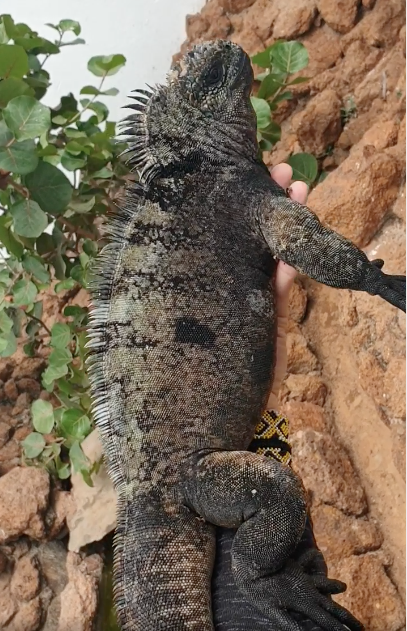
Given the life cycle and longevity of these iguanas and the fact that if you smuggle, you do so with eggs/youngsters it seems extremely unlikely the originally smuggled founder animals are dead. To the contrary, the Galapagos iguana breeding currently taking place is very likely by the founder animals, given the age it takes them to become sexually mature. That makes animals still alive in Uganda illegal, though their permits appear to be in order and are treated as official, they are still laundered.
Re the import of the Fijian crested iguana to Vienna: Naturally they should have done a thorough background check, but given the volumes of work and the understaffing (and in cases lack of knowledge) it is entirely reasonable to assume no additional checks were done.
Re the Ecuadorian article, I never stated it was an article by the government, but the article does say: The Ecuadorian Ministry of the Environment confirmed that those iguanas were exported without permits and that used patrons have an illegal origin.
If you think it is good these animals are now bred in captivity, good for you. I think it is disgusting that a smuggler can get away with it, make a lot of money by breeding smuggled animals and get fans all over the place for the "amazing" work he is doing
@lintworm i agree that there is no point in pushing this back and forth as it takes us nowhere and opinions always will differ to some degree so ill only put the actual facts here and leave it at that.
According to Cites the animals in Uganda all were born in Switzerland not Mali.
Making them Swiss offspring either of the founders from the Mali import or from entirely different Swiss animals.
This makes sense if you look at how long they had been in Switzerland before offspring was exported to Uganda (4 years) and compare that to the timespan it took Izoo in Japan to have their offspring (3.5 years).
This also lines up wih how long it takes for any other similar large Iguana (Cyclura) to mature / have offspring in captivity.
You stated your own personal opinion as a fact: "That makes animals still alive in Uganda illegal" (referring to them being the potential actual founders).
Looking at the actual facts however that is highly improbable and most likely not true.
Considering that they can actually breed them, have legally imported Swiss offspring and likely to some degree with them also are financing other conservation projects, i dont see the picture quite as dark as you try to portray it.
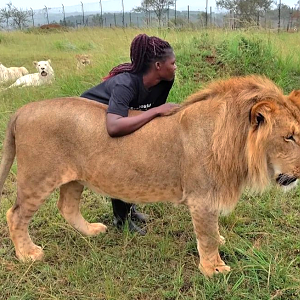
They are putting up educational programs and are introducing extinct species back for release into their local ecosystem through import and breeding projects, which they already do with the African Wild Dogs and seem to be in the process of doing with several other species according to their interviews on TV and their social media.
The wild dogs reintroduction:
About their project in general:
They are spreading the offspring of their Iguanas to other Zoos which i must honestly admit and im sure im not the only one who would like to see these in more Zoos.
The reintroduction and breeding projects will cost them quite a lot of money if they are not funded by someone and I dont see how they would be doing that for commercial gain.
But, concerning those Iguanas and the available facts, none of those Iguanas at their facility are likely to be smuggled and they do have legal permits for them.
I'm afraid I'll have to agree a little with Fred here. Even if the iguanas were poached (which is definitely a bad thing, don't get me wrong), it now means that they are present in zoos. If they manage to breed and spread through other zoos we could have a proper population of them outside the Galapagos.
Practically the same thing that happened with America's White-bellied pangolins. Poached and now breeding (hopefully to become a population eventually). Of course that was a different story because those animals were confiscated, but it's the same concept
@Mr Gharial I disagree. Ecuador chooses to protect the Galapagos so stringently for a reason; it is one of the most fragile ecosystems on Earth. This operation sets a precedent for further, potentially more damaging smuggling of the animals of the Galapagos.
Furthermore even if the iguanas are breeding, the population is not sustainable, and no further 'imports' can be made to broaden the genepool. As for your comparison, it isn't remotely the same, as you helpfully point out in your own post.
I just would like to add: For those fanboys that are in favour of capturing (or even worse, smuggling) wildlife to put in zoos playing the card of "conservation" must be remembered that you do not need marine iguanas in captivity for zoos to contribute to marine iguana's conservation. Zoos have Galapagos tortoises which in my opinion is more than enough as an ambassador species for the islands. With these you collect funds, teach people about the islands, about darwin's travel, etc. And well-conservation-minded zoos will use some of those collected funds to help Ecuador to protect its wildlife. Some people just want to have the pleasure of having an iguana in a tank, which in my opinion is a quite selfish reason to capture any wild animal into captivity. These fanboys do not really care about the conservation of the Galapagos islands. If ever the situation of the species gets really dark, I am sure the Ecuadorian government will create an in-locu ex-situ programme for it. We do not need the species abroad, we are in the 21st century.