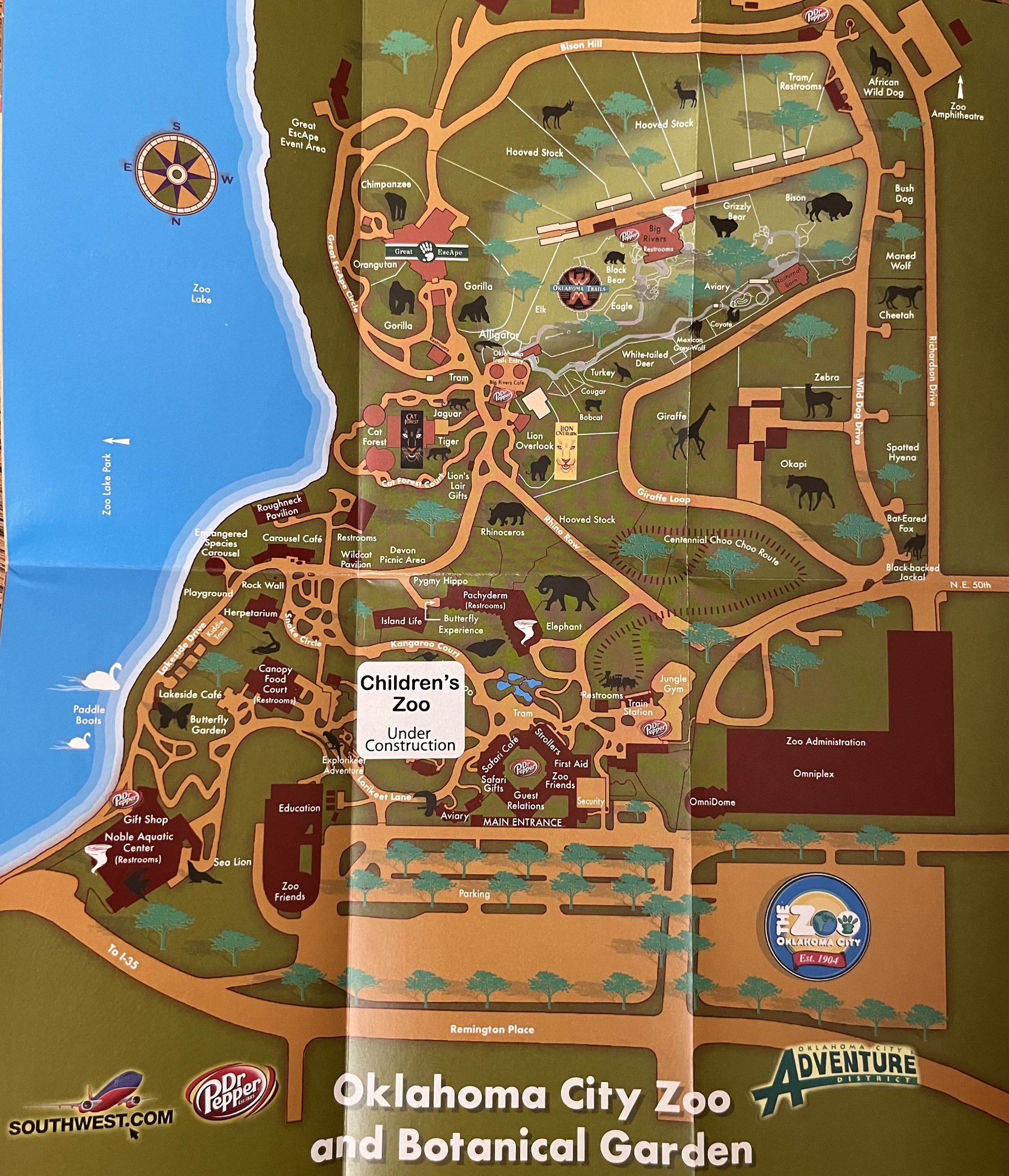
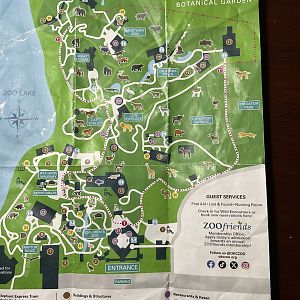
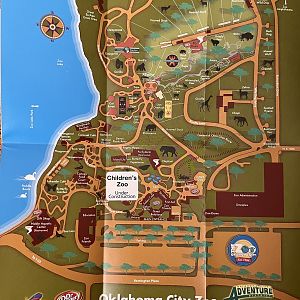
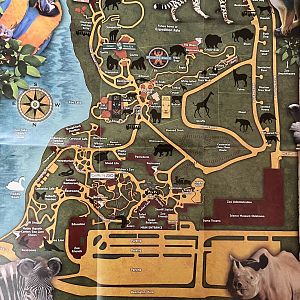
I'm glad you kept these! Thank you for posting. If I had known 30 years ago how much the zoo would change, I would have held on to some of my zoo maps! In the 1970s, the OKC Zoo had about 22 or 24 hoofed animal yards. You can see that they were down to 12 by 2008, and there are only six or seven now.
@Summer Tanager That's a massive reduction in ungulates, which I suppose is a common theme in major American zoos. It makes me appreciate Saint Louis Zoo, with its glorious 'Red Rocks' zone. When I visited Oklahoma City Zoo in 2008 there were species such as Somali Wild Ass, Gerenuk, Bontebok, Greater Kudu and Sable Antelope in the 'Hooved Stock" paddocks.
@snowleopard There has been a big reduction over the years. I need to create some sort of timeline from my notes going back to the early 1980s. In the early 80s ('83 through '85), the OKC Zoo had Barasingha, Pere David Deer, Chamois, Nubian Ibex, Markhor, Guar, Sitatunga, Nyala, Greater Kudu, Defassa or Common Waterbuck, Sable Antelope, White-tailed Gnu, Addax, Gemsbok, Grant's Gazelle, Persian Gazelle, Dama Gazelle, Saiga, Grevy's Zebra, Giraffe, and Okapi. In the late 1970s, the collection also contained Hartmann's Mountain Zebra, Common Eland, White-eared Kob, Topi, and Cape Hartebeest, but I believe those were gone by 1980.
In the late 80s and early 90s, the Zoo shipped out their Barasingha, Chamois, Markhor, Sitatunga, Gemsbok, Persian Gazelle, and Saiga, but replaced some of those with Roan Antelope, Bongo, Arabian Oryx, Lowland Anoa, and Bontebok, so it wasn't all bad. For a period in the late 90s and early 2000s, the Zoo also had Gerenuk (as many as seven at one time), Nile Lechwe, and Yellow-backed Duikers.
But with the creation of the Oklahoma Trails and Asian exhibits, nearly all of the hoofstock are gone. All that's left now are Okapi, Giraffe, Dama Gazelle, Tufted Deer, Grevy's Zebra (plus White-tailed Deer, American Elk, and American Bison - but those don't really count in my book). With the Expedition Africa, I believe that they're bringing back Bongo, Eland, and Red River Hogs, bringing in Red-flanked Duiker, and they're replacing the Grevy's Zebra with Hartmann's Mountain Zebra. I'm hoping a few more species will come back over time and I would love to see Barasingha, Sitatunga, Nyala, Gerenuk, Addax, and Bontebok come back!
It seems like Chamois, Guar, White-tailed Gnu, Topi, Hartebeest, White-eared Kob, Persian Gazelle, and Saiga are species of the past in North American Zoos. And Gemsbok, Waterbuck, and Grant's Gazelle are found now almost entirely in the private sector. It's sad but interesting to see these changes play out over the past 40 years.
Did Oklahoma Zoo used to have African elephants as shown on the map here instead of Asian elephants? Or did they just picture the wrong elephant species on the map?
For many years, the OKC Zoo had a female Asian Elephant named Judy and a female African Elephant named Tanzy. Judy lived at the Zoo from about 1949 through the early 2000s and Tanzy came in the late 1970s. Several years after Judy died, Tanzy was sent to another facility that housed African Elephants, but I don't remember the exact year. It would have been sometime between 2006 and 2009, so it's possible that she was still there. The construction began on the new Asian Elephant habitat around 2010 and she was sent out before then. My guess is that this is a hold-over from the previous year's map, or Tanzy was still there when the map was produced.
It's interesting that @DavidBrown mentioned elephants, and that @Summer Tanager is a wealth of knowledge, because I went back through my 2008 road trip review and also the ZooChat gallery, and I did NOT see any elephants when I visited Oklahoma City Zoo on August 10th, 2008. The last African Elephant was gone by then and the zoo's two female Asian Elephants were at Tulsa Zoo as they went there on loan. The map I was given was outdated. So, instead of elephants of any species, I saw this area and it was devoid of animals:
Thank you for looking at your past notes and the Zoo Chat photo gallery! You've confirmed that Tanzy had been shipped out before 2008! The bird exhibits in the Pachyderm building were my primary interest and after the Asian Elephant Judy died, I somewhat lost interest in the elephants (Judy was a zoo celebrity and nearly 50 years old when she died). I had forgotten that the zoo purchased an Asian Elephant named Mary (?) after Judy died and apparently a second Asian Elephant that I don't even remember. I believe (or assumed) that both of them were older former circus elephants and I didn't realize that the Tulsa Zoo is where they went before the current elephant exhibit was built. We're getting closer to filling in the elephant time line and I can't believe that the Zoo's "new" Asian Elephant habitat is now 13 years old! Time is flying too quickly!
@Summer Tanager hi. I raised quite a few of the now gone hoofstock species at OKC zoo in the late 70s to mid 89s. I got here to this forum while researching Saiga Antelope, which we had a successful but quite disastrous run with. They were housed in public bathrooms we shut for the winter, the nursery, as well as the separate hoof stock nursery. This was all inside the former Children’s Zoo area. They should never have been brought over from Russia. It was quite an event separating the sick individuals, rushing neonates to the nursery in the freezing winter temps. Feeding them cow colostrum. Extremely nervous animals. I felt badly for them. I just read a paper authored partly by a keeper I knew, Jack Grisham and that awful animal grabbing kook Lawrence Curtis. Look up what he did in Texas kidnapping those porpoises for display at the Fort Worth Zoo. He was a man focused on one thing only, collecting. I worked under the first person with a scientific approach toward the nursery, Marcia Clevenger. She came from Omaha and also wrote many papers on our hand rearing experiences.
I was there when G-Anne (gorilla) was pulled from her mum and brought to us. I have sent her gifts in Australia. Quite a special time in my life. It definitely planet the seed for my becoming a wildlife Rehabilitator later in my life. So many good and not so good but fascinating memories from a time when all contact was allowed. I worked with the Indian Fruit Bats who were housed in the nocturnal building. Not a thought about vaccines! It was a fun and a little dangerous time to be a young keeper. Once I had to retrieve a volunteer from the grasp of Judy, the hand reared elephant. So many many stories and memories…..
@Possumqueen I love your stories! I remember a time (probably in the 1978 to 1982 period) where there were a bunch of Saiga Antelope at the Zoo - probably 10 or more. I heard (and this might not be true) that they were imported from somewhere in the USSR and that they were very susceptible to Hoofstock Tuberculosis, which was a problem in certain exhibits through the 1980s and 1990s. I didn't realize that they were nervous animals, but I'm not surprised to hear that! I've heard nothing but good things about Jack Grisham, and about 90% of the things that I've heard about Larry Curtis were bad. Fortunately, for all of the negative things (like the failed attempt to establish a population of Saiga) there are at least five good husbandry projects for species like Nyala, Sable Antelope, Sitatunga, Addax, Red Kangaroos, Cheetah, and Grant's Gazelles. I remember a time when the OKC Zoo also had a fairly large breeding groups of Chamois and Markhors (pre-1980).