The only reason I can think of is that I grew up visiting Chester Zoo which used to have a very good collection of parrots.
My brother used to have an Orange-winged Amazon. Unfortunately he never took to me. He got rid of him last year beacuse he was becoming affected by the feather dust, and the parrot was becoming aggressive to visitors, mostly by attacking their feet when he was walking along the floor.
The Amazon went to good home and is now owned by a lady who is a member of a parrot rescue organisation. His behaviour has greatly improved now that he has the company of other parrots.
I think that parrots should not be housed singally.
My brother has also kept and bred Elegant Parakeets, Peach-faced Lovebirds and Moustached Parakeets.
His aviary was closed when his young son developed asthma. The birds may not have been the cause, but my brother didn't want to risk affecting his son's health.
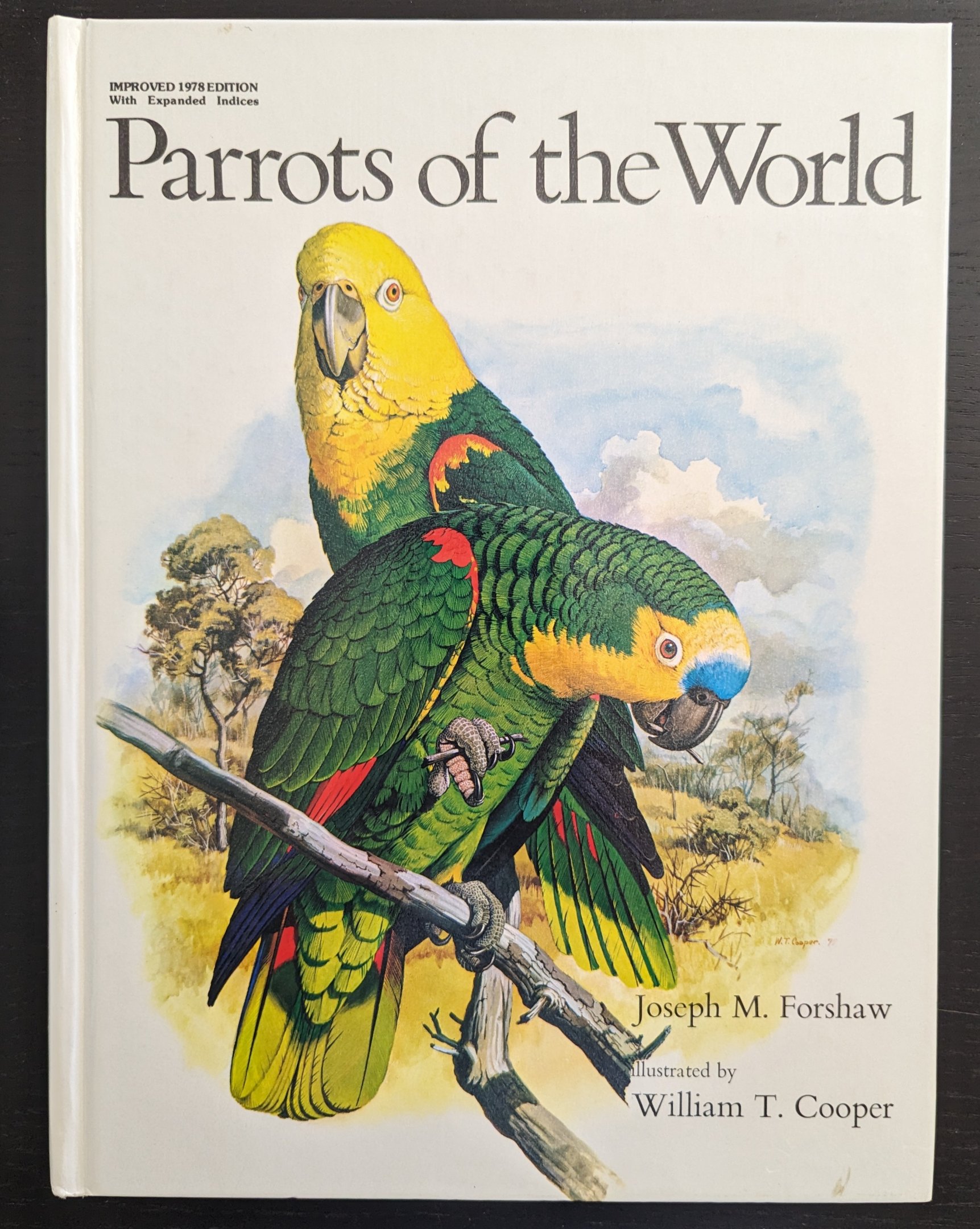
I love this book too! I bought my copy when I was 22 and in graduate school. I've always loved parrots from afar, but the only species that I've ever kept were Cockatiel and Bourke's Parakeet. I loved both of those species and they are great birds. I only kept birds of the normal, wild-type coloration.
@bongorob that makes a lot of sense. In fact, I remember Chester Zoo having a Parrot House historically. Your reasoning reminds me why I am interested in hoofed mammals, my childhood visits to San Diego Zoo walking through Horn & Hoof Mesa and seeing the wife diversity of ungulate taxa side by side in visually pleasing buff-colored enclosures. I also liked it because it was the most quiet and least visited section of the zoo. Similarly, riding the Wgasa Bushline monorail and viewing the large diversity of ungulate species and subspecies I saw in the multi-acre field exhibits. Pardon the digression, but your interest in parrots reminded me of that.
Oh yes I do! I refer to it a few time each year and it's on a book shelf in my living room next to the parrot/dove/cuckoo/turaco edition of The Handbook of the Birds of the World by BirdLife International and Lynx publishing. Both are great references for all things parrot.