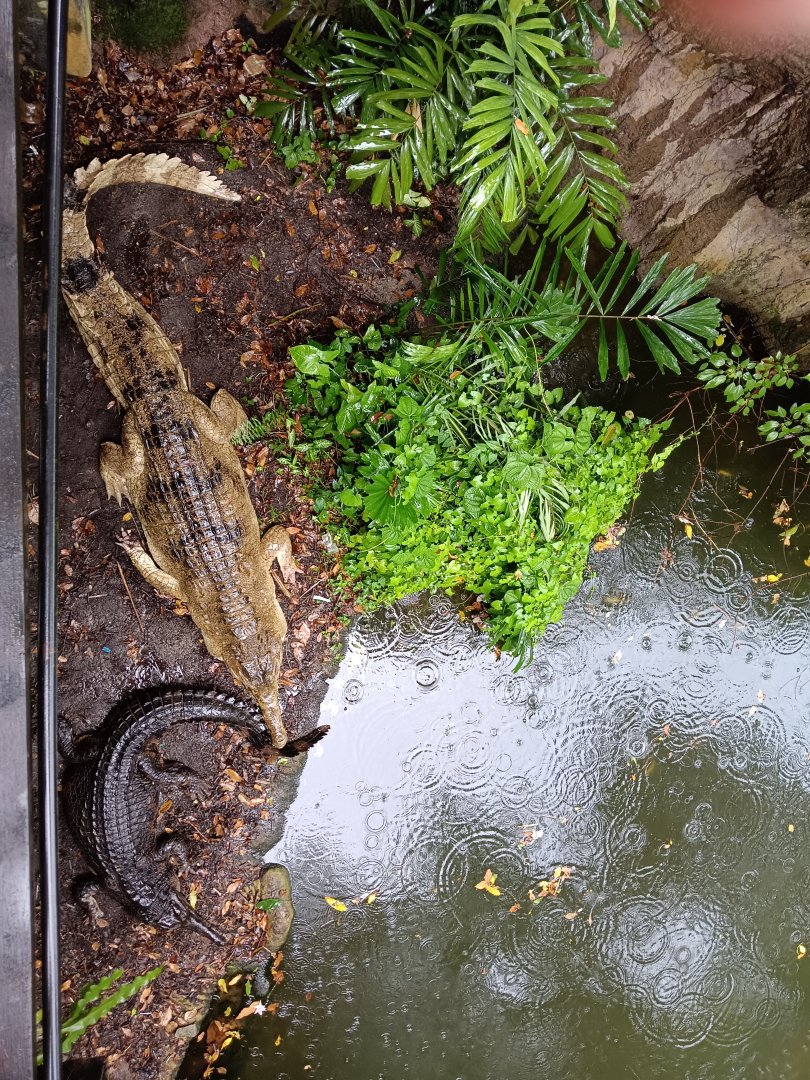
@Kifaru Bwana Yes,they are all sunda gharials.I suppose the yellow is a male while the brown one is a female.The sunda gharials iirc would be moved to Rainforest Wild.
@PangolinLover0514, I was more hoping for information on when the animals arrived exactly, their sex, ages and what the plans from Mandai Reserves are with their current group of Sunda gharials?!!
@Kifaru Bwana The bigger one is a male while the smaller one is a female,idk about the age,The sunda gharials would be moved to rainforest wild unless plan changes again.
a) Can You elaborate a little more on the 2021 hatching(s)?
b) Do you have any more information on the individual Sunda gharials in the collection (I was aware from previous visits to Singapore Zoo that they have a good number in one vivarium/paludarium and a few - sometimes larger specimens - in a larger outdoor exhibit)???
@Kifaru Bwana
a) it was their first false gharial hatching
b) For now there's only one false gharial enclosure in the zoo but they have a smaller individual that was seized by the authorities living in River Wonders at the Yangtze River area. False gharials will probably also be kept at Rainforest Wild like most of their other crocodilians and presumably some will be moved to the saltwater croc exhibit after he is transferred to RW Asia
@NATY, - perhaps it was not clear enough - but I really wanted to know in more detail how many Sunda gharial hatchlings were born and how many of these hatchilings have survived till the present. Sunda gharials like their Indian relatives are rarely bred in zoos worldwide ..., even in South East Asia breeding success is deploringly slim and few and far between. I imagine current 10.4 individuals are not all adult Sunda gharials ... n'est ce-pas? So, my query still remains unanswered.
It seems zoos in the region focus or have more breeding success with the Crocodylus family, allthough even that is not what it should be ..., in particular with the Siamese crocodile Crocodylus siamensis or both Papuan crocodile species. Size and agressive nature seems to be the order of the day and thus salties or probable hybrids seem to take top order (where on the basis on conservation status all other crocodile species would have to take first seats).