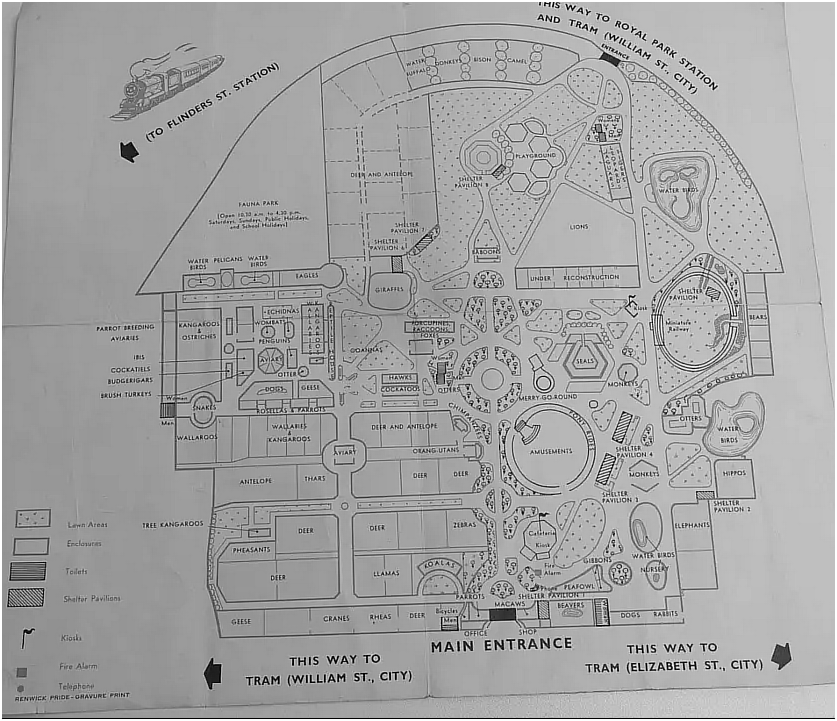
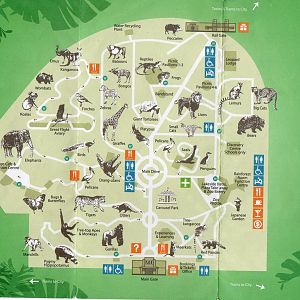
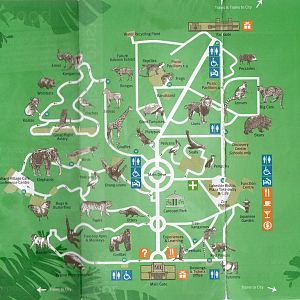
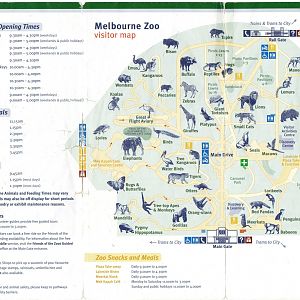
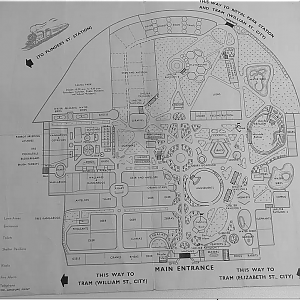
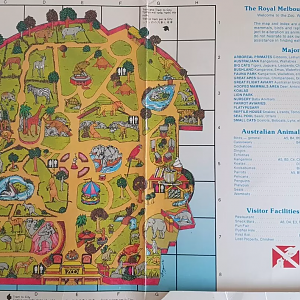
@steveroberts I was 10 in 1968. I remember the zoo in in this shape. I can even remember animals in the old lion cages labeled here as under reconstruction. On the other hand quite a few animals were not where they were labeled here. For instance my memory was that dogs (dingo, jackal, coyote, husky? Wolf?) were on the south wall labeled cranes, geese etc.
The lion park was the first new exhibit in the reformation of the zoo. Was the hippo the second or was that earlier? It was not a great exhibit for the hippos. Anyway the ‘70s would see drastic change, very exiting for a young zoo goer.
@MRJ The old Lion cages became the Small cat row, did they change much during the reconstruction (size and space wise)? And were Lions the only ones there?
Perhaps the dogs came later on? Ie. early 70's. They were certainly there by the mid 70's from all accounts.
In regards to the hippo enclosure, there was an article on it. From memory it was dated 1968, so would presumably follow the opening of Lion Park the year prior. At the time, the zoo had three hippos, Rangi, Genevieve and Henrietta.
@Jambo the old lion cages were totally removed and the small cat row was a new construction, very different from the old cages. I believe the old lion holding facilities off display were retained for the Loin Park, but could well be wrong with that. After the lions moved out they did keep some other species there, for some reason I recall cheetah and hyenas, but neither species turned up anywhere else after they were knocked down.
Yes the dogs could well have been later. As a small child, I am sure the birds there would hardly have registered. The one thing I do register there is the half round koala area, including at one point a cuscus. I also remember a tapir in the paddock next door, with a young one. I took a photo of them with my mother’s Box Brownie.
Then the hippo enclosure on this map definitely dates the map to 68-69. To think that by 1974 they had constructed the Great Ape Grotto, received gorillas, converted the round pavilion near the rail gate to a new reptile house, and were working on, if not already completed the small cat row, the new big cat exhibits and treetops, as well as a new Australian mammal area.
from seeing some of the old maps of zoos (Melbourne, Adelaide and Perth zoos especially) back in the day like this one; a common feature seemed to be numerous hoofstock yards that while medium to small by todays city zoo standards were comparitively large when compared to say the felid, canid, bear, ape and monkey enclosures (elephants too had small 'quarters' back then, but guess techincally they got out and about even if those walks around back then involved carrying visitors on their backs for the most part too).
Even some of the bird species had comparitevely bigger 'quarters' back then (geese and cranes on this map, rheas yard seems about medium). Remember on an old map of Perth Zoo the green peafowl enclosure near the big cats seemed to be about the same size as the whole row block of big cat enclosures and couldnt help thinking ''you guys should've let the green peafowl wander the grounds and give that enclosure (with any needed reinforcements to the enclosures exterior) to say the tigers''; but try not to 'edit' history in my mind lol.
Thanks for sharing your memories again too MRJ, always look forward to almost as much as your news and updates about the animal residents of your park.
Interesting seeing kangaroos and ostriches together on the map.
@MRJ It's also interesting to see the GFA had Eagles in it at one point in time. Do you remember which species? I never knew it was divided into sections. Also cool to see the old Big Cat cages for the Jaguars, Leopards and Tigers. Obviously these were replaced not long after with the much larger cages that opened in the early 70's but the location, opposite the islands is quite interesting. There isn't a lot of space there.
@steveroberts I too noticed the interesting Kangaroos and Ostrich mixes, perhaps the Ostriches were a temporary replacement for Emus. That whole area (where the elephant complex currently is), seems to have been redeveloped in the 70's but I could be wrong.
Yeah thats makes a lot of sense i.e Ostriches as filler for Emus usually sharing with Kangas' (agree that its fascinating that the GFA used to be divided up and had Eagles in it, assumedly Wedge-tails').
Was thinking only yesterday about how you found an old show from the '80s that was filmed at MZ and had quite a lot of footage of some of the animals and exhibits and you wrote out time stamps if one wanted to skip ahead for watching if looking for specific species and their old exhibits. That was a great find and work with sharing man, want to go back and look at again this year.
*edit (for post above) I should've acknowledge Taronga's hoofstock collection back in the day too being very extensive also (e.g Blue Wildebeest, Anoas, Nilgai, Przwalski's Horses, Springbok, Kudu, Malayan Tapir {definitely one there in '39} to name a few) but pointed out Melbourne above and Adelaide and Perth back in the day because the general sprawl of the hoofstock collection really stood out when seeing the old maps. Taronga had a sprawl too but somewhat more contained around whats the Chimpanzee Park site now and African Savannah site now, and the area around centre of whats now Rainforest Trail precinct that back then were yards backing onto the south of Elephant walk area, some still in use as back of the farmyard area from late '70s until work on Wild Asia/Rainforest Trail began in '03; + old Bison paddock in top nth west corner of the grounds & also Pere Davids' Deer yard that either became or neighboured Pygmy Hippo exhibit for a number of years until sometimes in '90s - Pere Davids' Deer were gone before then though. Same can be said for Auckland Zoo's extensive hoofstock collection and their yards/paddocks back in the day too.
@Jambo Lots of questions and lots of things to say so I'll break things down into separate posts.
"It's also interesting to see the GFA had Eagles in it at one point in time. Do you remember which species? I never knew it was divided into sections."
The GFA was divided into sections until it was rebuilt in the '70s. I remember the small section in the middle held ocelots. Wedge-tailed eagles, and plenty of. For many years I thought I had seen vultures there. Nobody I asked ever knew anything about them, and so I thought it was my imagination. However, not so long ago I found out that Melbourne Zoo imported king vultures post WW2. So, it is quite possible I saw them in the early '60's.
Wow don't know what to be more impressed with: that the original GFA complex held ocelots back in the day or that used to have king vultures too, so cool.
As a kid thought had seen an Indian white-rumped vulture at Bannamah Wildlife Park in south-west WA; but then learnt being a member on here about Australia's strict bird import restrictions of late decades**, so unless was a seized smuggled bird the park took in, which sort of doubt (the smuggling part) as its appeal is only appreciated by a rare few, may have been an overactive imagination personally and mistaken say another raptor bird or perhapd turkey or something for it and read the name somewhere in a book on animals (will wrinkle my mind for long time though think as wasnt prone to inventing stories or memories really as a kid), this would of been about c.1994.
**species hasn't been identified on any of the extensive exotic birds in Australia in recent decades researched and blogged about on here.
@steveroberts "a common feature seemed to be numerous hoofstock yards that while medium to small by todays city zoo standards were comparitively large when compared to say the felid, canid, bear, ape and monkey enclosures" @Jambo "Also cool to see the old Big Cat cages for the Jaguars, Leopards and Tigers. Obviously these were replaced not long after with the much larger cages that opened in the early 70's but the location, opposite the islands is quite interesting. There isn't a lot of space there."
Horrific is the description I would have used. Melbourne was a Victorian-era zoo as can be seen from the orang and chimp enclosures preserved on the main walk. Enclosures constructed in the 20th Century were no better. In fact, in the early 1960's there was a strong campaign to close the zoo that nearly succeeded. I remember the Chair of the Board, a senior public servant, spoke at my school after the opening of the Lion Park. His comments were to the effect "I don't like zoos and would close them down, however if we have to have it, I intend to make it the best I can".
The cat cages were on a brick and concrete base, steel bars, each one no more than 10 metres square (probably less), with a night den behind and a mock rock shelter/platform at the back.