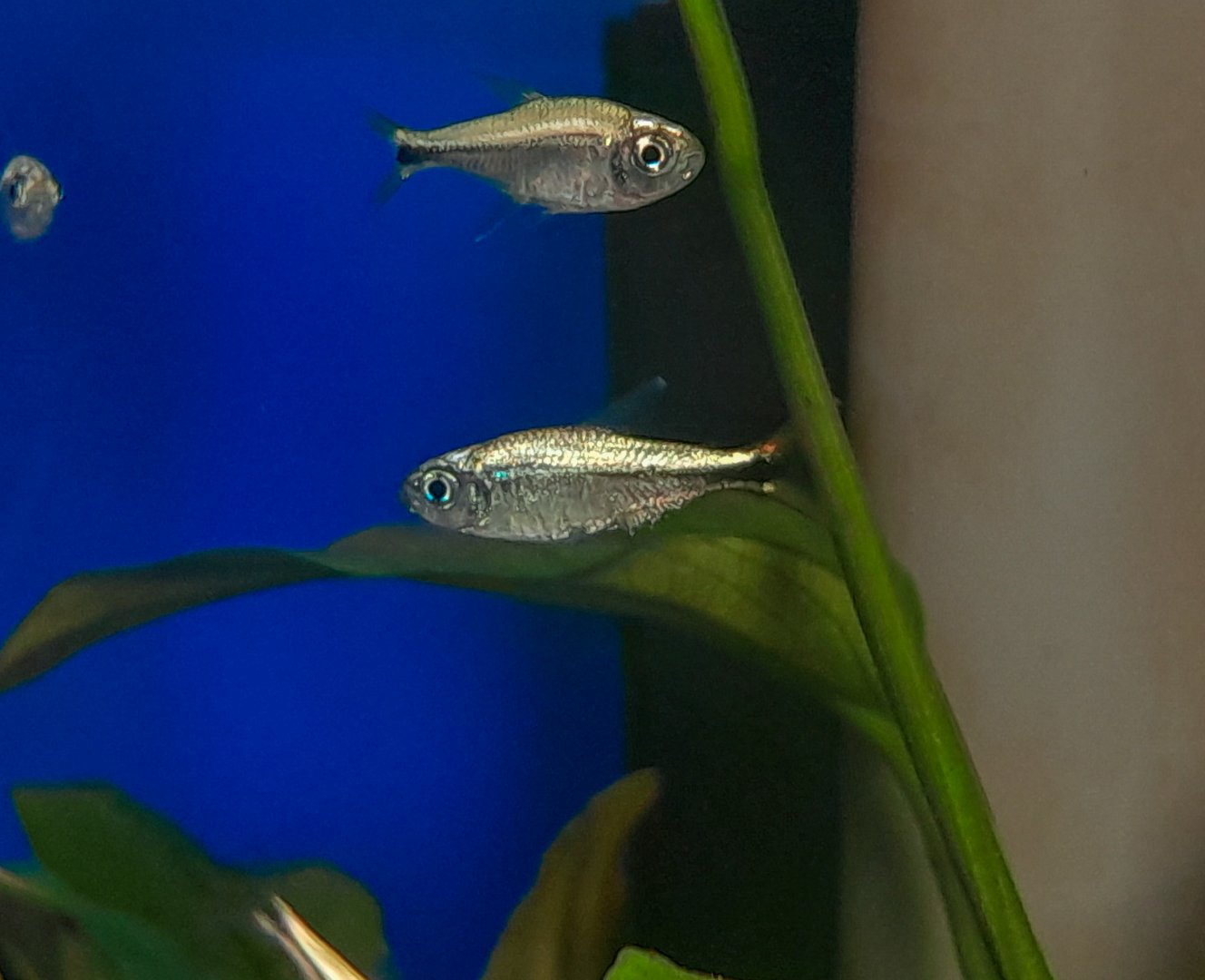
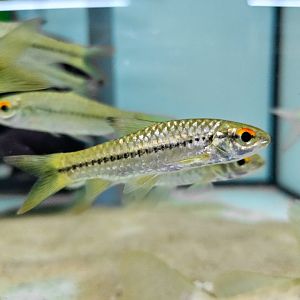
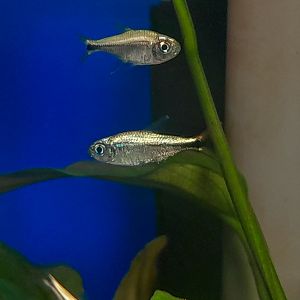
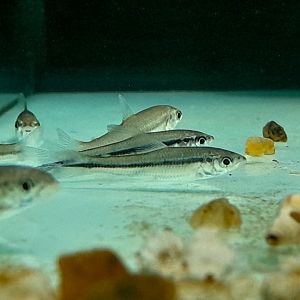
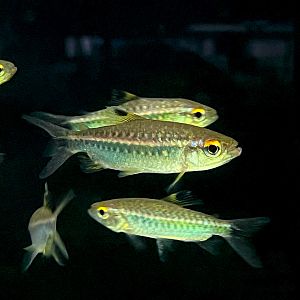
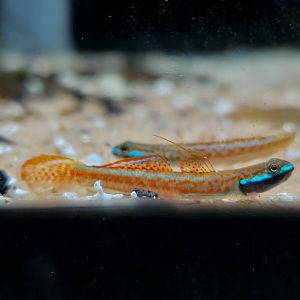
The golden sheen in these fish results from an increased release of the pigment guanine in the skin, triggered by an infection with the larvae of parasitic trematodes. The fish serve only as intermediate hosts for these worms, becoming infected by consuming bird droppings containing the larvae. Once ingested, the larvae migrate to the fish's muscles and form capsules. While this might sound unpleasant, it is harmless – infected fish in aquariums live just as long as their uninfected counterparts. However, their striking golden colouration draws the attention of fish-eating birds, the worms' final hosts. When a bird eats an infected fish, the encapsulated larvae hatch in the bird's intestine and mature into sexually active worms. These worms produce eggs in large numbers, which are expelled in the bird's droppings, perpetuating the cycle.