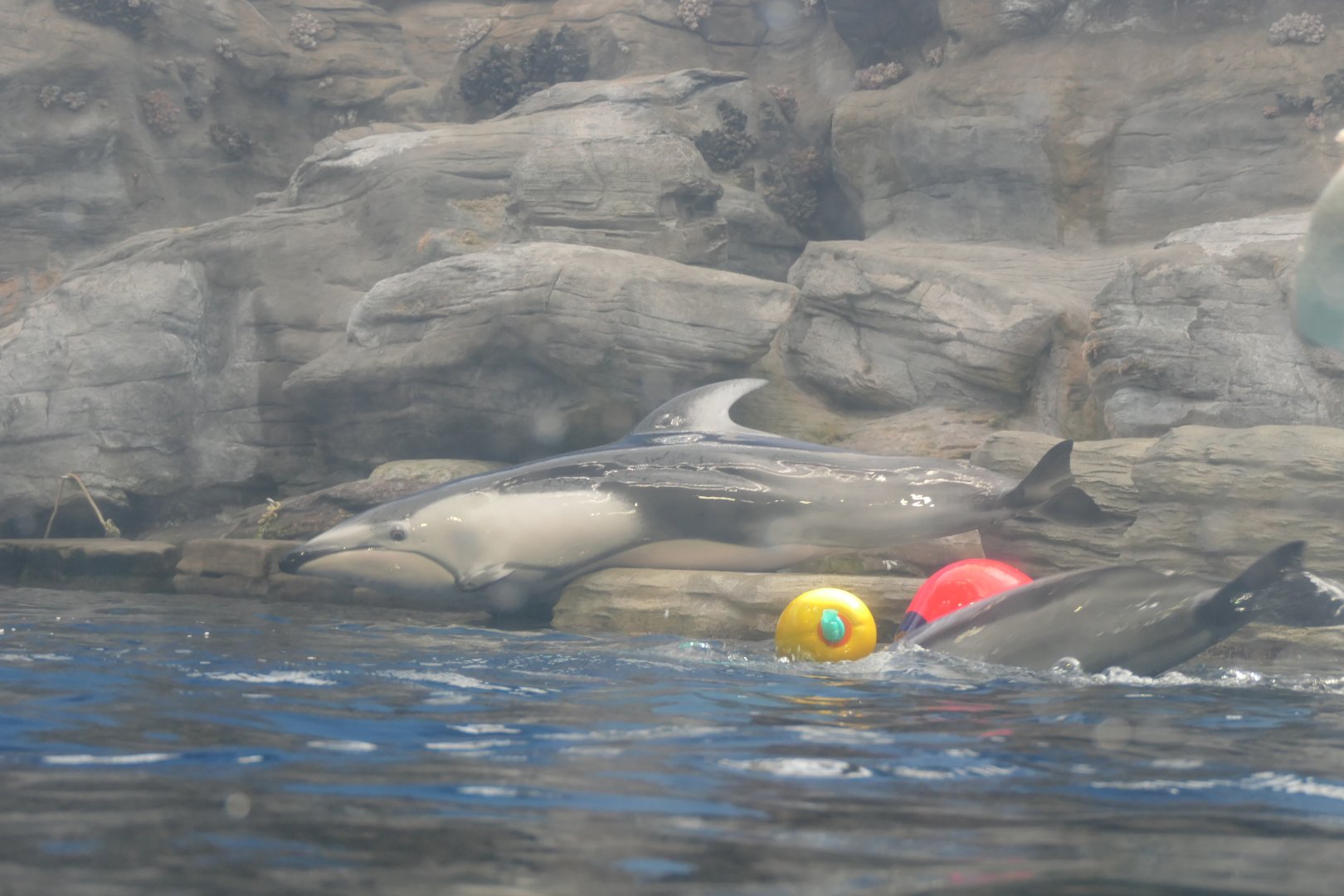
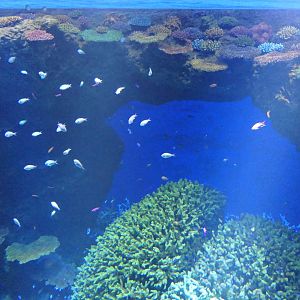
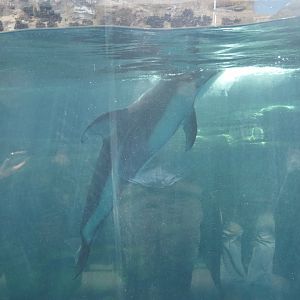
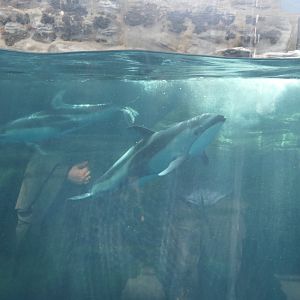
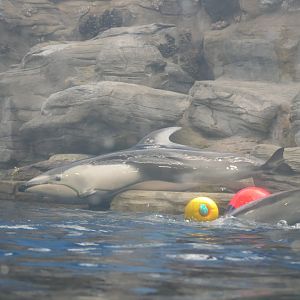
I always find it peculiar that Osaka’s dolphin tank is as small and faux-rock heavy as it currently stands. It really makes you wonder if an enclosure this subpar would be better off for a more size-appropriate species.
Also, based on the title, is Lagenorhynchus not a valid genus from your perspective?
@Austin the Sengi yes, I agree, this enclosure would me much better used for other species (ideally something actually found in the Tasman Sea, which this tank is intended to replicate despite its sole resident species not even being found there!).
As for the scientific name I used, as far as I know Lagenorhynchus is still a valid genus, but it has been split pretty heavily to the exclusion of obliquidens, which (along with some other former Lagenorhynchus) has been placed in the newly erected genus Sagmatias.
@Austin the Sengi I haven't read any literature on it, I'm just following a split made on iNaturalist
(Taxonomic Changes Taxon: Sagmatias (Active)" · iNaturalist Australia) splitting Lagenorhynchus into Lagenorhynchus sensu stricto (White-beaked Dolphin), Sagmatias (Peale's, Hourglass, Pacific White-sided and Dusky dolphins) and Leucopleurus (Atlantic White-sided Dolphin).
Not all authorities accept this split though - The Society for Marine Mammalogy's checklist still places all these species in Lagenorhynchus (Society for Marine Mammalogy)
@Veno how is the Sea of Japan type distinguished? Cetabase doesn't have any info on the origin of Osaka's dolphins so I can't confirm nor deny they originated from the Sea of Japan.
@Veno after having looked at that paper, I'd disagree that this specimen looks like the Sea of Japan type (morphotype 2 in the paper). Looking at figure 1 and my image, I think it looks more like morphotype 1 as the distance between the eye and front flipper is shorter than the distance as between the eye and tip of the snout (rather than the eye-snout distance being shorter than eye-flipper distance in morphotype 2) and the snout appearing more downcurved. If you disagree however I'd appreciate your input.