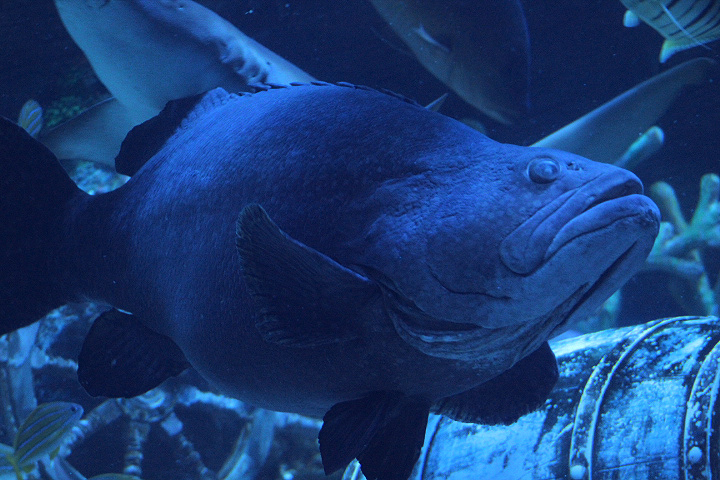
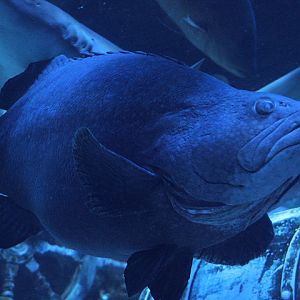
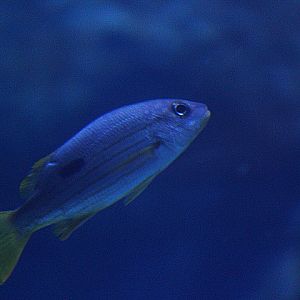
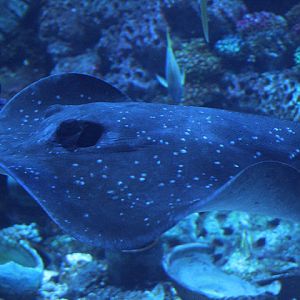
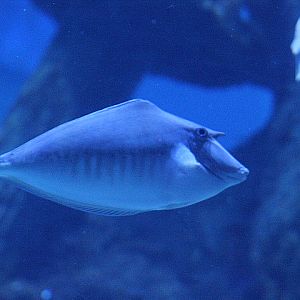
Likely the last known pure E. lanceolatus in a Indonesian public aquaria, as zoos and aquarias are now prefering to aquire the more widely-farmed and easier to maintain hybrid epinephelus grouper.
Even then, this individual shows what appears to be subtle deformities, what is known as "short-body" in the aquarium fish trade. This individual can be easily seen during scheduled feeding time.
@Rizz Carlton If that's true, then it's a very sad thing. I think SWA still housed purebred giant groupers AFAIK.
Ever since the hybrid groupers made their debut in the early 2010s, purebred brown-marbled groupers slowly disappeared from seafood restaurants. By the 2020s, they're gone.
@Fargusno no, I don't think I recall seeing any E. lanceolatus in SeaWorld Ancol, despite them having what appears to be a entirely natural group. They're mostly E. coiodes and E. fuscoguttatus from my observation.
Obviously, these hybrid groupers are breed to be developed to be as good of a eating fish that are cheaper to "produce" compared to using pure, wild groupers that might have some features that made them harder to consume. Of course they'll be more popular for seafood restaurants to use in their dish, pisciculture 101.
@Rizz Carlton If what you were saying about the last giant grouper in Indonesian aquaria is true, then I'm very worried. Hopefully when it dies one day, they will get a purebred one. "Bumblebee groupers" or juvenile giant groupers are still available in the ornamental fish trade, mostly kept in freshwater.