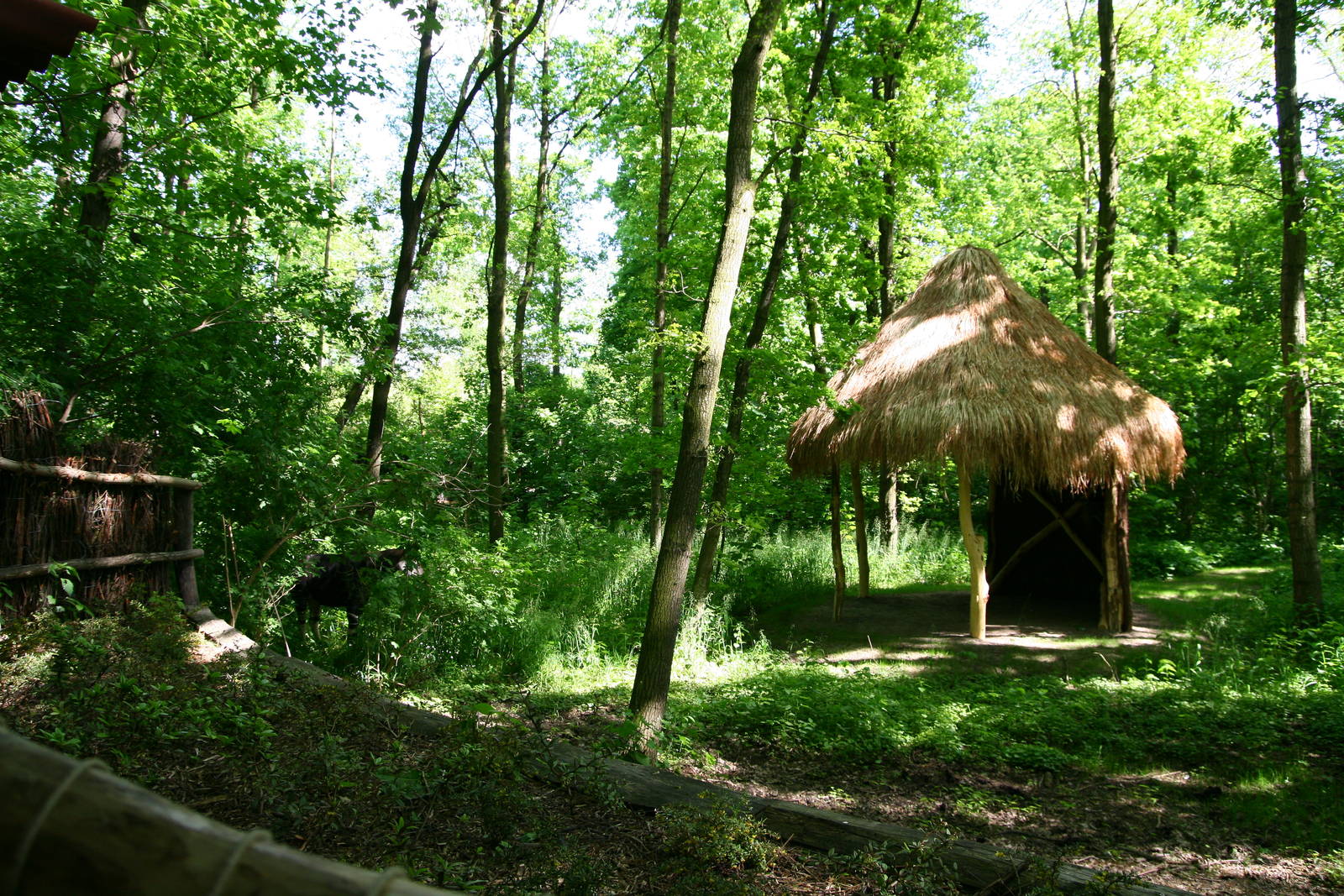
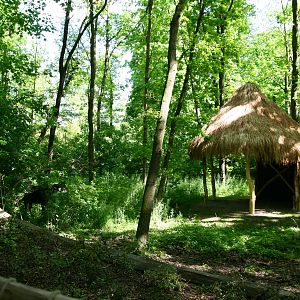
This appears to be a terrific exhibit for okapis, and the dense vegetation, abundance of shade, apparent lack of obvious barriers, and thatched roof all offer up a somewhat immersive experience. The landscaping is well designed, and it must be enjoyable to see such fantastic creatures in a lush setting rather than a boring paddock that could just as easily house cows or goats. Various other zoos have okapis in sunlit yards that seem as if they belong on a farm, but at least Leipzig has made an attempt at a much more natural environment for their okapis. Visitors will come away with a greater appreciation for such a relatively unknown mammal, and the beauty of nature will be on show for all to see.
There is not much in this enclosure that has been "designed", the zoo just fenced a piece of woodland with the existing vegetation and they added the hut for the okapi and the visitor`s galerie.
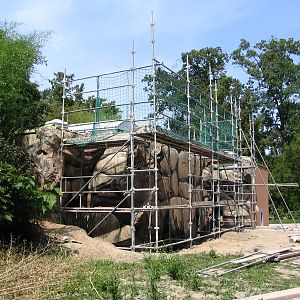
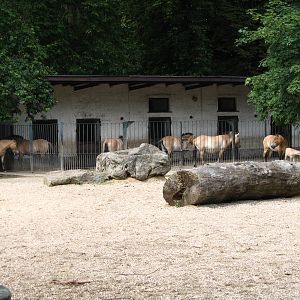
The okapi facility in Leipzig has in total 3 enclosures, and this is the largest and best. The other 2 are just the typical gass paddocks and are relatively small. The barn is simple (but probably good for the animals, I havn`t seen it from inside) and can`t be visited. They have 2 young males at the moment, one from Stuttgart and one from Rotterdam.
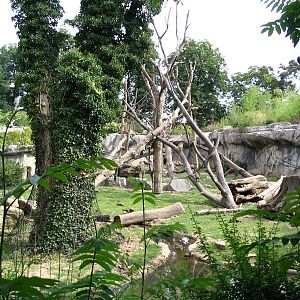
This enclosure is indeed the best okapi enclosure in germany. Even the old enclosure, constructed within 4 weeks in 2005, offers much shade and lush vegetation in summer, more than the enclosures at Frankfurt, Stuttgart, Berlin or Wuppertal. Visitors often despair of searching for the brown okapi that is hidden in the bush.
The okapi facility has in total 2 enclosures, a part of the old enclosure was separated in 2006 to offer a hiding place to the red forest duikers. In the meantime duikers and okapi "Steve" from Stuttgart (born 2007) are using the entire enclosure together. Okapi male "Kimdu", born at Rotterdam in 2005, occupies the new enclosure. In summer you can see "Steve" and "Kimdu" (nephew and uncle) changing kisses at the fence.
The okapi barn is really simple, 7 boxes inside, one for the duiker family, six for 2,0 okapis.
Since december a male chinese water deer occupies the new enclosure.
This appears to be a terrific exhibit for okapis, and the dense vegetation, abundance of shade, apparent lack of obvious barriers, and thatched roof all offer up a somewhat immersive experience. The landscaping is well designed, and it must be enjoyable to see such fantastic creatures in a lush setting rather than a boring paddock that could just as easily house cows or goats. Various other zoos have okapis in sunlit yards that seem as if they belong on a farm, but at least Leipzig has made an attempt at a much more natural environment for their okapis. Visitors will come away with a greater appreciation for such a relatively unknown mammal, and the beauty of nature will be on show for all to see.