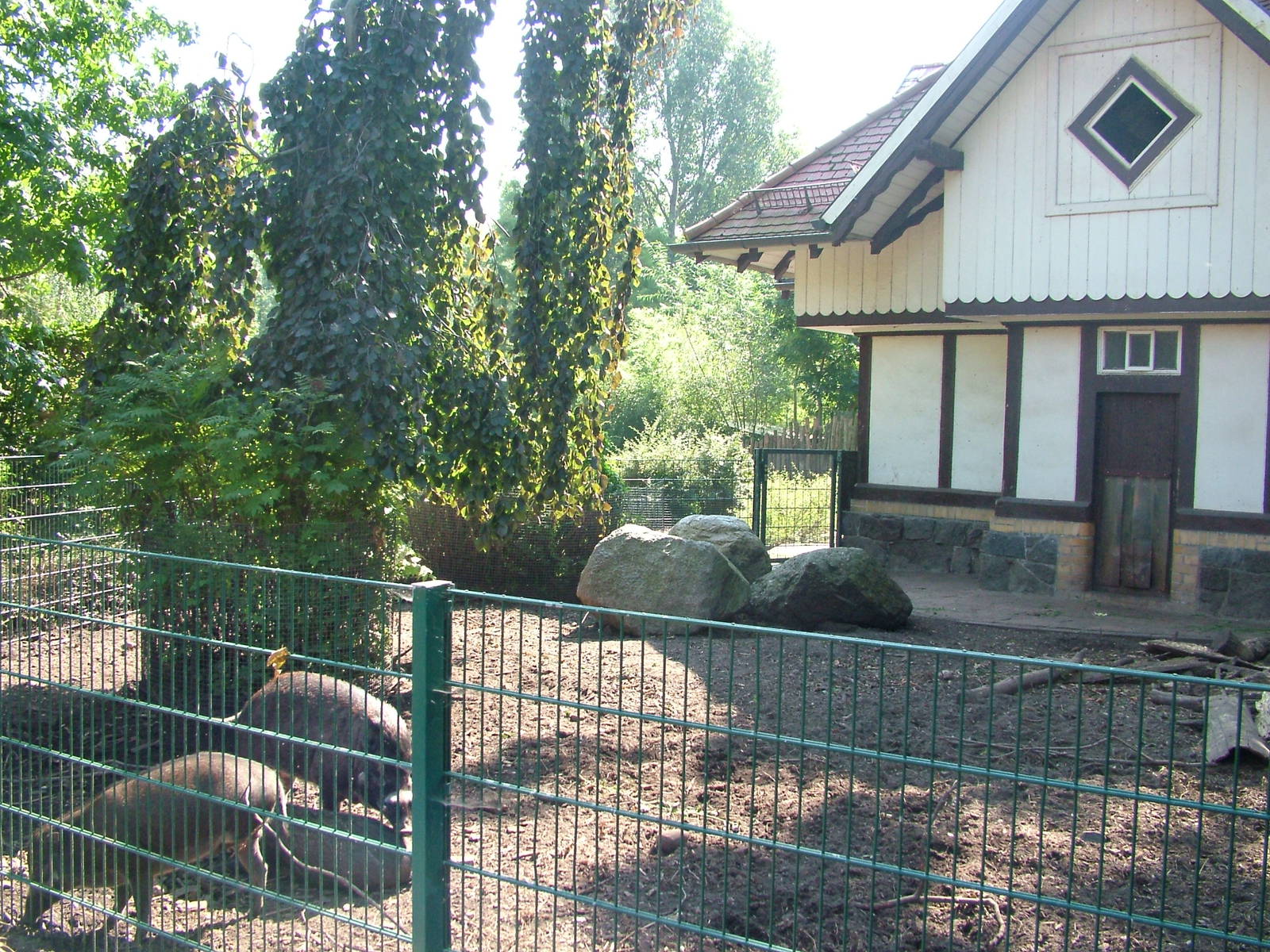
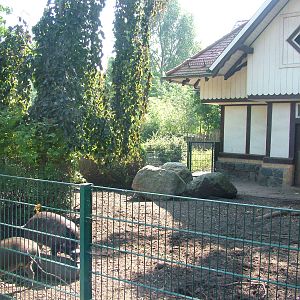
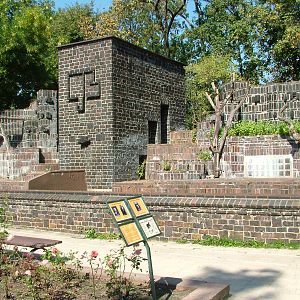
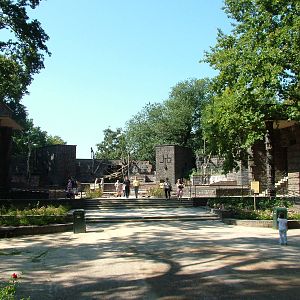
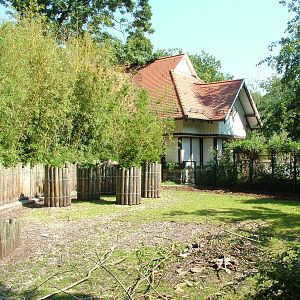
This rustic-looking cottage reminds me of one that was in a deer paddock at Berlin Zoo, and which brought forth some discussion on a ZooChat photo thread a few days ago. Seeing photos of Bear Castle or this warty pig exhibit at Leipzig Zoo seem a little jarring in comparison to the modernistic approach of Pongoland and Gondwanaland, and would it be a fair assessment to state that Leipzig is an effective melding of the past and present in a single zoo? Is the zoo purposefully maintaining its older, more historic areas or does it demolish them when constructing new exhibit complexes?
This rustic-looking cottage reminds me of one that was in a deer paddock at Berlin Zoo, and which brought forth some discussion on a ZooChat photo thread a few days ago. Seeing photos of Bear Castle or this warty pig exhibit at Leipzig Zoo seem a little jarring in comparison to the modernistic approach of Pongoland and Gondwanaland, and would it be a fair assessment to state that Leipzig is an effective melding of the past and present in a single zoo? Is the zoo purposefully maintaining its older, more historic areas or does it demolish them when constructing new exhibit complexes?
Most of the remaining old structures and enclosures are slated to be converted into a modern South American exhibit in the future. Heritage status of some of the buildings (including the Bear Castle) and the current economic situation suggest these changes are a ways down the road, especially after the enormous effort and expense of Gondwanaland.
Leipzig is a good example how to arrange historic renovated and maintained zoo architecture (Elephant house [1926], the "rusty-looking cottage" - the house for smaller deers [1908], the Deer house [1908], Asiatic aviary [1928], Aviary for birds of pray [1928], Rhino house [1880s], Ape house [1902], New Carnivore house [1901], Aquarium [1910], Terrarium [1913]) with modern zoo architecture (Pongoland [2001], Gondwanaland [2011], lion exhibit [2001], tiger taiga [2003], Kiwara-Savannah [2004], Sloth bear exhibit [2003], Okapi enclosure [2005], Seal pool, Hyena exhibit [2004], Meerkat exhibit [2004]).
Some parts of the zoo are waiting to be purposefully renovated and for appropriate use in future (Leopard cages [1968], Bear castle [1929] etc.). The bear castle is going to be renovated and used for a nocturnal animal house, the Leopard cage will be demolished to make space available for new exhibits.
Most of the remaining old structures and enclosures are slated to be converted into a modern South American exhibit in the future. Heritage status of some of the buildings (including the Bear Castle) and the current economic situation suggest these changes are a ways down the road, especially after the enormous effort and expense of Gondwanaland.
The official timescale for South America (as per the zoo's website) is 2012-2015. We shall see whether this is accurate!
As regards historical buildings:
The entrance area (known as the Gruender-Garten or 'Founder's Garden') is the historical core - the old carnivore house has been converted into a museum space and the historic monkey house and aquarium are still in use. I know the aquarium is intended to remain in its current form; I'm not sure about the future of the monkey house. Another historical building (the Deer House) has been incorporated as a viewing area for the tiger exhibit. This is not a zoo about to lose all of its history, which is good to see.
According to the overview map on the website (- Zoo Leipzig), both the anoa/warty pig building and the Bear Castle are actually within the (theoretically completed) Asian area. I don't see any reason this house should go - it seems quite serviceable.
There is an odd central area (including this house, the Bear Castle, rhinos, fur seals/penguins, macaques/baboons and the Bird House). To include these areas in South America would leave the Sloth Bears/Rhesus Monkeys split from the rest of Asia (and the website map calls the whole area Asia). I think it's a case of wait and see, but for the moment it's a zoning-free area in the middle. Personally, I'd be happy for it to remain so.
The South America area will include the leopard cages, the owl-aviaries, the dall sheep-rock, the Przewalski-house plain, the maned wolf exhibit and the children's zoo.
The OLD carnivore house [1878] was demolished in 1996, it was the oldest zoo building. The building, that has been converted into a museum, is the NEW carnivore house.
The monkey house will be converted into a insectarium.
The South America area will include the leopard cages, the owl-aviaries, the dall sheep-rock, the Przewalski-house plain, the maned wolf exhibit and the children's zoo.
The OLD carnivore house [1878] was demolished in 1996, it was the oldest zoo building. The building, that has been converted into a museum, is the NEW carnivore house.
I believe that this "odd middle section" is a blank on the master plan as this area was the originally intended site for Gondwanaland in the "Zoo der Zukunft" ("Zoo of the Future") master plan. Later, the zoo acquired the additional space where Gondwanaland is now.
I believe that this "odd middle section" is a blank on the master plan as this area was the originally intended site for Gondwanaland in the "Zoo der Zukunft" ("Zoo of the Future") master plan. Later, the zoo acquired the additional space where Gondwanaland is now.
Ah, that's interesting and makes a lot of sense. It's worked out quite well; they can be flexible with that area as it adjoins all the major areas (Asia, Africa, South America, Gondwanaland). Gives them options.