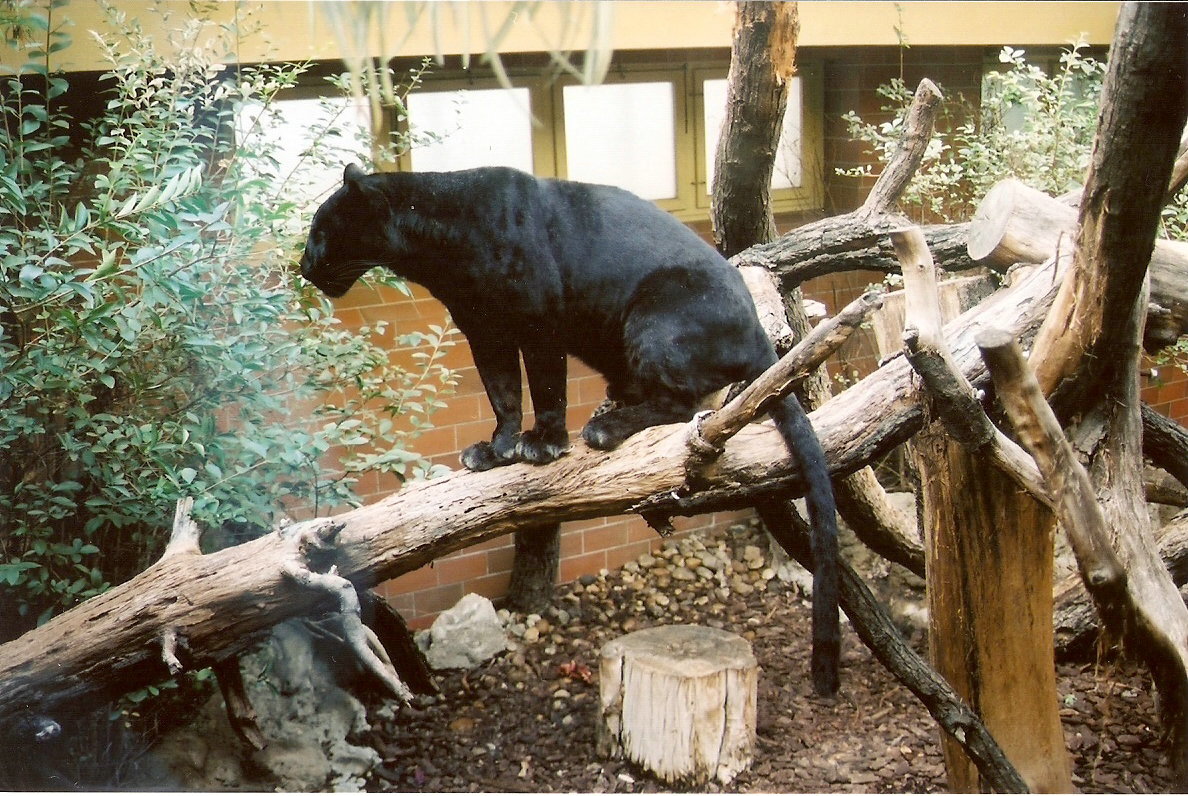
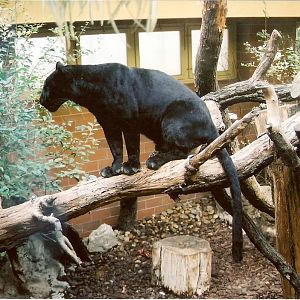
This animal was labelled as [i]Panthera pardus melanotica[/i], and I've always wondered how accurate this was (pure-subspecies African leopards not being very common). Does anyone know how reliable this ID is?
This animal was labelled as Panthera pardus melanotica, and I\'ve always wondered how accurate this was (pure-subspecies African leopards not being very common). Does anyone know how reliable this ID is?
The Hungarian authorities use for denomination of black leopards the Panthera pardus var. melanotica name. I don't know why... We also have a black leopard, and on the CITES certificate there are performing this name, but the animal is unknown subspecies...
In the past, names for mutation animals [would be cultivars if they were plants] have been written thus: Panthera pardus 'melanoticus'. other examples would be the Dark-throated Golden Pheasant [Chrysolophus pictus 'obscurus'] and the Melanistic Common Pheasant Phasianus colchicus 'tenebrosus']. both these birds are melanistic mutations, analogous to the Black Leopard /Panther.
Can one of linguista around here help with word endings please? Should it be 'melanotica' to agree with 'Panthera', or 'melanoticus' to agree with Pardus? It's a long time since I did Latin at school
@Maguari- Thank you for posting this photo. I always like to see big cat's body structures. I have been trying to draw a more advanced painting of a couple african Leopards and can't ever get there structure just right. I think this will help ( hopefully )