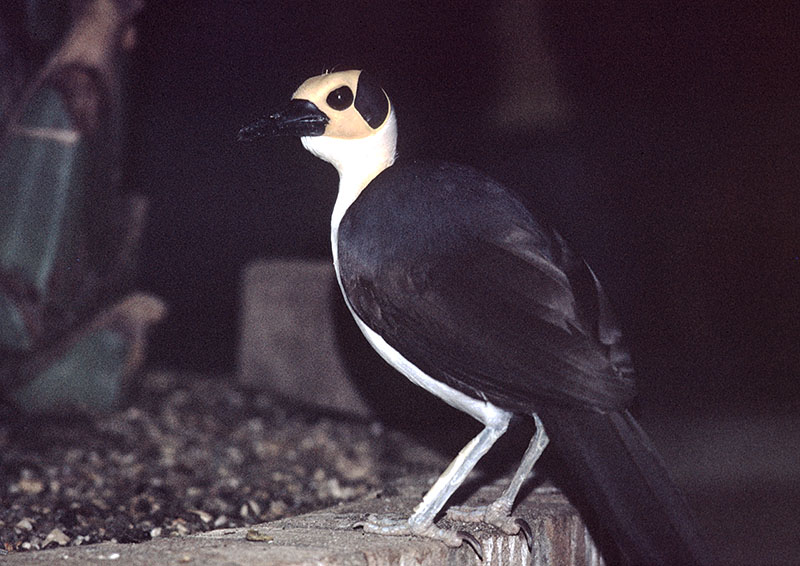
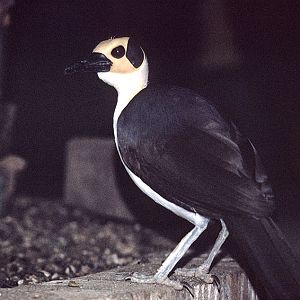
Picathartes gymnocephalus. Tropical House, Rotterdam, 22nd July 1974. Scanned from a Kodachrome slide, unfortunately the slide was badly underexposed, in spite of using flash, but the scanned image is clearer than the original slide.
Picathartes gymnocephalus. Tropical House, Rotterdam, 22nd July 1974. Scanned from a Kodachrome slide: unfortunately the slide was badly underexposed, in spite of using flash, but this scanned image is clearer than the original.
I have just checked the IZYB Volume 15. In 1974, there were 51 of these birds in 14 collections in Europe and the USA. They nested in several collections in the 1970s and young were reared in Amsterdam and San Antonio (and probably other places too).
It is very unfortunate that they did not become established in captivity, as they were fascinating to watch as they usually moved around with giant hops, which made them awkward to photograph, and they built lovely mud nests.
I have just checked the IZYB Volume 15. In 1974, there were 51 of these birds in 14 collections in Europe and the USA. They nested in several collections in the 1970s and young were reared in Amsterdam and San Antonio (and probably other places too).
It is very unfortunate that they did not become established in captivity, as they were fascinating to watch as they usually moved around with giant hops, which made them awkward to photograph, and they built lovely mud nests.
No, their habitat is remote and difficult to access. I was based on the other side of the country unfortunately. There are some organised trips to suitable areas these days.
Last week I was watching a documentary about a Dutch guy who broke the "Big Year" world record for birds. Part of the documentary was focussing on his search for the white-necked picathartes (in which he succeeded). Very interesting bird! Unfortunately it isn't kept in captivity anymore for quite a while.
I might have seen it's grey-necked relative in Frankfurt, although I can't remember. It's named in the zoo guide of my visit, but I wasn't aware of it's rarity at that moment (the only species from the Bird House I do remember is my first shoebill).