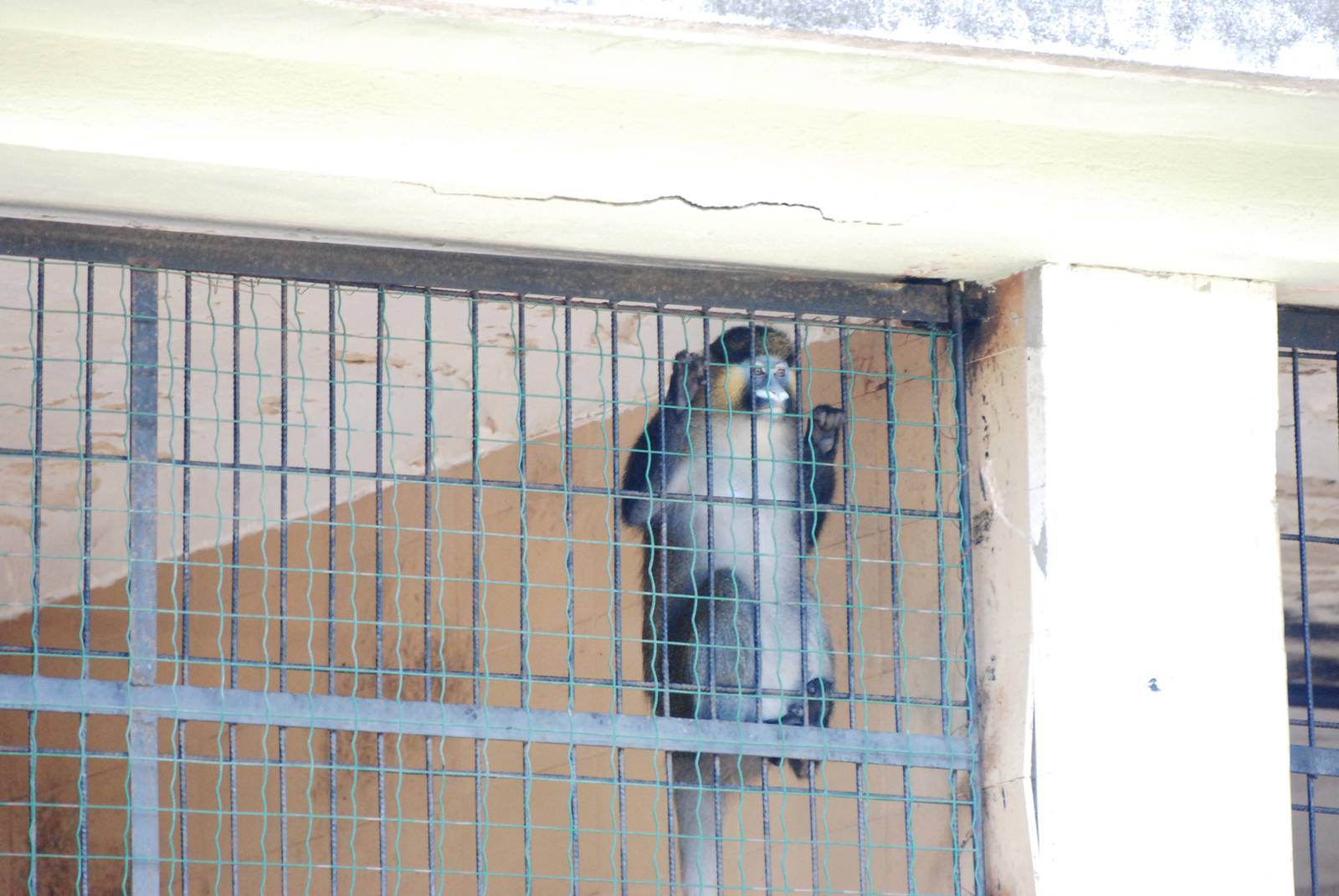
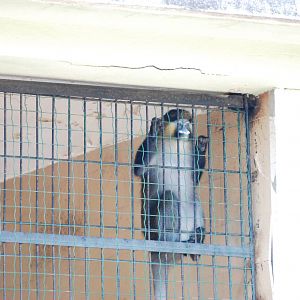
ISIS, which, of course, may or may not be accurate, lists Lisbon as having a single male. Montpellier, in France, meanwhile has five males; only Beauval, in Europe, has a 'proper' group, with two males and five females. i think this could be a species which has gone from zoos within a decade - and what an enormous pity that will be.
ISIS, which, of course, may or may not be accurate, lists Lisbon as having a single male. Montpellier, in France, meanwhile has five males; only Beauval, in Europe, has a 'proper' group, with two males and five females. i think this could be a species which has gone from zoos within a decade - and what an enormous pity that will be.
The only other place I've seen them recently is ZOOM/Gelsenkirchen, but they only had three at the time and I've a feeling they've decreased since.
We only saw one at Lisbon but with most of the enclosure screened off I couldn't swear there weren't more - it was only by very lucky timing we saw this one.
ISIS, which, of course, may or may not be accurate, lists Lisbon as having a single male. Montpellier, in France, meanwhile has five males; only Beauval, in Europe, has a 'proper' group, with two males and five females. i think this could be a species which has gone from zoos within a decade - and what an enormous pity that will be.
Not a great deal I fear.. Even any 'rescued' ones in Africa are probably the subject of rehabilitation schemes nowadays, rather than being allowed to be exported. There is a real danger some of these rarer Guenons could be lost completely from our zoos in the future, a terrible shame.
I really do think EAZA and the European zoo community should make more of an effort to manage Cercopethicinae populations better. I is too much of a luxury to just pretend these primates are unworthy of any captive space or no publicly popular species.
C. cephus is just but one of out of the whole lot (and I am including mangabeys, langurs, colobus too here).