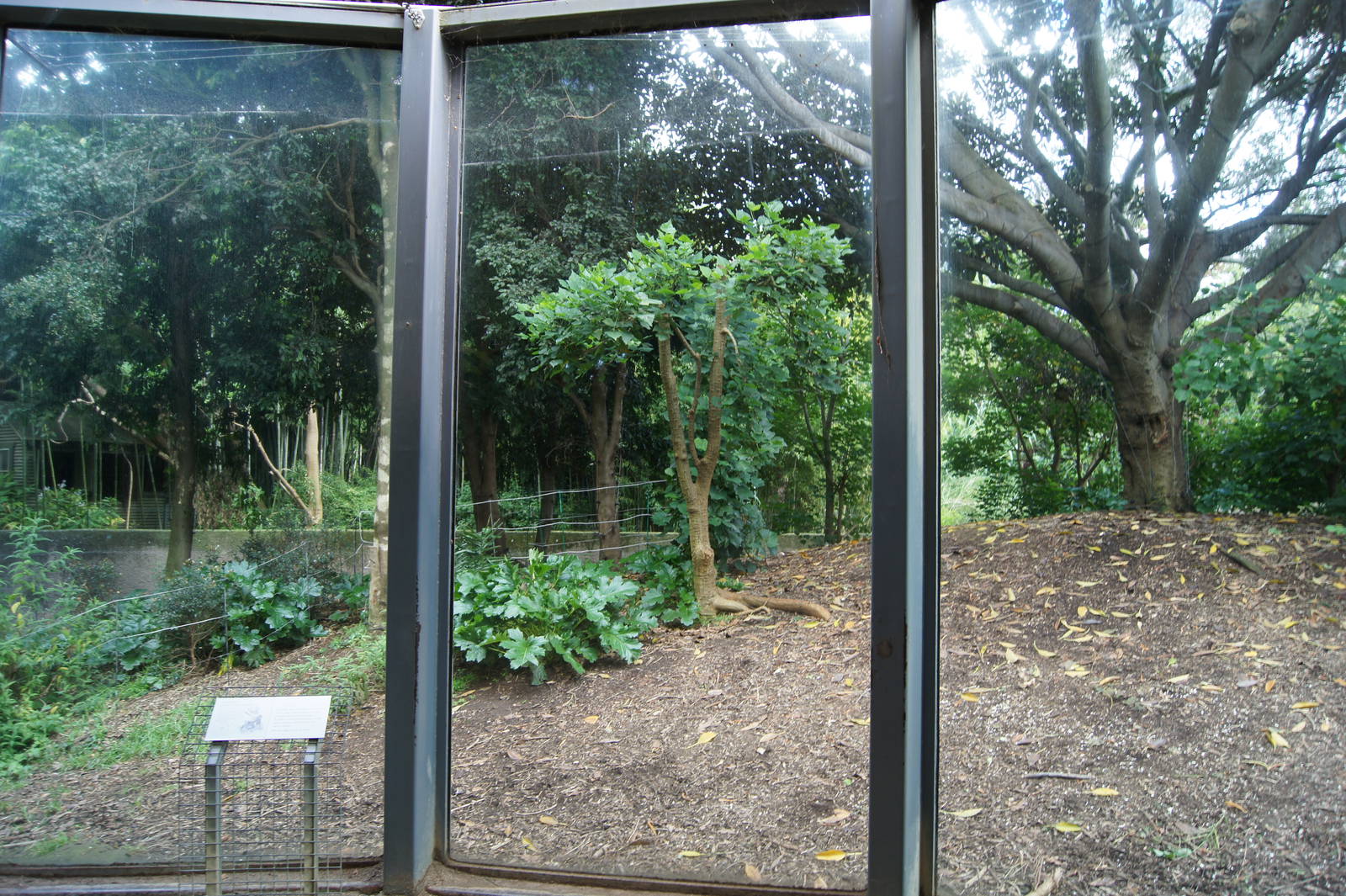
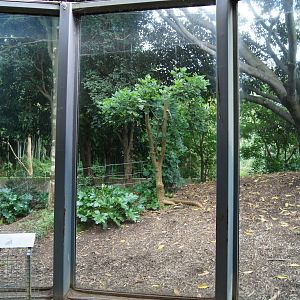
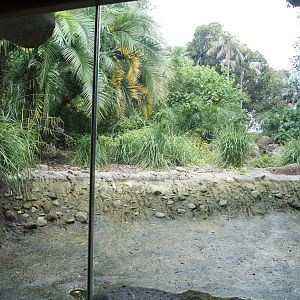
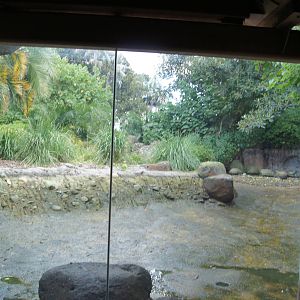
This is the left hand side of the first viewing window. Unfortunately I couldn't get a pic of the right hand side because there were lots of little children swarming it due to a gorilla lying next to the window.
This is the left hand side of the first viewing window. Unfortunately I couldn\'t get a pic of the right hand side because there were lots of little children swarming it due to a gorilla lying next to the window.
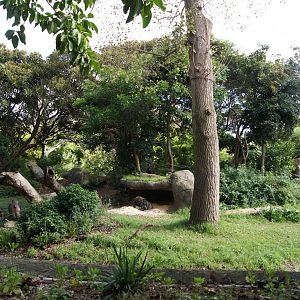
The vast majority of the living trees are hot-wired, especially in this end of the exhibit, but without the protection the trees would be most likely dead and the shady canopy would be lost. There are dead trees and small palms that aren't protected for them to climb to the right of this photo. I always find this issue to be a catch 22. Do you let the gorillas, and other destructive apes, have access to the trees in their exhibits and risk losing the canopy (which isn't just an aesthetic issue) or do you not give the apes access to them and keep the shade?
. There are dead trees and small palms that aren't protected for them to climb to the right of this photo. I always find this issue to be a catch 22. Do you let the gorillas, and other destructive apes, have access to the trees in their exhibits and risk losing the canopy (which isn't just an aesthetic issue) or do you not give the apes access to them and keep the shade?
For Gorillas, I think the shade/canopy aspect is much more important than letting them climb these trees, or get close access to them so they debark the trunk and eventually kill them that way. Being essentially ground dwellers, as long as there are some(dead or artificial ones) they can access to satisfy their occassional desire to climb, then I think that's fine.
With smaller primates, e.g. Monkeys, that actually live in trees rather than on the ground, its rather a different issue. (Same with Orangutans)