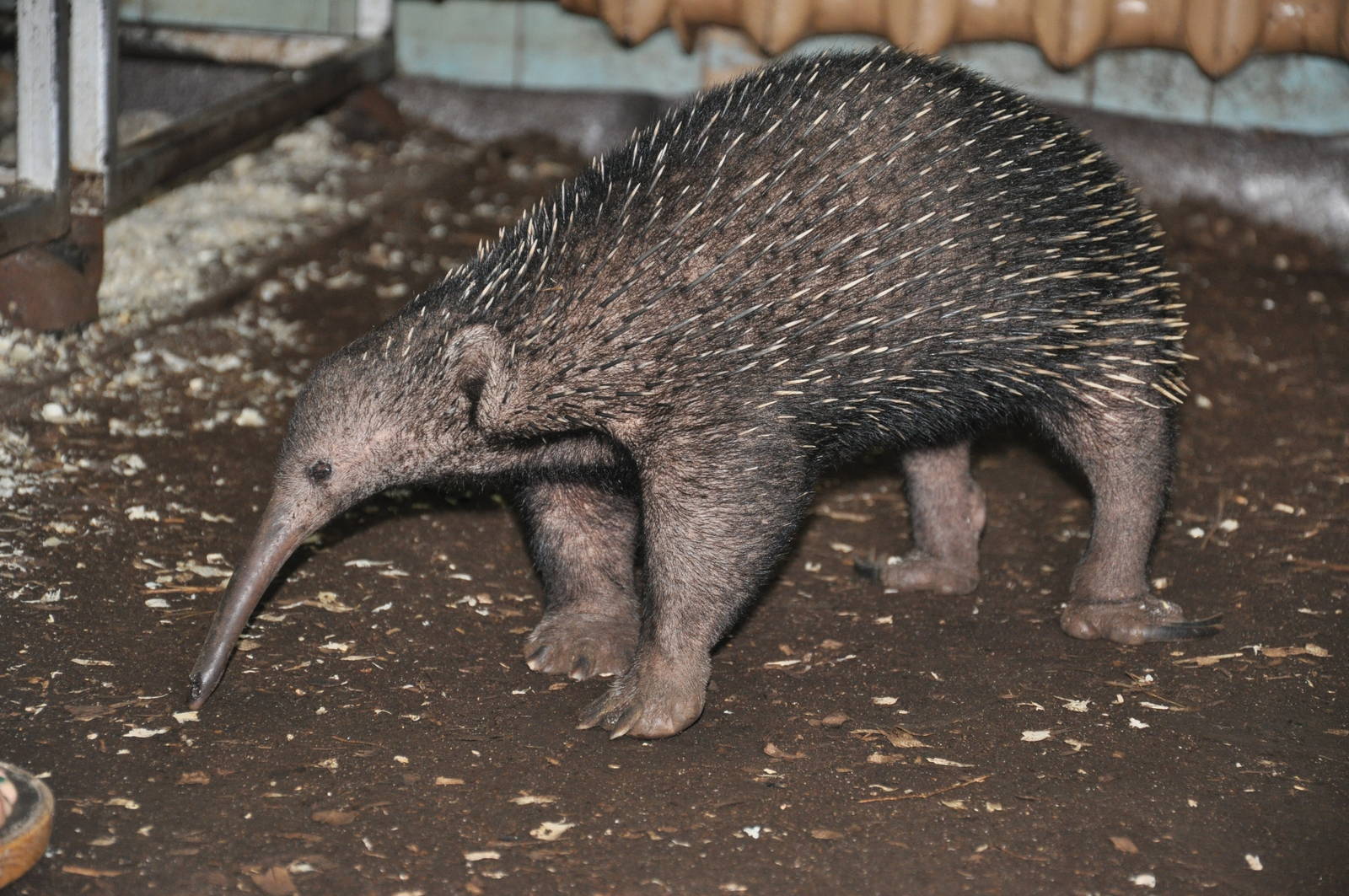
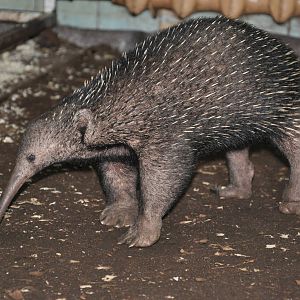
those are Z. bartoni and this photo is a Z. bruijni, so its likely there may be differences in the amount of fur between species (I googled it but decided that photos on the internet can't necessarily be trusted to be correctly labelled); there's also the possibility the amount of fur depends on the altitude of the population from which the particular individuals originate.
Well, although I stand by my original assessment of the Moscow animal looking very bald, Chlidonias is correct when he states they are different species. According to Flannery and Groves (1998) when they revised the genus, Z.bruijni has a highly variable pelage, "... specimens from lower elevation areas ... have very little fur, while those frm the higher peaks ... can be so densely furred as to obscure the spines on the back."
All other species (and subspecies) are known to have thick fur which almost obscures the spines.
Interestingly, this paper had no photos of Z.bruijni, but photos of skins of the others. My copy of "Walker's Mammals of the World" 5th Ed., 1991, (which only recognises the one species) has two overexposed b&w photos of an animal that looks very much like the Moscow animal above. All other photos or illustrations I've seen have been of heavily furred animals like those in the Taronga photos I posted.
Sadly, this animal has now passed away - as far as I am aware, this now leaves only those at Taronga (which are, as noted, a different species) as the final longbeaked echnidna in captivity anywhere in the world.