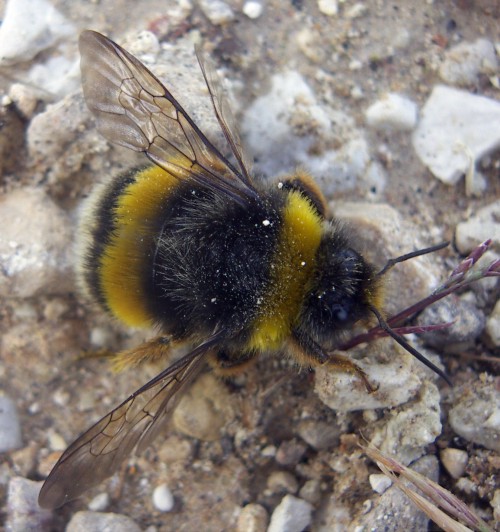
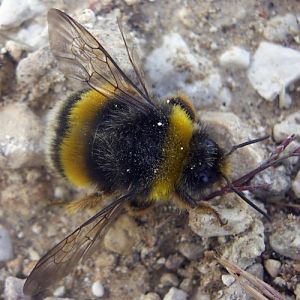
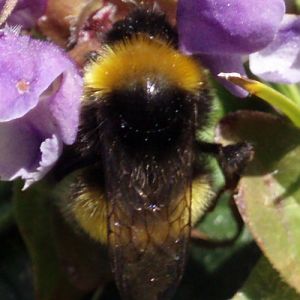
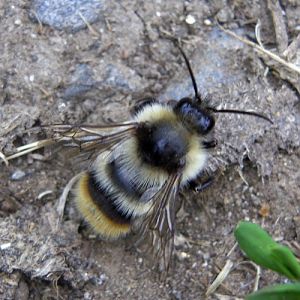
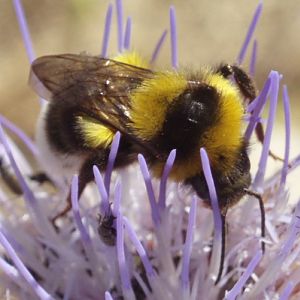
Wrong. It's Bombus terrestris. Appart of being the only species present in the zone where it was photographed, the colours of B. lucorum are a bit paler. Maybe your geographical variant of the species lacks fur on the head, but I never knew none of the many species of Bombus that lacks completely fur on the head.
All bumblebees have fur on the head, until they decide to shave
Male Russian B. terrestris doesn't have yellow fur, while B. lucorum does. Though there's a certain degree of variability throughout the species' range.
No, I not handled them. I know that they're stingless but anyway I fear respectfully them, and the same for male polistine or eumenine wasps. I know a good expert in these hymenopteran groups (he identified most of my bumblebee species) and I saw him handling these insects, but I just take the photo and let them go.
P.S. Not sure if this is yellow fur or just pollen in the front? (some pollen can be seen in the foreleg)
Males have longer antennae, slender abdomens and reduced jaws, their heads look rounded. They don't collect pollen on their feet, pollen baskets are absent.
When caught, they may make instinctive sting movements though.
Also males often show different colour of body/head than queens or workers have. As the example with B. lucorum and terrestris.
In cuckoo bees, males are easier to be distinguished from large, venomous fat girls
When collecting bumblebees, I catch males by hand.
Besides being easier to ID than females (by genitalia shape), males are useful to make pranks on uneducated people, like a bumblebee in your mouth (but if it gets wet, it won't fly instantly. And it tickles!)
Probably it's fur color.
I collected males B. terrestris/lucorum with various amount of yellow on the head, from a small patch like this to completely yellow-fronted ones.
Btw white-tailed bumblebees can became yellow- and red-tailed, as they release their poop after being put to sleep.