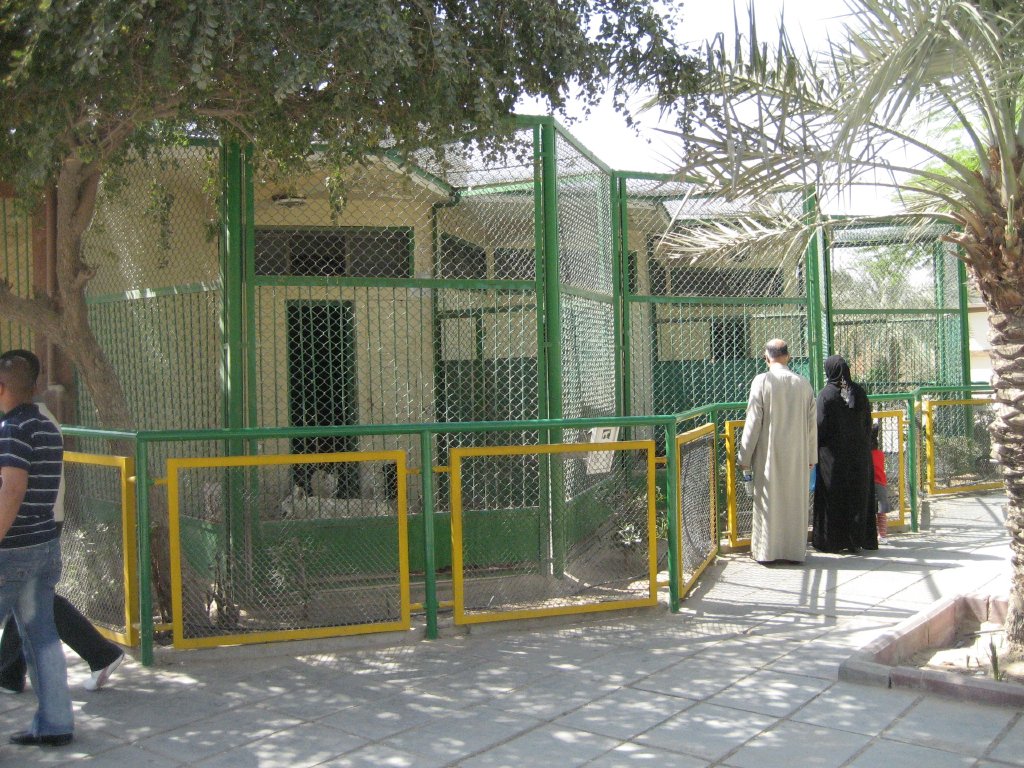
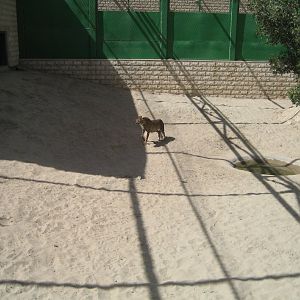
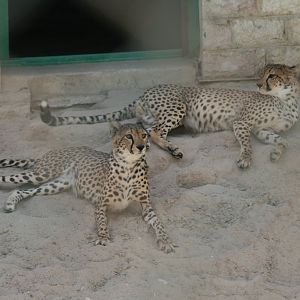
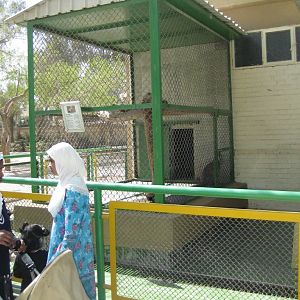
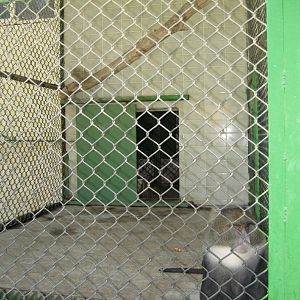
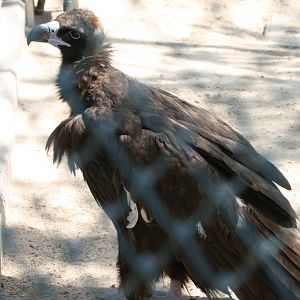
Just curious - how does a dive like this zoo (albeit in an oil rich country which leaves no excuse to have substandard enclosures) get something as uncommon (outside Australia at least) as dingos whilst better zoos in the likes of Europe have virtually none
(No offense to Middle Eastern zoos btw - it just seems strange that a cr*p place like this would get hold of dingos whilst other, better zoos elsewhere seem to have trouble getting any animals that are (native) Australian).
I have no idea how they got dingos. I'm guessing they still trade with other zoos, as the elephant I saw was obviously a young one, and I'm pretty sure they don't have a breeding pair tucked away somewhere. But that still doesn't answer your question.
I'd love to go back there and spend some of those Kuwaiti Oil millions in order to fix the zoo.
a friend of mine recently went to the dubai zoo and came back with a series of photos for me. i was very surprised to see that they had gorillas - and kept them in cages similar to this.
apparently and not surprisingly, dubai is planning on building "the best zoo in the world" - but really, unless its desert themed i won't consider it eligible for that title.
They had dingos, a golden jackal, wolves and striped hyena.
phoenix said:
apparently and not surprisingly, dubai is planning on building "the best zoo in the world" - but really, unless its desert themed i won't consider it eligible for that title.
I don't know about that. They have built the world's largest indoor ski slope, and they have squillions of dollars to spend - they could concievably build an outdoor rainforest with lots of misters to maintain humidity.
And I hope this kickstarts Kuwait into doing something with their crappy little menagerie.
Australian dingos used to be a very common and widespread species in Europe in the past, even in the eastern part of it. I´ve got a guide of Czechoslovakian zoos from 1950es and almost each of them had some dingos on display. They were winter-hard, easy to care, bred like rats and cheep to buy. I think the change came in around late 1980es? when these animals were believed to be of no value (because nobody knew how pure they are) and all zoos stoped breeding them and phased them out of their collections.