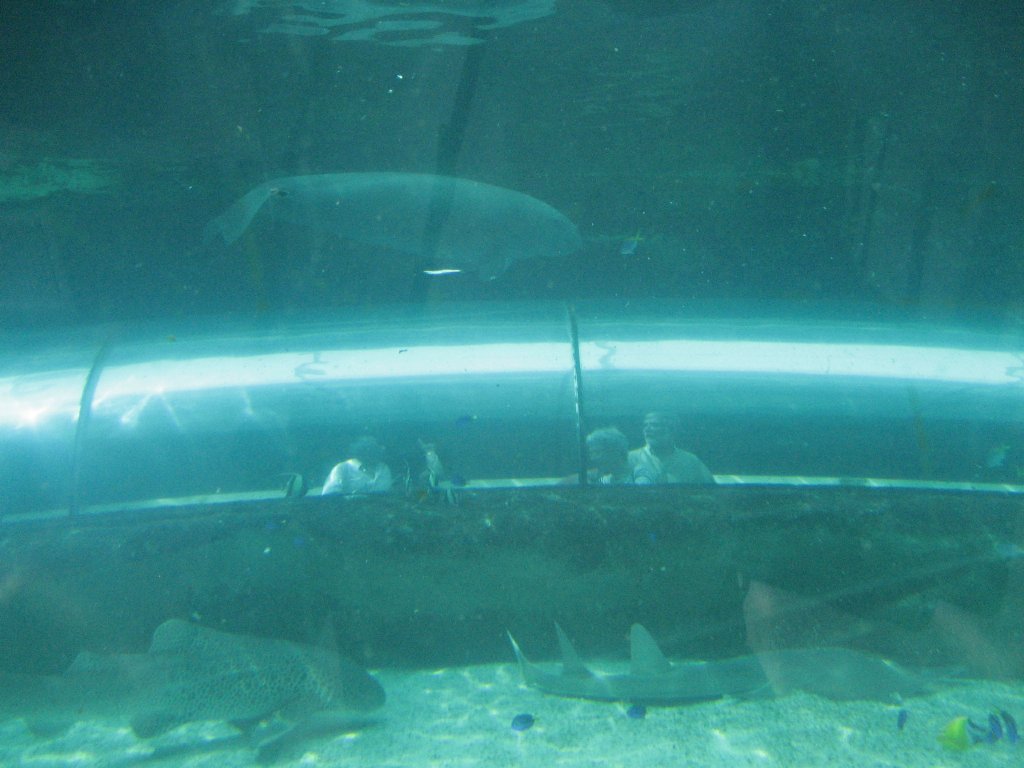
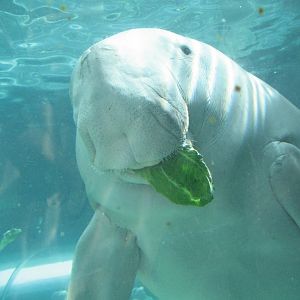
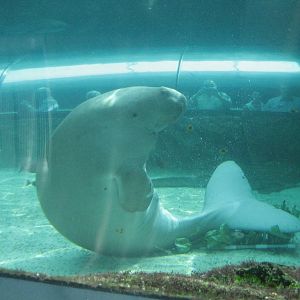
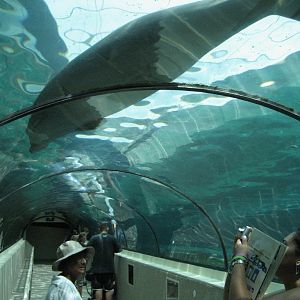
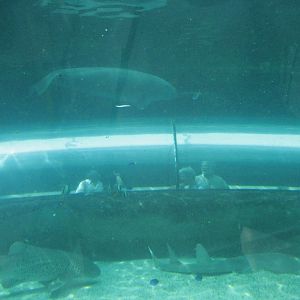
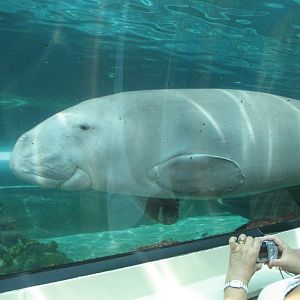
This is one of a nice series of photos on the dugongs at the Sydney Aquarium. Is the exhibit more interesting without the seals? It is probably a lot quieter as dugongs are more than likely completely silent as they cruise around their pool.
Can dugongs reproduce in captivity? In the past I read that they can't. I'm not agree with keep captive dugongs or manatees... their conservation is much better in the wild I think.
@Kakapo: The few dugongs that have been kept so far in captivity haven't reproduced (yet). However, that doesn't consequently mean that this is impossible; let's see what will happen in the future.
West Indian manatees have reproduced several times in captivity, most recently in Nuremberg Tierpark.
When it comes to the "value" of ex-situ conservation in zoos, the same pro's and con's apply for manatees-just as they do for Western Lowland Gorillas or African Bush Elephants... Personally, I think that at least the West Indian manatee is a species where practical ex-situ conservation could come in handy one day.
Thanks for that info, very helpful! I'm very happy for know that manatees are able to breed in captivity. And I imagine that if manatees do it, dugongs can do it also.
@snowleopard: if they were making any noise, I didn't hear it. Certainly not above the racket the other tourists and school kids were making!
@Kakapo & SunWukong: re conservation - I don't know whether these animals will do anything directly for conservation, even if they do breed. But the educational value (and therefore indirect conservation value) of these animals, making people aware of the species, was invaluable. They were very popular. One decided to have a rest on the floor in a corner next to a tunnel, and you couldn't get near it because of all the people! Some people (adults and children) sat down or leaned up against a wall and made themselves comfortable until the dugong took off again.
As you are all aware, people will contribute to conservation projects if they care about the project, and seeing a dugong in the flesh as opposed to in a book or on TV goes a lot further towards getting people to care. Many of the visitors seemed to 'connect' with the dugongs. I think if I had a tin and told people I was collecting, I would have made several hundred dollars in the short time I was there.
@Hix: The described effect, i.e. raising social awareness/concern, is my opinion probably one of the most important and practical aspects zoos can contribute to conservation. Most often, the mere breeding of the species in captivity isn't the ultimate solution some seem to envision it to be.
Anyway, as you wrote in the past tense: the dugongs are no longer there, right? Has been quite a while sincemy last visit to the Sydney Aquarium...
@Sun Wukong: My visit there was two days ago. My response was made in the past tense because I was talking about things I observed the day before.
And I agree with your view that "the mere breeding of the species in captivity isn't the ultimate solution some seem to envision it to be."
Breeding endangered species in captivity is NOT conservation. Only when they go back into the wild, survive and reproduce does it become so. I wish more industry professionals understood that.