Note : there are less hazardous cohabitations ; the largest snake species (Anaconda, Asian Pythons...) went away.
The Penguin pool has been destroyed, the Penguins left the zoo definitively. It is planned to turn this space into outdoor terraria for native reptiles and amphibians.
Hate to interrupt the species list posts, but... I can't help but to wholeheartedly congratulate your efforts; this is a really cool Masterplan, and I really like how plausible it comes across as, very believable indeed. Very well done!
Rosy Feather Star Antedon bifida (0.0.7), Sunset Cup Coral Leptopsammia pruvoti (0.0.45), Small Red Scorpionfish Scorpaena notata (0.0.5), Mediterranean Moray Muraena helena (0.0.2)
Allis Shad Alosa alosa (0.0.16), European Pilchard Sardina pilchardus (0.0.347), Turbot Scophthalmus maximus (0.0.9)
Queen Angelfish Holacanthus ciliaris (0.0.2)
Peacock Hind Cephalopholis argus (0.0.2), Mandarinfish Synchiropus splendidus (0.0.11)
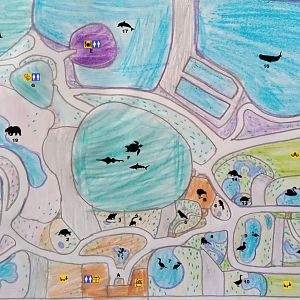
Note : in this version of the Aquarium, the number of fish and tanks has been greatly reduced, with the departure of all the large species (that will be transferred in the former Dolphin complex), only small and middle-sized fish and invertebrates remain.
The most interesting exhibits here are a large tank for Sardines and other pelagic fish, and several aquaterraria for tropical and subtropical mangrove and coastal habitats dwellers.
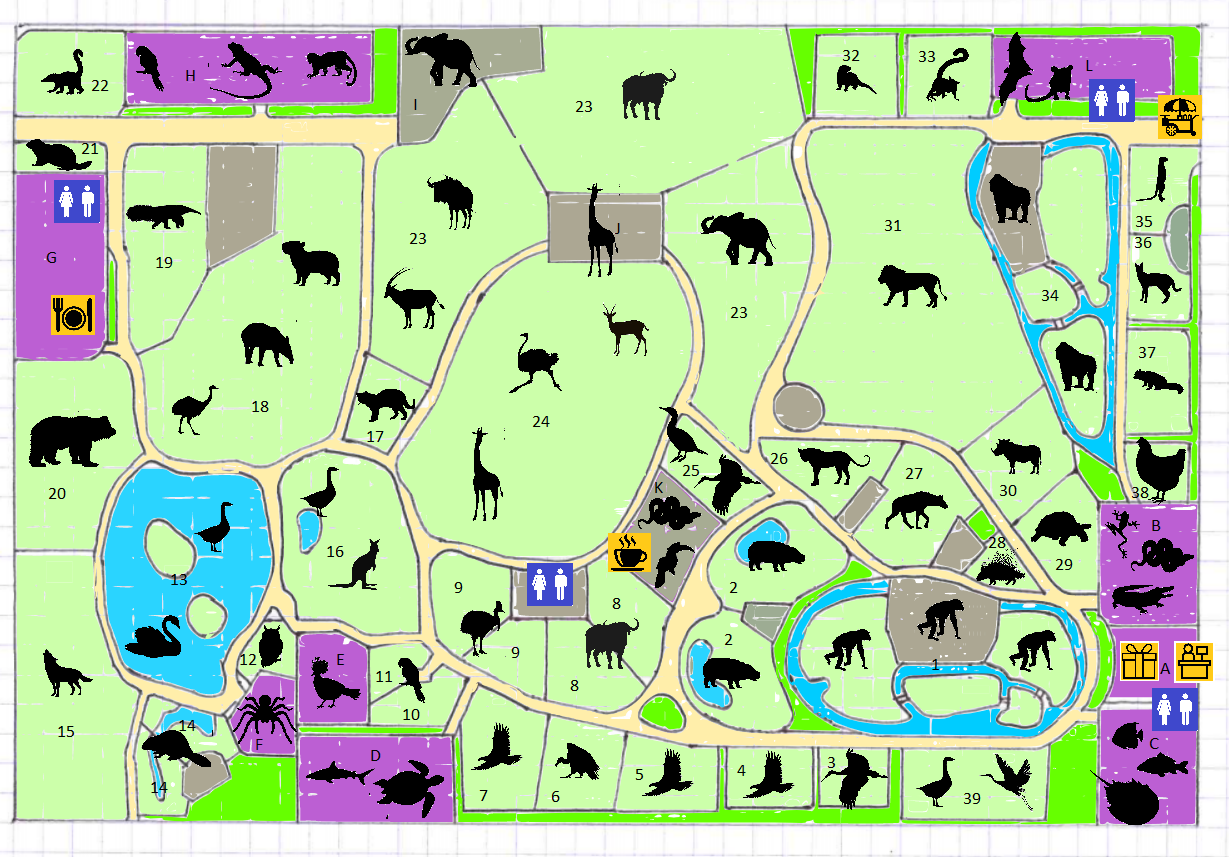
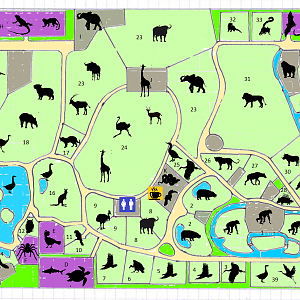
1- Common Chimpanzee Pan troglodytes (5.5) Note : the former Cat and Primate complex has turned into a brand new zone for a breeding group of Chimpanzees, that enjoys 4 islands linked between them with ropes and bridges, and a building with 2 large inner enclosures to house them at night or in inclement days. The building can be visited.
2- Pygmy Hippopotamus Choeropsis liberiensis liberiensis (2.1), Red-crested Pochard Netta rufina (9.10) Note : the empty space between Big Cats enclosures and Fountainside Bistrot is now a complex of 2 enclosures for Pygmy Hippos (1 adult male "DJALON" + 1 adult female "AMINA" and her baby boy, "NIMBA"). They live with a flock of Red-Crested Pochards.
6- King Vulture Sarcoramphus papa (1.2), Crested Caracara Polyborus plancus (0.1)
7- Harpy Eagle Harpia harpyja (0.2)
Note : the numerous aviaries and bear grottoes are now destroyed, in favour of a complex of 5 large and light aviaries for African and South American birds of prey or scavengers.
Some of these birds breed regularly (Short-toed and Martial Eagles, King Vultures) ; for other species we wait partners as we have single birds or same-sex groups.
8- Lowland Anoa Bubalus depressicornis (0.1)
9- Southern Cassowary Casuarius casuarius (0.2)
Note : the former Oryx / Hippo / Zebra enclosures have been maintained but only to keep solitary animals (in a much more vegetalized landscape than before).
This zone is a small Australasian sector, aside with the nearby Kangaroo enclosure and aviaries for Parrots and other birds.
10- Kea Nestor notabilis (1.0)
11- Musk Lorikeet Glossopsitta concinna (8.4)
Note : the collection of the Parrot sector has been greatly reduced, with only 2 Oceanian species. The Lorikeets live in a breeding group, while the Kea remains single until now.
Note : there aren't no longer Dolphins nor Killer Whales in the Zoo for years. Their pools remain but they are now connected (2 large pools) to make a lagoon for Sharks and Turtles that have left the historical Aquarium. Additionnally there are caves, a (true) wreck and the Turtles have a sandy beach for breeding attempts (Loggerheads have already managed to breed here).
Note : all these Australasian bird species live in free-flight in this house, planted with lush tropical vegetation, with a waterfall. A path allows the visitors to penetrate into this house.
Note : the main pond of the zoo is now dedicated to Northern waterfowl. A Scandinavian-style café is planned on the shore of the pond, while the birds will enjoy quiet islands where they could breed without being disturbed.
F) Insect House
European Field Cricket Gryllus campestris (0.0.167)
Mediterranean Black Widow Latrodectus tredecimguttatus (0.0.5)
Note : this small pavilion is partially used to house indigenous European bugs with interesting features. The other part of this place, closed to the visitors, is a laboratory to study the physiology and ecology of the invertebrates.
Note : this part of the Zoo forms a new European section, with few species of birds (Tawny Owl) and mammals (Beaver, Wolf), plus the insects and invertebrates of the building n° F.
An important change is the relocation of the Wolf pack, that can now enjoy a woody space, 10 times larger than their former enclosure.
Note : this new Australian zone is built on the former exhibits of Kangaroos, Hyaenas, Giant Otters and Rheas (+ the nearby former child playground). Now it hosts a small number of Wallaroos that came from a neighbouring zoo that closed in 2016, and a Magpie Goose that have a swampy space with reedbeds and a small pond.
It could host another species of Kangaroo / Wallaby in the future, when the Wallaroos will be gone.
17- Ocelot Leopardus pardalis (1.0)
Note : this new cat species live in the former Red River Hog enclosure and its surroundings. This zone is now an quite large enclosure with lush vegetation, where the Ocelot can hide easily from the sight of the visitors.
18- South American Plain
South American Tapir Tapirus terrestris (0.2), Capybara Hydrochoerus hydrochaeris (4.0), Greater Rhea Rhea americana (1.2), Elegant Crested Tinamou Eudromia elegans (5.6)
Note : the Tapirs, Capybaras and Rheas have now a large plain 5 times larger than their former enclosures together. They live with a recently arrived troop of Tinamous, that have already managed to breed (in this case a "nursery" zone can be separated from the rest of the enclosure).
19- Giant Anteater Myrmecophaga tridactyla (0.2)
Note : the 2 female Anteaters, "PLATA" and "PARANA" have been separated from the other South American animals due to their potentially agressive behaviour.
20- Spectacled Bear Tremarctos ornatus (2.0)
Note : although the formerly present Bear species went in other zoos, the Gardener Park Zoo has welcomed 2 brothers of the sole South American Bear species. These animals, called "QUITO" and "QUECHUA" are young, and it's possible that one of the males will be changed for a female in the near future.
G) The Zoo Cafeteria
The former Convention Centre has been reduced and converted into a cafeteria/restaurant, where it's possible to see the Bears behind the window while dining.
Note : these recently arrived rodents are a kind of symbol of the transformation of the Zoo.
They live in a rocky landscape with burrows behind the Cafeteria, and they already have bred.
22- White-nosed Coati Nasua narica (1.5)
Note : these small carnivores are a recent acquisition of the Zoo. They live in a large enclosure with plenty of trees and ropes. Their actual enclosure have briefly hosted Tortoises and Meerkats in the past but it seemed more interesting to comfort the Neotropical vocation of this corner of the zoo, along with the neighbouring building. Coatis are perfectly fit for this enclosures because of its lush vegetation. They already bred here.
Note : the former Greenhouse has been refurbished to be a genuine animal exhibit, with free-roaming primates, birds and reptiles of many species, that can be seen along a path across the vegetation, near the ponds or on the ground level. The Sakis, Trumpeters, Sunbitterns and Tortoises breed regularly with success in this place.
In this place there's also information of the ecological importance of the Amazonian forest, and about a conservation program in Ecuador supported by the Zoo, that includes monitoring of threatened species (Giant Otters, River Dolphins, Jaguars, Primates...), development of sustainable crops (coffee, cocoa, vegetables, fruit...), scolarization and access to health for the villagers.
Note : in this building there are several inner paddocks for the Elephants, where they're housed during the night or when the weather is inclement. It can be visited in winter months.
23- The Elephant Plain
African Savanna ElephantLoxodonta africana (1.2)
Cape Buffalo Syncerus caffer caffer (1.0)
Blue Wildebeest Connochaetes taurinus (5.4), Gemsbok Oryx gazella (3.2)
Note : it's a complex of 3 plains occupied alternatively by these species, so it provides a kind of behavioral and sensitive enrichment without creating conflicts. There already have been births among the 2 antelope species.
The elephant group is composed of the male TEMBO and the females TSWANA and ETOSHA.
Note : this plain completes the Elephant Plain previously presented. It's focused on North Eastern African species.
J) Giraffe House
Note : in this pavilion (that be visited) there are inner paddocks on both sides of the path, for Antelopes, Ostriches, Giraffe and Buffalo. There's also information about a conservation program led by the Zoo to redeem the fauna of Djibouti.
Common Rock Hyrax Procavia capensis (3.1), Red-billed Hornbill Tockus erythrorhynchus (2.5), Common Hoopoe Upupa epops (1.1), Common Little Bittern Ixobrychus minutus (1.1), Black-tailed Godwit Limosa limosa (1.5), Wattled Lapwing Vanellus senegallus (0.3)
Royal Python Python regius (0.1)
Migratory Locust Locusta migratoria (0.0.9250)
Note : in this pavilion there are a café (the former Fountainside Bistrot), a large aviary for birds and small mammals that reproduces diverse African landscapes with sandy areas, rocks, bushes, hollow trees, a pond and mudflats. When you leave the pavilion you can see an insectarium for crickets and a cave with a terrarium for the python.
On the side of the Africarium a large wetland aviary hosts Goliath Herons and Cormorans, both breed here.
26- Leopard Panthera pardus (0.1)
Note : this new enclosure covers the former Wolf and Barbary Sheep paddocks and a part of the adjacent picnic area. It offers a large volume for a spotted female Leopard that can hide from the visitors even if it's a large animal.
27- Brown Hyaena Parahyaena brunnea (1.2)
Note : the recently arrived Hyaenas replace the formerly displayed (and commoner) Spotted Hyaenas. They live in a sandy enclosure that covers the former Ibex, Red Panda and Anteater paddocks.
28- Crested Porcupine Hystrix cristata (0.2)
Note : this small enclosure replace the former Tapir park. Now 2 sister Porcupines live in this place.
Note : this new enclosure is sandy and grassy, with a small pond. The Tortoises can be seen when the weather is warm enough, otherwise they stay in their winter boxes (out of the public sight). They have bred successfully.
30- Red River Hog Potamochoerus porcus (3.0)
Note : these pigs live now in the former Pony ride paddock, in a newly refubished enclosure with mulch, mud and sand in the soil.
31- Lion Panthera leo (1.3)
Note : the Lions can enjoy a large park with an artificial hill. Their pride includes a male (SIMBA) and three females (SATARA, SWAZI and WAZA [name of a reserve in Cameroon and of the World Association of Zoos and Aquaria !]), all of them are young and haven't already bred.
It's also possible to see the Lions in their boxes in the night pavilion, although they stay rarely there during the day, even in winter.
32- Fosa Cryptoprocta ferox (2.1)
Note : these animals open the Malagasy section of the Zoo. They live in a large aviary with a lot of perches and hides.
33- Black and White Ruffed Lemur Varecia variegata (1.0)
Note : only a single old individual lives in the aviary, after his death it will be replaced by a breeding group of this highly threatened species.
Note : a part of the former Natural History Museum has turned into this mammal house, the other part is closed to the public and hosts the Administration of the Zoo.
34- Western Lowland Gorilla Gorilla gorilla gorilla (0.4)
Note : this exhibit hosts a bachelorette group, from over-represented lineages of Gorillas. They are called BIOKO, BAKA, DOUALA and DIANA. Like the Chimpanzees, they live in a complex of several islands linked by bridges, and they have also inner enclosures in a pavilion for the winter months and the inclement days. The pavilion can be visited.
35- Meerkat Suricata suricatta (6.6)
36- Serval Leptailurus serval (0.2)
Note : this species concludes the African Zone.
37- Nepalese Red Panda Ailurus fulgens (2.2)
Note : in this small Himalayan zone, there's a breeding pair of Red Pandas and their offspring. This enclosure is lush with a lot of bamboo and other vegetation.
38- Himalayan Monal Lophophorus impejanus (1.2)
Note : this exhibit completes the Himalayan zone, with a spacious aviary full of bamboo and rhododendrons. But isn't it possible to have another image, closer to a pheasant or wildfowl, than this ridiculous chicken???