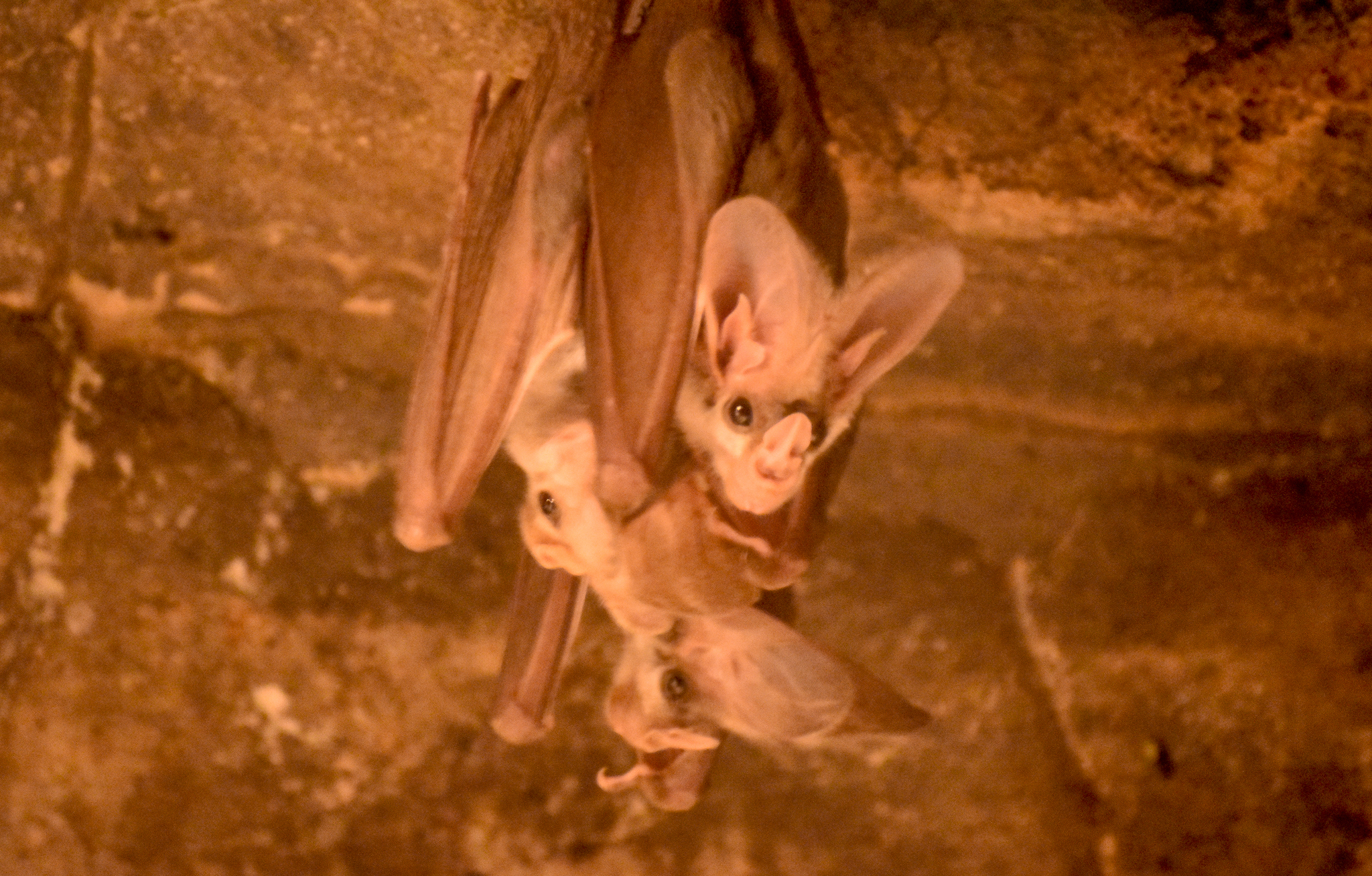
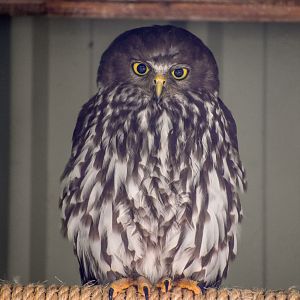
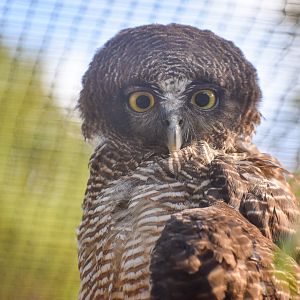
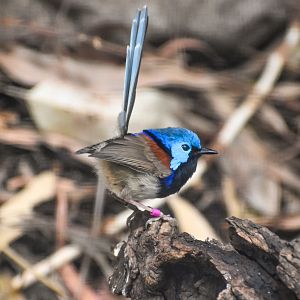
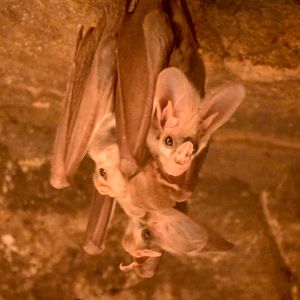
@Coelacanth18 They are pretty awesome to watch and I highly recommend finding out when they are fed especially for an incredible show if you ever visit Australian zoos with them. Fortunately they are part of managed programme so are in good numbers especially around the collections in Sydney with the new Sydney Zoo being the studbook keeper. I find their captive history quite interesting and here is a snippet from their husbandry manual if you haven't read it [https://aszk.org.au/wp-content/uploads/2020/05/Mammals.-Ghost-Bat-2008KJ.pdf]. The manual discusses in great detail the range of management issues they have encountered with this species but slowly there seems to be a relatively stable population:
The current captive population of Ghost Bats primarily descended from founding stock from Pine Creek, N.T. with the exception of the Perth Zoo population having individuals from Port headland W.A. Adelaide Zoo holds individuals from Winnellie. The Winnelli stock may be classed as a distinct taxonomic unit. Taronga stock were DNA tested in 1994 and Winnelli in 1996 so the pedigree of these populations is completely known. Although some pedigree assumptions had to be made when analysing the studbook data it is highly recommended that the studbook keeper be contacted prior to breeding. All wild caught animals are assumed unrelated.
The inbreeding coefficient in the current captive population is fairly low as there was approximately 93.8% of gene diversity found in the wild in the NT group. The WA group in Perth only retained 75% genetic diversity in 1997 Due to calculation through GENES analysis it was found that there has been a loss of 5.7% of genetic diversity since the founding generation. (1997-1996). Since founders have contributed unevenly to the current population there is a risk of loss of genetic diversity. (Gleen.W.-1997)
@WhistlingKite24 That's great information, thanks! I knew a solid handful of zoos in Australia kept them, I'm glad to hear that they likely aren't struggling.
Are these feedings scheduled demonstrations/talks, or do you just mean when they happen to be fed in the enclosure during the day?
@Coelacanth18 When they are just being fed in their enclosures - it's usually when they switch the lights off early in the morning. They fly down to the ground, grab a dead chick or mouse and proceed to eat it whole slowly. It's usually when they make the best display and are the most active and vocal.