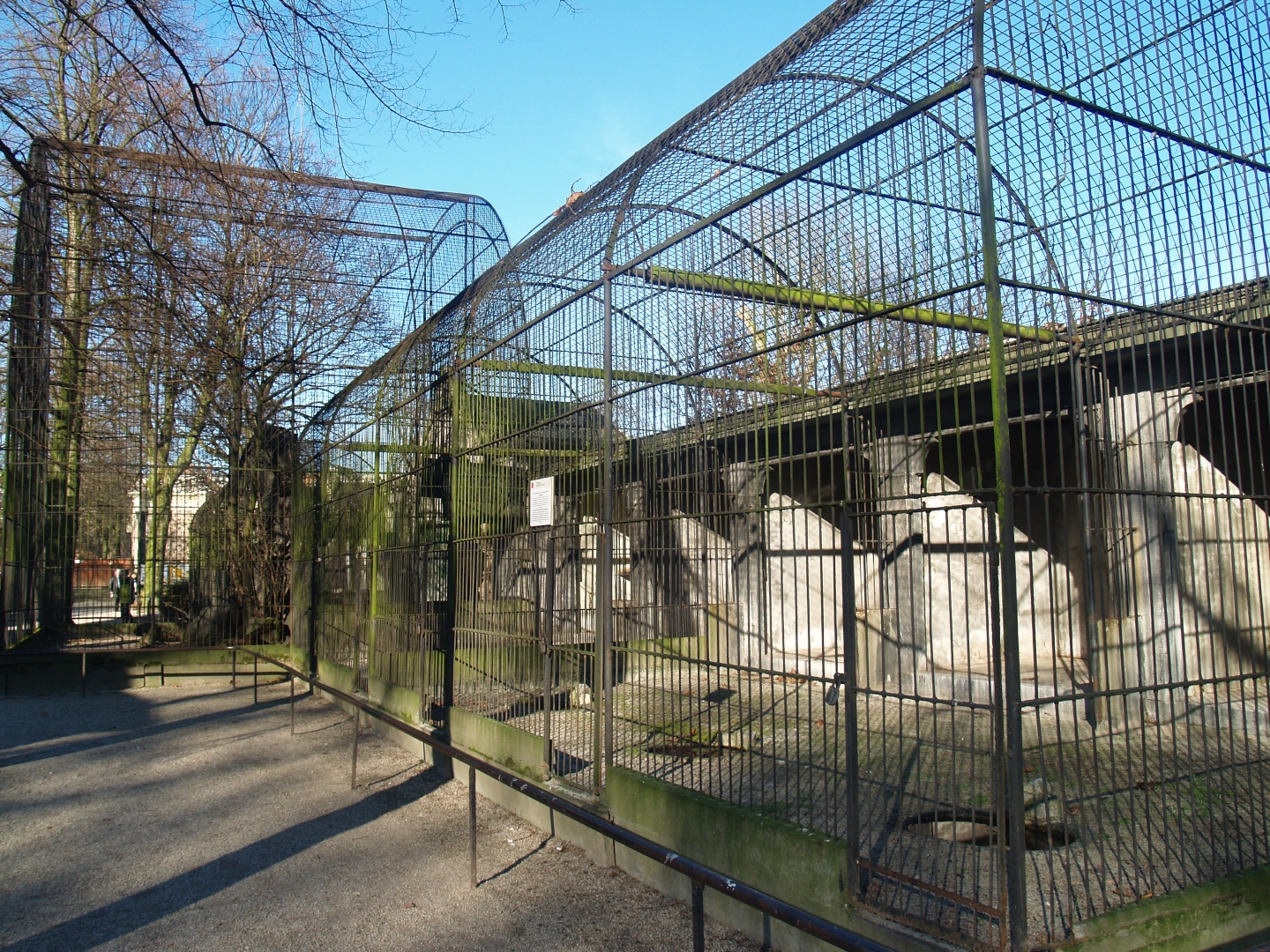
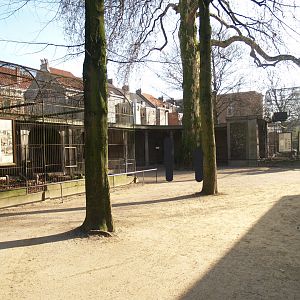
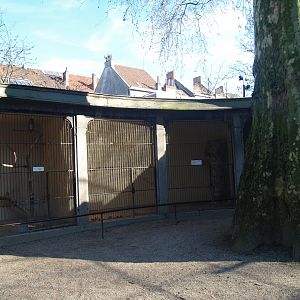
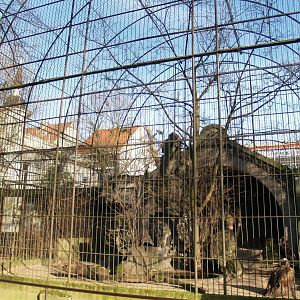
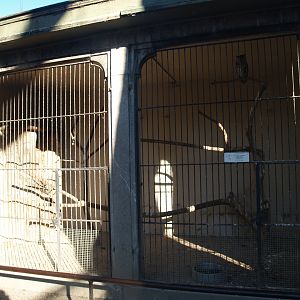
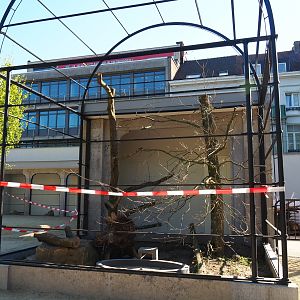
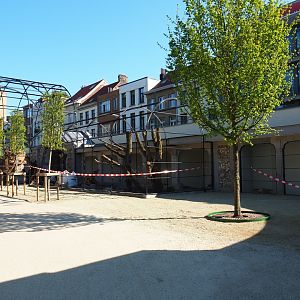
These ancient bird-of-prey aviaries, designed by Charles Servais and built in 1855-56 (and therefore, together with the Egyptian, are the oldest surviving buildings in the zoo which first opened in 1843), were formerly found in between the ape house and what at that time was the children's zoo (playground, restaurant, red panda, meerkat and rabbits exhibits) until 2013 when they were dismantled and demolished. A playground temporarily replaced them at this location until a few years later the construction of the new outdoor chimpanzee and gorilla exhibits that now sit at this site began.
The bluestone building elements and the rock work from the old aviaries were salvaged, cleaned up and stored for restoration and use during the rebuild. The cagework is being restored during the rebuild as it was so rusty it could not be salvaged. Old techniques were used in this process. The reconstruction includes the rebuilding of the left wing of the aviary complex which was demolished in 1969.
The aviaries are currently being reconstructed with new, larger and modern indoor enclosures behind the Moorish Temple (okapi house). - an area that is part of the expansion zone for Zoo Antwerpen that was realized between 2008 and 2010 after 31 houses that were gradually acquired by the zoo over the years were demolished.
Species confirmed for these new aviaries are Mexican military macaws (Ara militaris mexicana), Swift parrots (Lathamus discolor) and Ecuadorian red-lored amazons (Amazona lilacina). So far there has been no confirmation on whether the blue-headed macaws (Primolius couloni and hyacinthine macaws (Anodorhynchus hyacinthinus) will also be included in this project.