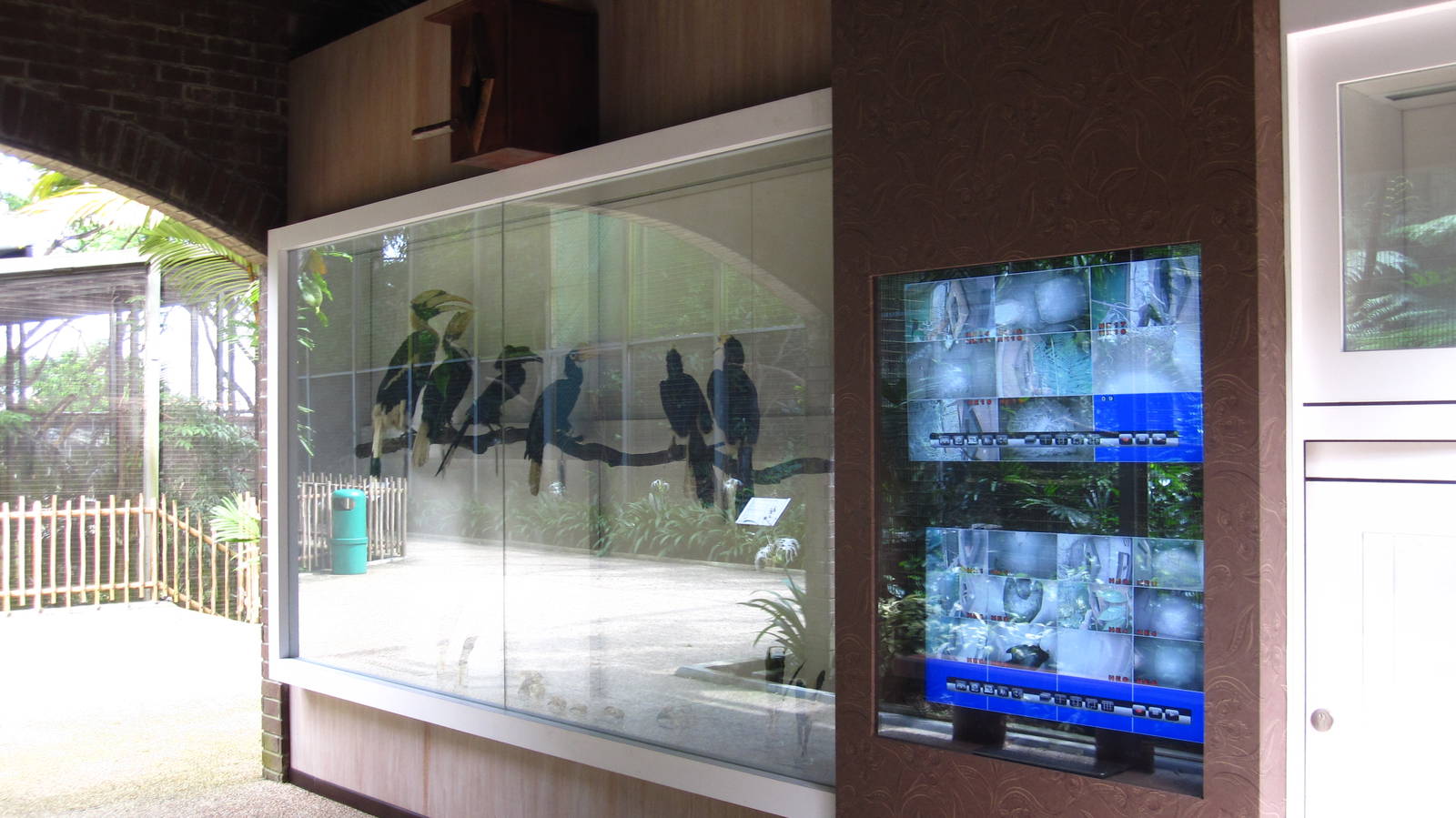
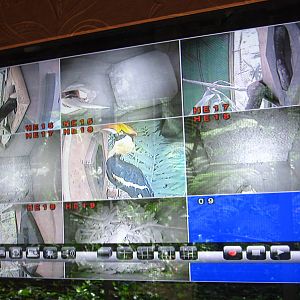
A new educational display with taxidermised hornbills, eggs, feathers and skulls. A video wall shows live feeds from the nest cams in the aviaries. A nest box is also mounted at the top.
A new educational display with taxidermised hornbills, eggs, feathers and skulls. A video wall shows live feeds from the nest cams in the aviaries. A nest box is also mounted at the top.
The Oriental Pied Hornbill is native and doing very well now following a conservation project by the National Parks Board, NGOs, a local university and the Bird Park. The project included reintroduction of captive-bred individuals and setting up of artificial nest boxes. The population is about 100 individuals now (significant, given how tiny Singapore is), and the birds are breeding in semi-urban environments.
Rhinoceros and Helmeted Hornbills were known to be native but have since died out. The team from the Oriental Pied Hornbill project are now working to re-introduce Rhinoceros Hornbills.
The Oriental Pied Hornbill is native and doing very well now following a conservation project by the National Parks Board, NGOs, a local university and the Bird Park. The project included reintroduction of captive-bred individuals and setting up of artificial nest boxes. The population is about 100 individuals now (significant, given how tiny Singapore is).
Rhinoceros and Helmeted Hornbills were known to be native but have since died out. The team from the Oriental Pied Hornbill project are now working to re-introduce Rhinoceros Hornbills.
Thanks for the information. That is great news about the pied hornbill. Reintroducing rhinoceros hornbills to one of the world's great urban areas would also be a very inspiring and important conservation feat.