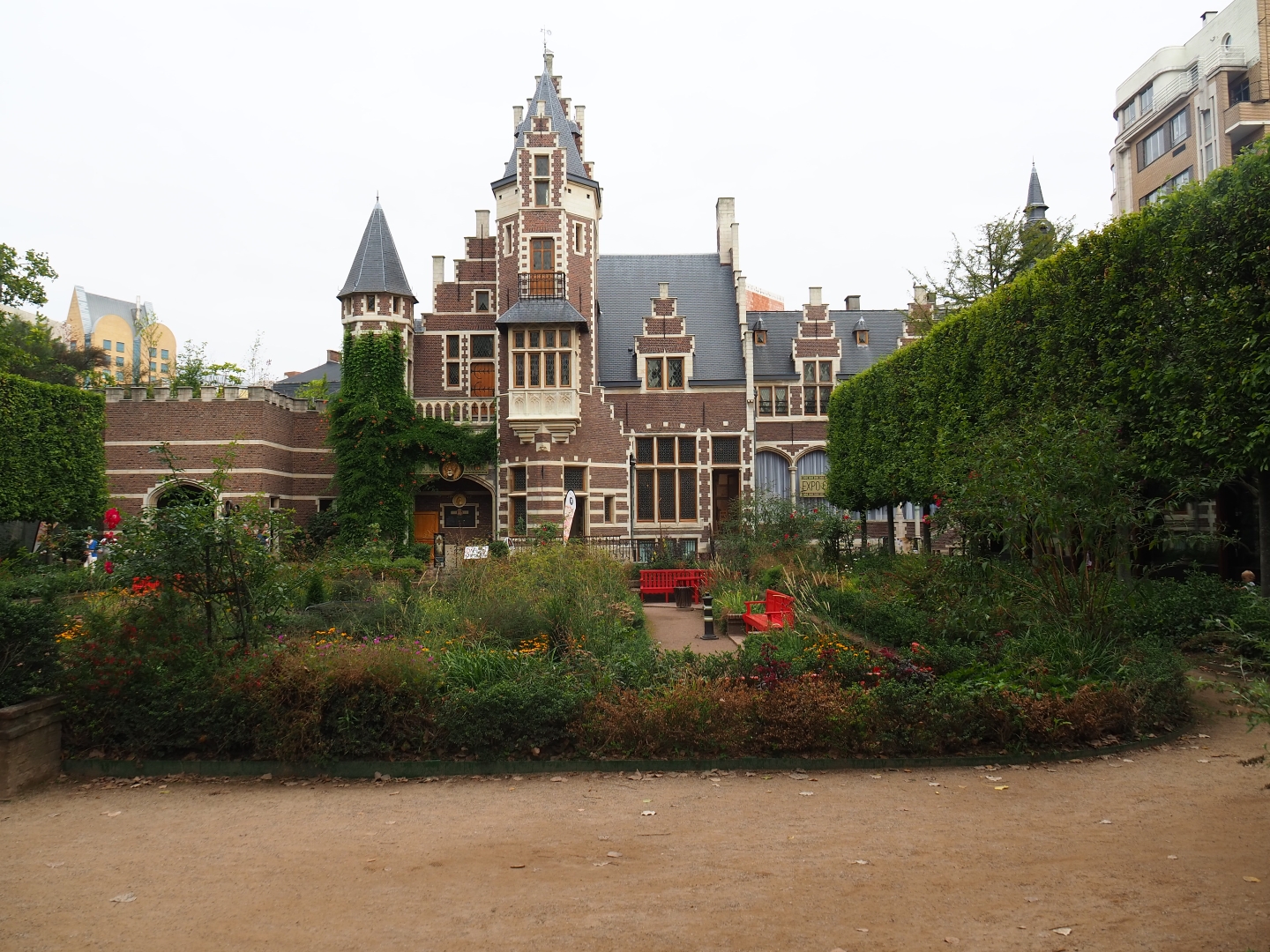
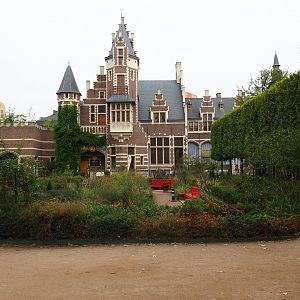
De 'Melkerij' building, literally translated from Dutch 'The Dairy', was designed by Emile Thielens and Emiel Van Averbeke and built in 1898.
A memorial plaque for Emile Thielens, architect of many still defining buildings at Zoo Antwerpen in the late 19th and early 20th century, is present in the entrance gallery of the Melkerij building.
During the first part of its existence it was indeed used to house cows for milk production (a very fancy cow stable if you ask me, but those were different times and of course a place like Antwerp Zoo wouldn't construct anything not fancy if they could in those days). The milk was guaranteed to be free of tuberculosis (an issue in those days) and the location next to the monkey house was (wrongly) believed to help prevent primates from getting tuberculosis. The milk was sold for consumption in the building itself (there was a consumption room) as well as delivered at home in porcelain jugs by horse-drawn carriage. The milk deliveries seized by the time of the Second World War.
Later the building has different uses (including feed animal butchery, feed kitchen and rearing of rodents for feed), until in the late sixties, early seventies it was turned into the education center including classrooms, a planetarium, a small museum (not permanently open to the public) and some offices on the upper floor.
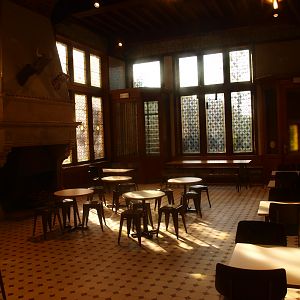
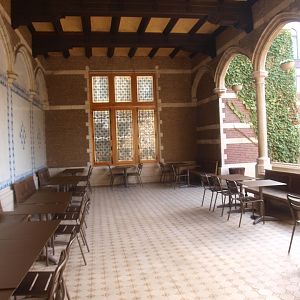
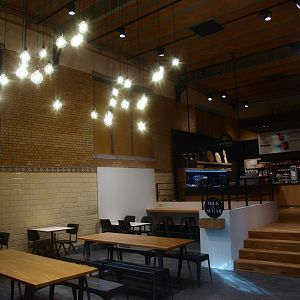
It remained an education center until 2014. During the 2014-2015 renovation and repurposing of the whole area surrounding the Flemish Garden it was repurposed into the restaurant 'La Latteria'. The original interior was maximally preserved and restored during that process. At least in the beginning 'La Latteria' sold some dairy products (ice cream, milkshakes), thus together with the interior and the food consumption aspects referencing the building's original purpose, but I'm not sure they still do as I haven't eaten in here since the big Savanna restaurant opened.
The Flemish Garden was also redone in 2014-2015. It was turned from an English-style garden with strictly delineated flowers bed, grass strips and little hedged into a more wilder, more natural garden including the espaldiers on the right, thus bringing it back into a state more closely resembling the early 20th century original.
In this image the espaldiers completely hide the Marsupial House, originally the Kangaroo building, found to the right in this view and currently home to Queensland koala, Goodfellow's tree kangaroo and dusky pademelon.