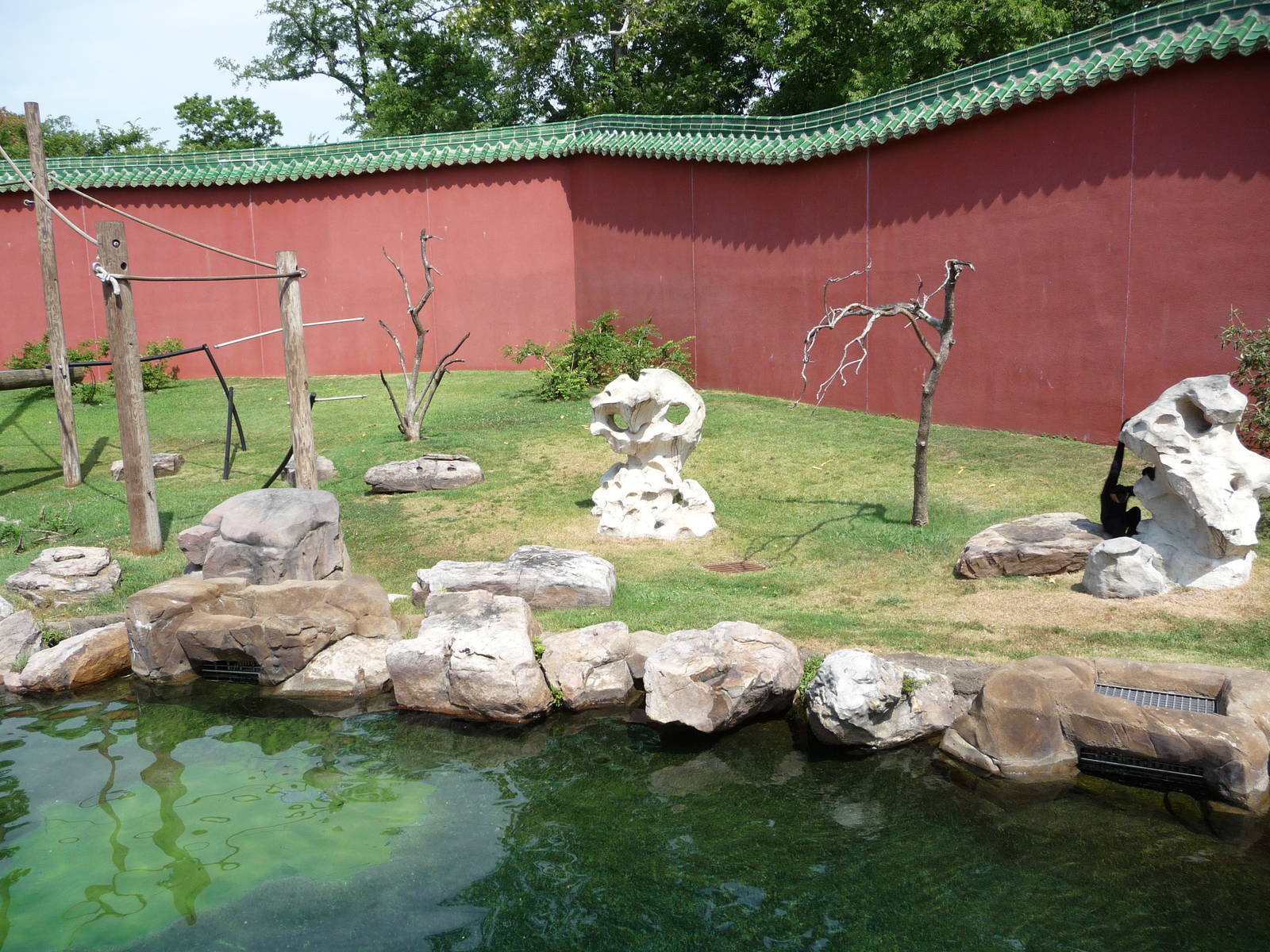
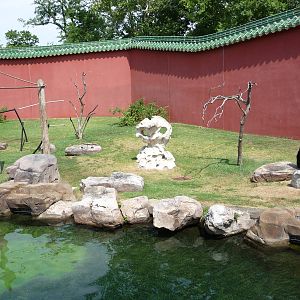
One interesting aspect of the enclosure is that it is also home to Asian small-clawed otters, and they must found it more to their liking than the "grass-mowing" gibbons.
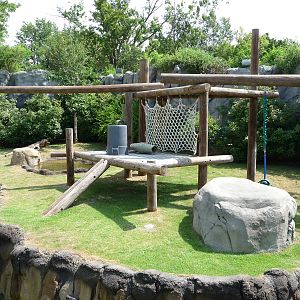
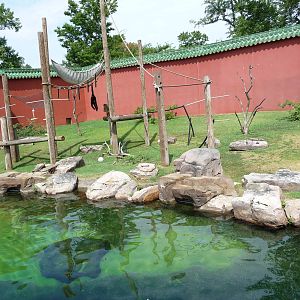
@ phoenix: The mere fact that the inspiration for the exhibit's architecture happens to come from a country within this animal's home range is not enough to justify it as a good exhibit. The main problem is that gibbons are primarily arboreal, and this exhibit has little to emulate the trees in which they live. Another problem is the lack of shade and cover which would naturally be provided by forest trees; here, the gibbons must resort to sheltering under oddly-shaped rocks or balancing under their hammock. It seems a real pity that such a spacious enclosure should be used so wastefully when not much would be needed to make it more appropriate for the gibbons. From an otter's point of view, it's not as bad, but improvements could still be made.
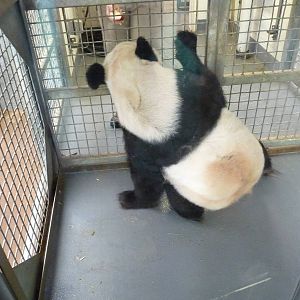
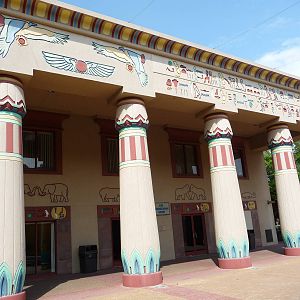
@nayer: ZooChat member phoenix was clearly joking. This CHINA set of habitats at the Memphis Zoo puzzled me, as the architecture throughout the "temples" was magnificent, the signage was top notch, the animals were interesting (giant pandas, gibbons, otters, Pere David's deer, Francois' langurs) but the exhibits were subpar.
I surprised to see a relatively new exhibit so barren. What is the purpose of the little trees? I have seen corn silo exhibits with more climbing structures for gibbons. The real problem with exhibit is not the lack of climbing structures but shelter. I don't see any shade accept for under the rock the gibbon is sitting and that is not enough.