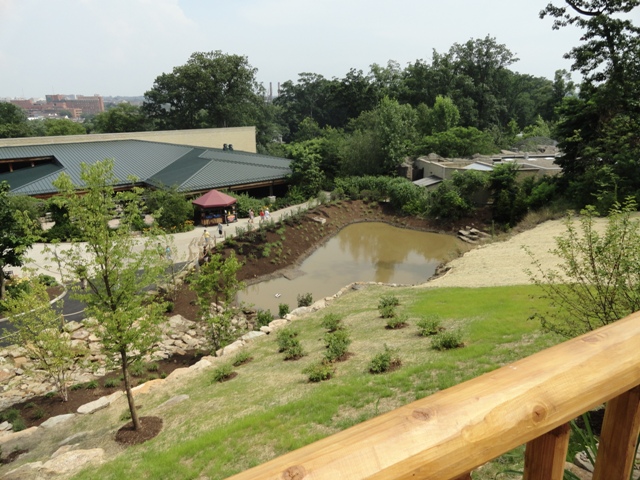
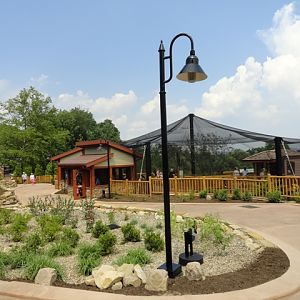
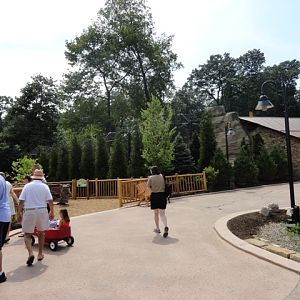
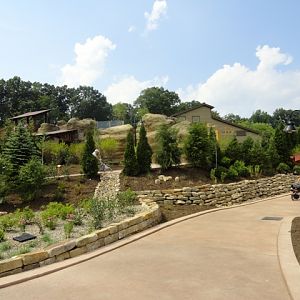
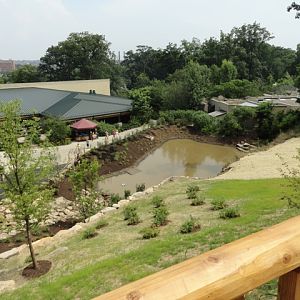
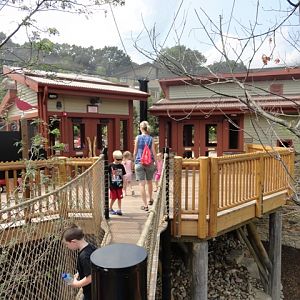
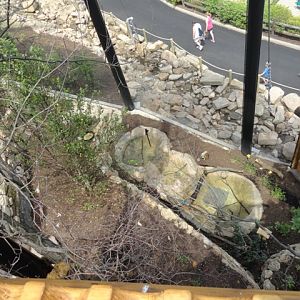
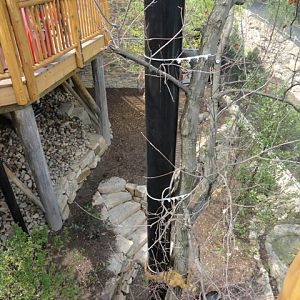
How visible is the retention pond from the Komodo Kingdom perspective? (I find it difficult to ascertain from the photo's angle.) While I understand, architecturally, the culvert is undoubted designed to handle the flow of water that will travel down the hill/walkway, I wonder if it could be converted into a smaller, more-permanent home for a pair of fill-in-the-blank waterfowl or native species of turtles?
How visible is the retention pond from the Komodo Kingdom perspective? (I find it difficult to ascertain from the photo's angle.) While I understand, architecturally, the culvert is undoubted designed to handle the flow of water that will travel down the hill/walkway, I wonder if it could be converted into a smaller, more-permanent home for a pair of fill-in-the-blank waterfowl or native species of turtles?
There is only certain places where the pond is visible down beside it. It was built the way it was for LEED certification. The zoo does not plan to place any zoo animals there. They do expect mallards, etc to probably take up residence. Dragonflies have already moved in. They seem to enjoy it. I expect they may have to add at least something to prevent a mosquito-breeding site.
Detention ponds, to do their job, must be allowed to rise and fall as conditions require. Even to go dry. And in times of heavy rain, the overflow is released into the sewer system or into other secondary detention ponds. Not the best conditions with which to manage a zoo collection