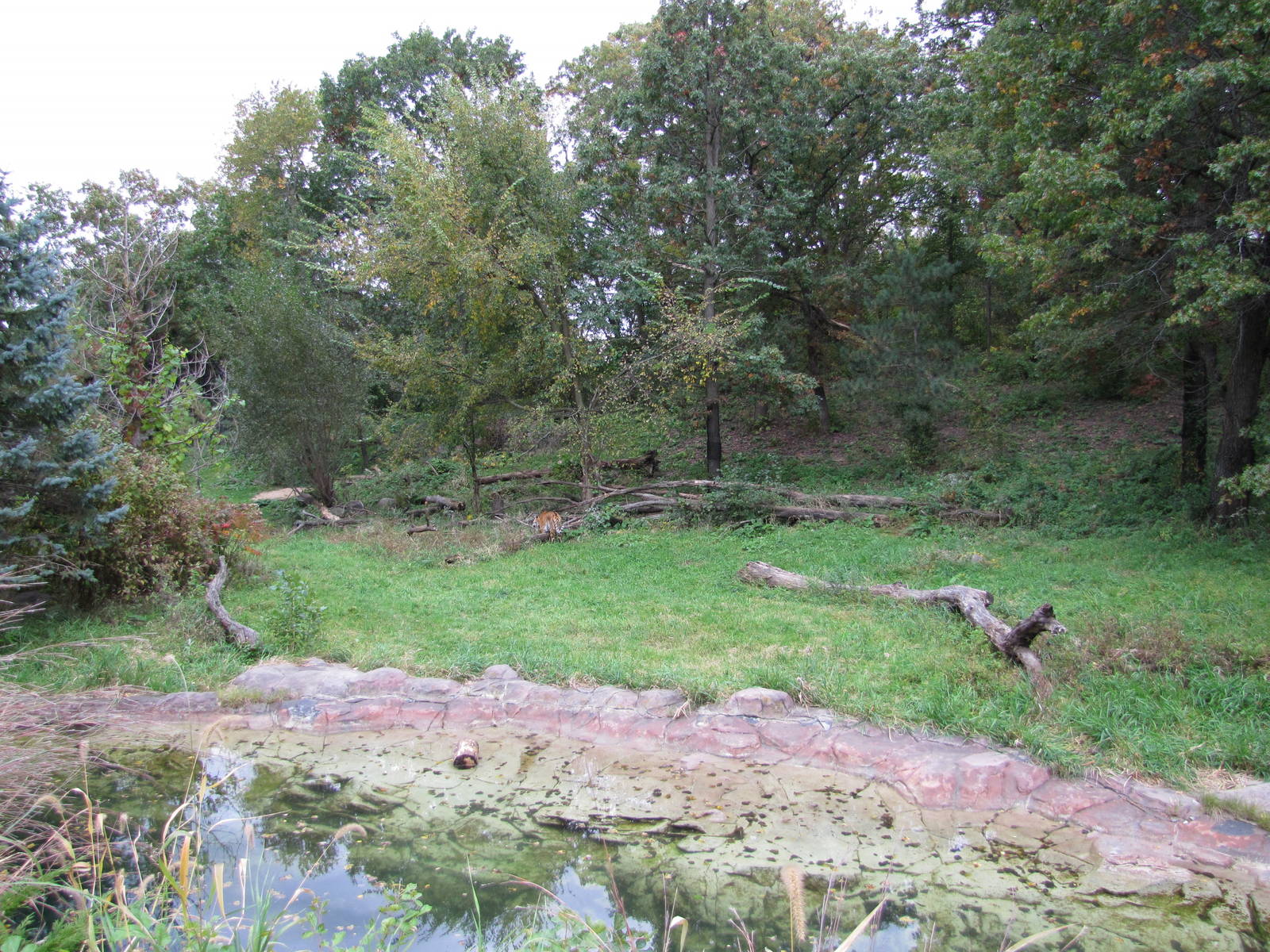
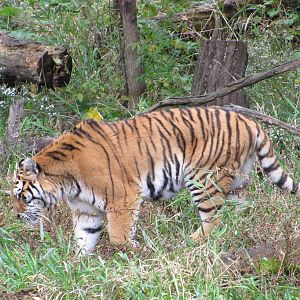
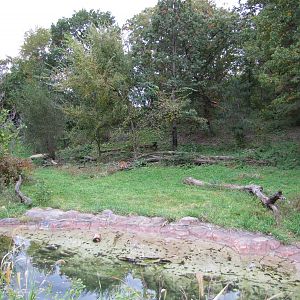
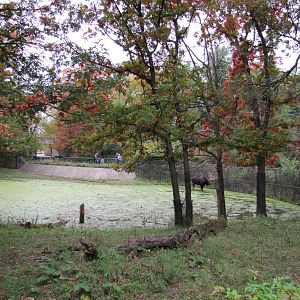
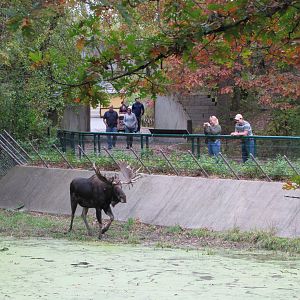
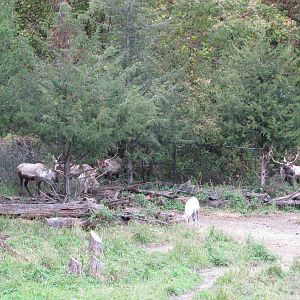
Part of massive Amur Tiger exhibit. I think the zoo has two and this would be the newer one, I think the other one, shown on an earlier photo, dates since the zoo opened in 1978.
Part of massive Amur Tiger exhibit. I think the zoo has two and this would be the newer one, I think the other one, shown on an earlier photo, dates since the zoo opened in 1978.
Part of massive Amur Tiger exhibit. I think the zoo has two and this would be the newer one, I think the other one, shown on an earlier photo, dates since the zoo opened in 1978.
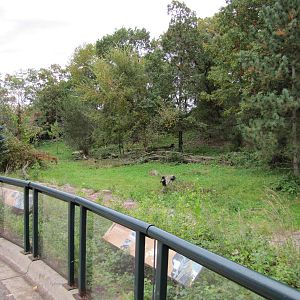
When the zoo opened in 1978, this area and the other Amur tiger exhibit were a single, 4+ acre exhibit! Many visitor complaints of never being able to see the animals resulted in changes. In the early 1980s, the two areas were separated, and the boardwalk viewing area was added. In the early 2000's a new glass viewing area was added to this space to improve viewing opportunities. In combination, these two habitats rival any tiger exhibits anywhere for their combination of space, naturalism and good viewing opportunities.
When the zoo opened in 1978, this area and the other Amur tiger exhibit were a single, 4+ acre exhibit! Many visitor complaints of never being able to see the animals resulted in changes. In the early 1980s, the two areas were separated, and the boardwalk viewing area was added. In the early 2000's a new glass viewing area was added to this space to improve viewing opportunities. In combination, these two habitats rival any tiger exhibits anywhere for their combination of space, naturalism and good viewing opportunities.
I couldn't agree more with the last sentence. In light of the size of most of their exhibits, their animals are remarkably easy to view. I had some of the most enjoyable views I've ever had of tigers, despite (or maybe rather because of) their size and naturalism, and also of the Amur Leopards, even if they are in nowhere near as large enclosures.
I might add that I wish the same person who designed the Minnesota Zoo had been involved with designing the Snow Leopard exhibits at the Bronx Zoo and even more so Central Park Zoo. I felt the chance of spotting one, much less photograph, was about the same as that of winning the lottery! Outstanding viewing and naturalism can go together as Minnesota proves big time.
The Amur tiger exhibits are two separate enclosures, but it is often difficult to tell where one ends and the other begins. America's largest tiger complex is easily the best of its kind, with perhaps Tiger Mountain at the Bronx Zoo coming in second place. Russia's Grizzly Coast at the Minnesota Zoo fits in nicely with the massive tiger habitats, and in fact most of the enclosures on the Northern Trail loop are several acres in size. For a zoo that specializes in cold weather species I'd say that it was one of the best dozen establishments in North America.
The Amur tiger exhibits are two separate enclosures, but it is often difficult to tell where one ends and the other begins. America's largest tiger complex is easily the best of its kind, with perhaps Tiger Mountain at the Bronx Zoo coming in second place. Russia's Grizzly Coast at the Minnesota Zoo fits in nicely with the massive tiger habitats, and in fact most of the enclosures on the Northern Trail loop are several acres in size. For a zoo that specializes in cold weather species I'd say that it was one of the best dozen establishments in North America.
@Baldur: you are one of the main reasons for my return, as you and I have corresponded more than ever since I left ZooChat! Plus your excellent photos and the fact that I kept in contact with many others inspired me to return to this terrific community of zoo geeks.
I might add that I wish the same person who designed the Minnesota Zoo had been involved with designing the Snow Leopard exhibits at the Bronx Zoo and even more so Central Park Zoo. I felt the chance of spotting one, much less photograph, was about the same as that of winning the lottery! Outstanding viewing and naturalism can go together as Minnesota proves big time.
In a way the same person has.
Lee Ehmke, the Minnesota Zoo director - responsible for the latest improvements to this exhibit - was a senior member of the design team at the Bronx Zoo when the Himalayan Highlands was designed. And the Central Park Zoo exhibit is really an updated version of the Bronx exhibit, after all