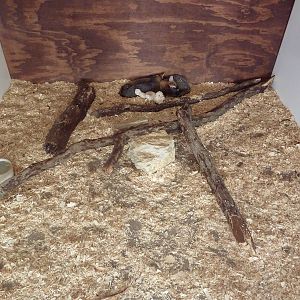
There was actually 2 youngsters in the exhibit but they are beneath the wooden edge and you cannot see them in this photo. The zoo has an off-site breeding facility with lots of hoofstock and a large number of mountain coatis, which are not normally found in American zoos. The exhibit is most definitely not very naturalistic.
they are not mountain coatis. Despite the sign saying "Nasuella olivacea" they are in fact Nasua nasua. Supposedly the ones called "mountain coatis" in the US are the Andean subspecies of Nasua nasua but they don't appear to be even that. There are a few other threads on Zoochat about it (see this one specifically, for example, Andean Ring-tailed Coati and this one Exhibit for Coatimundi).
They came originally into US zoos through the pet trade (there are also purported leaf muntjac (Muntiacus putaoensis) - actually young Reeves' muntjacs - in the US pet trade; anything to make something more attractive and more valuable to buyers!).
they are not mountain coatis. Despite the sign saying "Nasuella olivacea" they are in fact Nasua nasua. Supposedly the ones called "mountain coatis" in the US are the Andean subspecies of Nasua nasua but they don't appear to be even that. There are a few other threads on Zoochat about it (see this one specifically, for example: Andean Ring-tailed Coati).
They came originally into US zoos through the pet trade (there are also "leaf muntjac" - actually young Reeves' muntjacs - in the US pet trade; anything to make something more attractive and more valuable to buyers!).
The sign is lying? Shocking for this reputable zoo! I'm not sure what kind of coati they are but one thing for sure is that the specimens at Timbavati (in 2 separate areas) have very light, yellowish coats that set them apart from the usual darker morph that I see at seemingly every other American zoo.