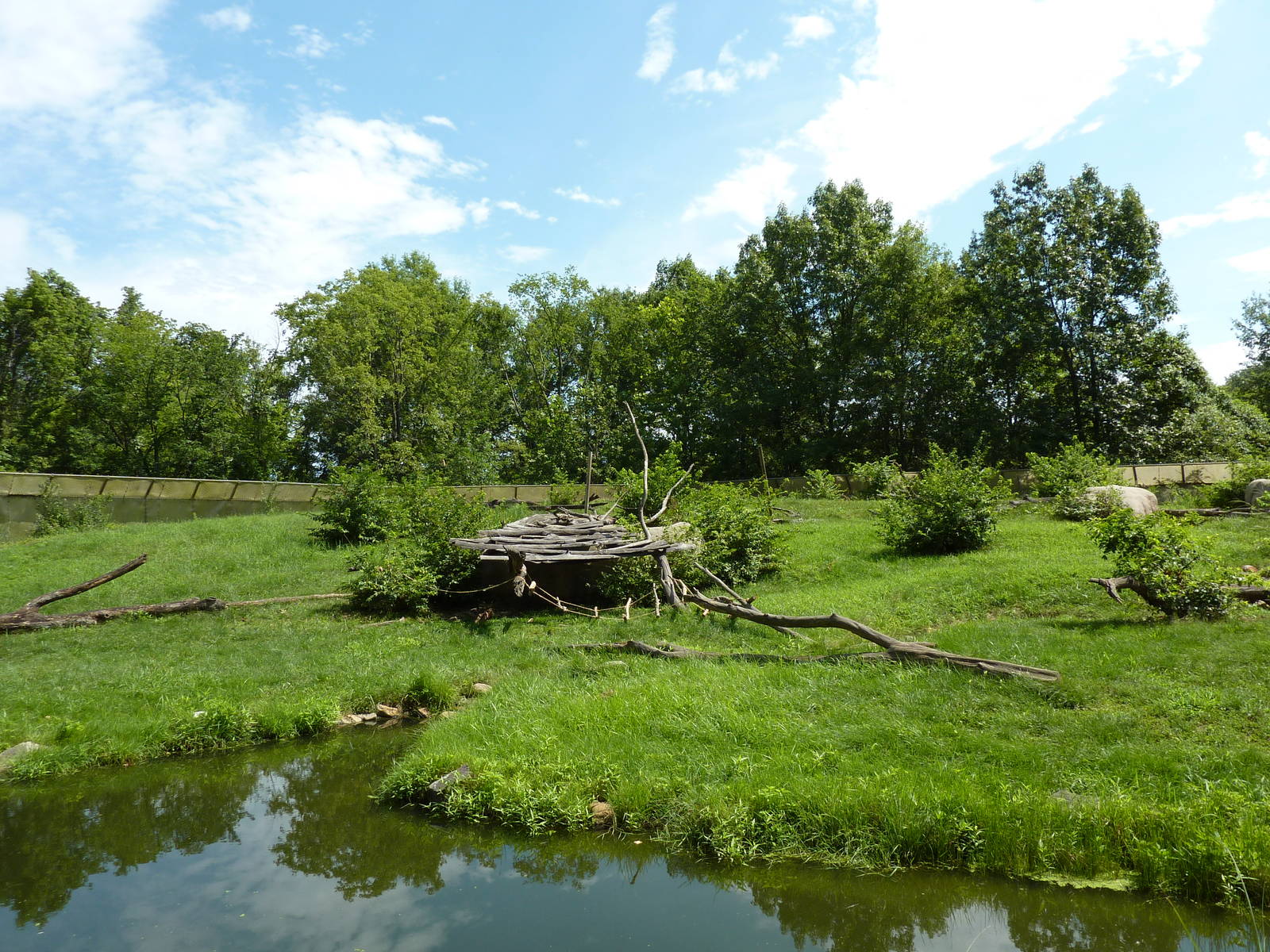
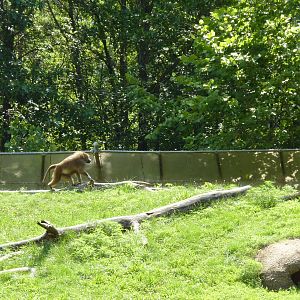
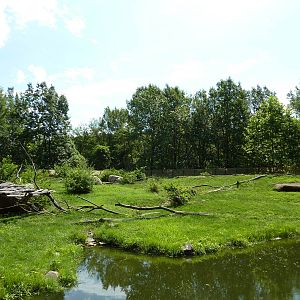
Africa – Where to begin? This area is an eye-popping 100 acres, and it is the #1 rated African area of any North American zoo. I’m actually quite intrigued to see if there is a zoo in the world (naturally excluding safari parks) with such an extensive list of species, on around 100 acres of land. The chimpanzee exhibit is a contender for the greatest zoo exhibit I’ve seen in my life and it is 3 acres in size and full of a massive forest that contains zero hotwire. I was told that the gorilla exhibit, including the indoor area, is 1.6 acres in size, and the elephant paddock must be at least 2 acres. However, viewing huge enclosures means a lot of walking for visitors, the one major drawback to the area.
The list of species is astonishing and rather comprehensive of most major African animals:
- Elephant, black rhino, Nile hippo
- Lion, leopard, cheetah, serval, black-footed cat
- African wild dog, black-backed jackal, bat-eared fox
- Scimitar-horned oryx, impala, giraffe, zebra, lesser kudu, blue duiker, red- flanked duiker, yellow-backed duiker, dik-dik, bongo
- Warthog, red river hog
- Gorilla, chimpanzee, red-capped mangabey, black mangabey, guinea baboon, red ruffed lemur
- Meerkat, rock hyrax
- Leopard tortoise, slender-snouted crocodile, black-throated monitor, Aldabra tortoise, African spurred tortoise
- African crowned crane, southern ground hornbill, saddle-billed stork, masked lovebird, silvery-cheeked hornbill, ostrich, bateleur eagle, lappet-faced vulture, kori bustard, secretary bird, assorted finches and other smaller birds.
Africa – Where to begin? This area is an eye-popping 100 acres, and it is the #1 rated African area of any North American zoo. I’m actually quite intrigued to see if there is a zoo in the world (naturally excluding safari parks) with such an extensive list of species, on around 100 acres of land. The chimpanzee exhibit is a contender for the greatest zoo exhibit I’ve seen in my life and it is 3 acres in size and full of a massive forest that contains zero hotwire. I was told that the gorilla exhibit, including the indoor area, is 1.6 acres in size, and the elephant paddock must be at least 2 acres. However, viewing huge enclosures means a lot of walking for visitors, the one major drawback to the area.
The list of species is astonishing and rather comprehensive of most major African animals:
- Elephant, black rhino, Nile hippo
- Lion, leopard, cheetah, serval, black-footed cat
- African wild dog, black-backed jackal, bat-eared fox
- Scimitar-horned oryx, impala, giraffe, zebra, lesser kudu, blue duiker, red- flanked duiker, yellow-backed duiker, dik-dik, bongo
- Warthog, red river hog
- Gorilla, chimpanzee, red-capped mangabey, black mangabey, guinea baboon, red ruffed lemur
- Meerkat, rock hyrax
- Leopard tortoise, slender-snouted crocodile, black-throated monitor, Aldabra tortoise, African spurred tortoise
- African crowned crane, southern ground hornbill, saddle-billed stork, masked lovebird, silvery-cheeked hornbill, ostrich, bateleur eagle, lappet-faced vulture, kori bustard, secretary bird, assorted finches and other smaller birds.
While the diversity of species is impressive and the exhibit sizes are generous, KC's Africa did not prove to be the visitor magnet that was anticipated when it opened in the early 1990s. The exhibit complexes' distant location in the zoo, vast spaces and long perimeter pathway, combined with the blast furnace climate of Kansas City's summer, made this an arduous and unpleasant experience for the young, stroller-laden families that make up the zoo's core audience. Attendance dropped from 700,000 to just over 400,000, an almost unheard-of decline. From an exhibit design perspective, with the exception of the brilliant chimp habitat, none of the areas are particularly dramatic or beautiful; barriers are generally quite apparent and the themeing is pretty basic. The new chairlift gets people to the other side of the loop more quickly, but adds visual clutter to the big open savanna. There is a lot to like about the complex and the ambitions behind it, but some important lessons can be learned about what it is that makes a zoo "work" by observing what didn't succeed here.
@reduakari: Your response was very well worded, and I already knew that Kansas City really struggled after their superb 100-acre African zone opened in the 1990's. I agree with "America's Best Zoos" in that Kansas City probably does have the #1 African zone of any zoo in America, with San Diego Zoo Safari Park and Dallas not too far behind. The chimpanzee habitat is astonishing, and there are other gems such as the gorilla exhibit, large hoofstock paddocks and many other exhibits are of a high quality. The lion, oryx and baboon habitats are some of the largest that I've ever seen, but the sheer size of the African zone has proven to be the downfall of the zoo. I can speak from personal experience as walking around with my wife in the summer of 2010 we were pushing a stroller and sweating profusely in the baking Kansas heat.
The last few areas that have been developed (Tropics building, polar bear, river otter) are all right near the entrance, and I believe that the plan is for the penguin enclosure to also be in that part of the zoo. Even with the future tiger/orangutan overhaul that zone is not very far from the entrance and when visting the zoo the African section almost feels as if it is a completely different entity. That part of the United States already has some amazing zoos (Omaha, Sedgwick County, Saint Louis) and as good as Kansas City is it is overshadowed by those truly great zoos.