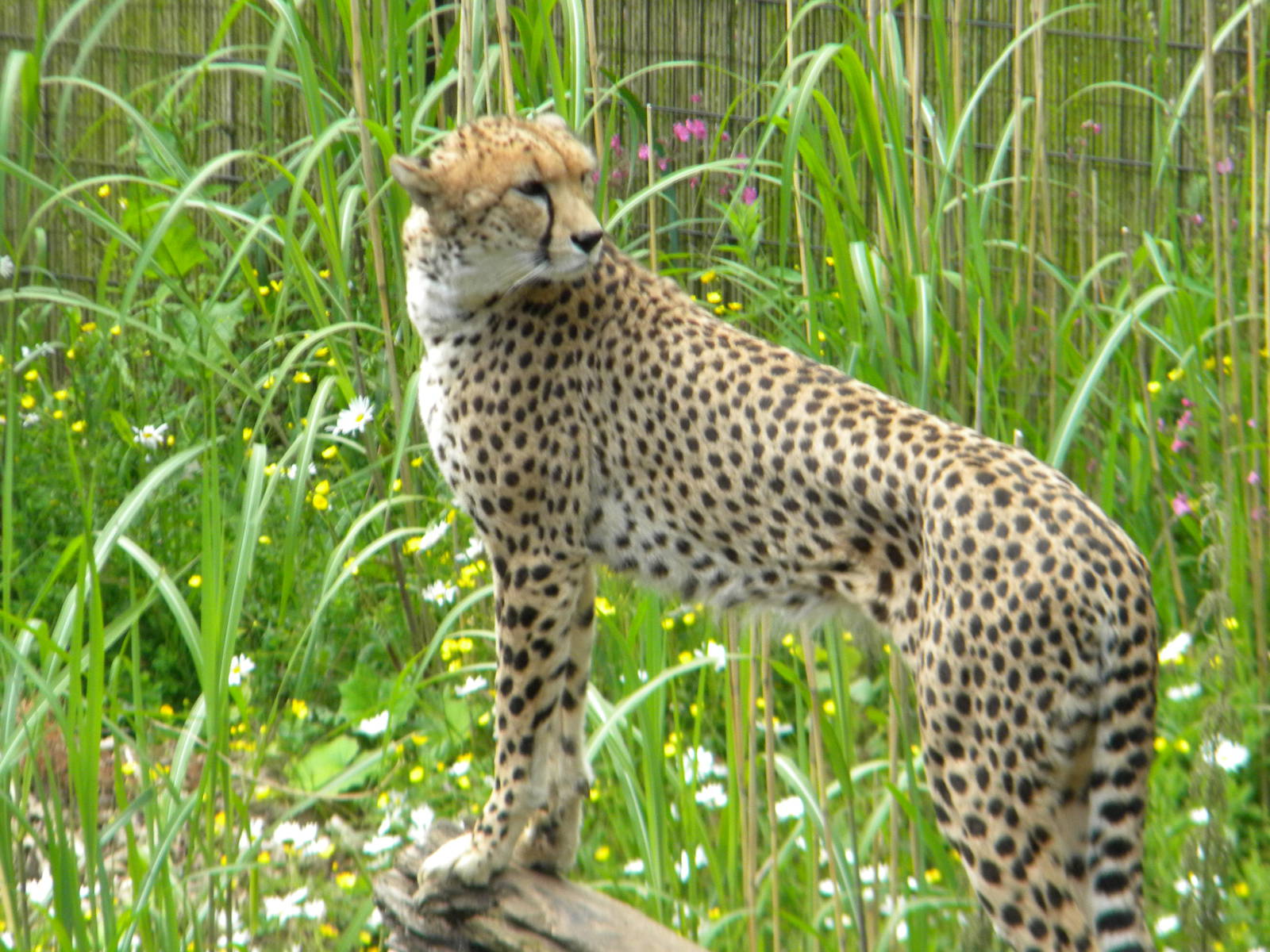
Definitely not Asian, although that may have been the original intention; I'm not sure. There are currently no Asian Cheetahs (A. j. venaticus) in Europe (possibly none outside Iran?).
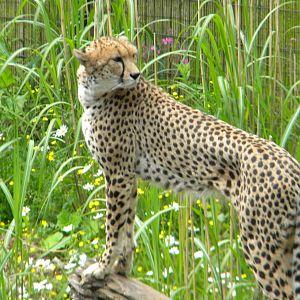
Chester's are North-east African (or Sudanese), which are still very unusual. The enclosure label is a careful and elegant compromise - the subspecies is labelled correctly and fully in the scientific name but not referenced in the common name to avoid drawing too much attention to the fact that they're 'out of zone'.
Definitely not Asian, although that may have been the original intention; I'm not sure. There are currently no Asian Cheetahs (A. j. venaticus) in Europe (possibly none outside Iran?).
Chester's are North-east African (or Sudanese), which are still very unusual. The enclosure label is a careful and elegant compromise - the subspecies is labelled correctly and fully in the scientific name but not referenced in the common name to avoid drawing too much attention to the fact that they're 'out of zone'.
Chester have been very careful to avoid using the actual phrase 'Asian Cheetah'... but of course they do have a huge great 'Asian Steppes' sign with a picture of a cheetah on it. There's a bit of sleight-of-hand going on.
And as I say, soemmeringii are still very rare animals - only 7 zoos in Europe keep them (as per Zootierliste), compared to 101 with the 'normal' South African Cheetahs (A. j. jubatus).
Chester have been very careful to avoid using the actual phrase 'Asian Cheetah'... but of course they do have a huge great 'Asian Steppes' sign with a picture of a cheetah on it. There's a bit of sleight-of-hand going on.
And as I say, soemmeringii are still very rare animals - only 7 zoos in Europe keep them (as per Zootierliste), compared to 101 with the 'normal' South African Cheetahs (A. j. jubatus).