@snowleopard, people who design exhibits, anybody else who wants to chime in:
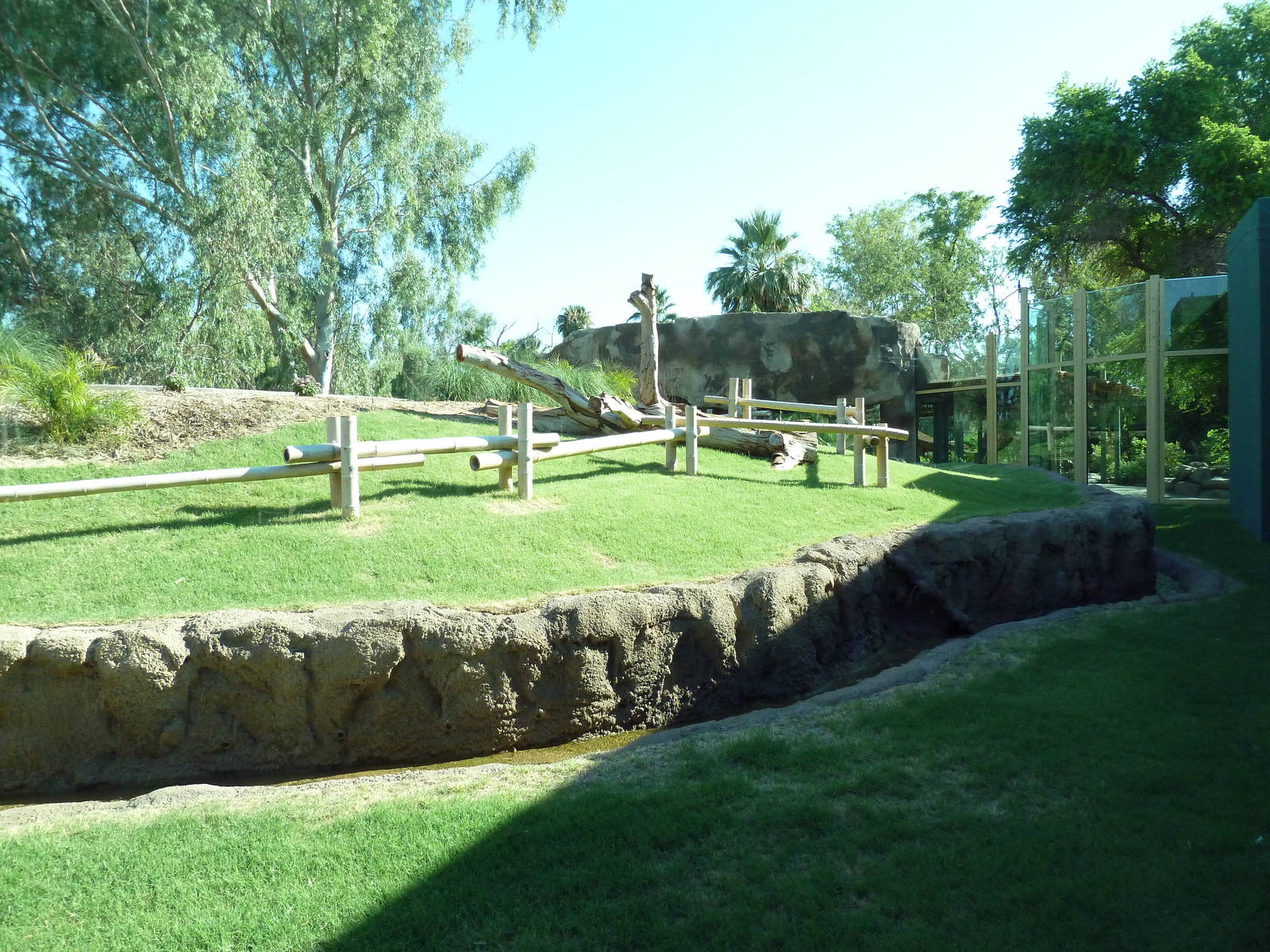
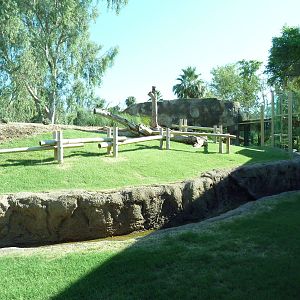
Can anyone explain why this exhibit has so much horizontal space relative to vertical space?
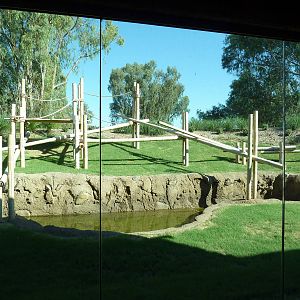
I know that orangs spend some time on the ground, especially older adults, but I ask very sincerely what the thinking is here in providing an extended grass strip with almost no climbing areas for an arboreal great ape.
I see from snowleopard's other photos that there is a playground type climbing structure in another part of the exhibit, but am sincerely curious why a large chunk of exhibit space like the above would be incorporated into an orang exhibit.
@snowleopard, people who design exhibits, anybody else who wants to chime in:
Can anyone explain why this exhibit has so much horizontal space relative to vertical space?
I know that orangs spend some time on the ground, especially older adults, but I ask very sincerely what the thinking is here in providing an extended grass strip with almost no climbing areas for an arboreal great ape.
I see from snowleopard's other photos that there is a playground type climbing structure in another part of the exhibit, but am sincerely curious why a large chunk of exhibit space like the above would be incorporated into an orang exhibit.
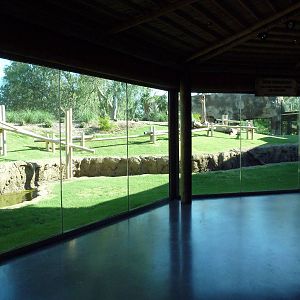
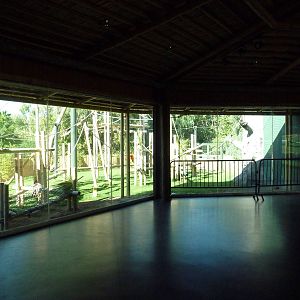
One of the individuals who actually worked on the design of the multi-million dollar refurbishment of the Bornean orangutan exhibit is on ZooChat, and perhaps he can chime in with his opinion...but I believe that the enclosure in this photo is atrocious for an arboreal species. Also, the indoor area that is on public view is almost completely empty of anything whatsoever (certainly climbing poles of any kind) and the second orang exhibit is much more adequate but still nothing spectacular. The air-conditioned viewing area with huge viewing windows into both habitats is fantastic, but this brand-new section of the zoo is massively disappointing.
An excerpt from my review:
Tropics Trail: Orang-Hutan: People of the Forest – The previous orangutan enclosure was built in 1975 and had aged badly over the years and the new area cost $5 million and just opened in April of this year so it is practically brand-new. There is a nicely-designed visitor entrance area surrounded by tall walls with lots of informational signs, and a neat visitor “tree house” style overlook allows for viewing into one of the large mesh ape exhibits. There are two main yards for the group of 4 Bornean orangutans, and one of the exhibits is functional yet boring aesthetically. It consists of an innumerable number of wooden beams with ropes attached to them to allow for brachiating apes to traverse the landscape. This yard is fine for the apes but is not innovative or trend-setting and in fact is as basic as it gets in terms of orangutan exhibitry.
What lands this exhibit in my “worst” category is the second yard and indoor areas. The yard has a small climbing structure and then a long row of wooden beams a few feet off of the ground with nothing else to climb on. Not knowing any different there is no way that I would ever have guessed that the habitat was built for orangutans, and the section of the yard closest to the huge viewing windows has a small stream that the apes will avoid, the back area is hotwired to death, and so the apes basically have a low beam to practice their tightrope walking on. Brutal.
The two indoor areas are head-scratching because there is nothing in them. On my long visit to this new area all 4 orangs spent time indoors and out of the hot sun but in either room there is not a single branch or device to climb on and only some bark-mulch/sawdust like carpet and one cardboard box. The orangs were walking around with not a beam or rope in sight, which is as bizarre as it gets for a species that spends 85% of its life in trees. Overall this exhibit is hailed as part of the zoo’s “a world-class zoo for a world class city capital campaign” but the orangutan pair of enclosures are disappointing and perplexing. Realistically the viewing windows are terrific for visitors and one of the yards is fine but overall I’m going to be highly critical here and most of the orang habitat is subpar.
@snowleopard, people who design exhibits, anybody else who wants to chime in:
Can anyone explain why this exhibit has so much horizontal space relative to vertical space?
I know that orangs spend some time on the ground, especially older adults, but I ask very sincerely what the thinking is here in providing an extended grass strip with almost no climbing areas for an arboreal great ape.
I see from snowleopard's other photos that there is a playground type climbing structure in another part of the exhibit, but am sincerely curious why a large chunk of exhibit space like the above would be incorporated into an orang exhibit.
I will do my best to answer your questions as I was involved with a portion of this exhibit (mainly the shade/viewing structures, and some of the site details)
The original concept behind the exhibit (that was decided by a group of zoo staff and a designer that is no longer with the firm) was to showcase the arboreal and terrestrial nature of orangs. The tag line was "Choices and Challenges". The thought was to give them access to a variety of terrain and let them choose where they want to be - hence the two vastly different yards. The two yards are actually joined together by a shift so that the oragns can have access to both yards at the same time so they have the choice on which side to be. The justification for a terrestrial yard came from how bornean orangs spend a lot more time than sumatran orangs on the ground due to lack of predation. I'm not saying I agree with the decision, but at least you know the thoughts behind it.
Personally, the lack of climbing opportunity has always bothered me immensely in the terrestrial yard, and I even think at one point there were some large deadfall for climbing in the design of the terrestrial yard that were removed for one reason or another. I might also mention that the inital design included asian small-clawed otters as part of the terrestrial yard with a large pool at the north end of the exhibit (this was nixed late in design for budget reasons). While I respect everyone's opinion and agree with some I can assure you (from personally knowing the people involved in the decision making) that the decisions made had reasons and history behind them. Sorry, I don't have all the answers but I'd be happy to answer any PM's on the subject.
Also, I'm not sure where the $5 million price tag came from but I can say the construction contract was much less.
The justification for a terrestrial yard came from how bornean orangs spend a lot more time than sumatran orangs on the ground due to lack of predation. I'm not saying I agree with the decision, but at least you know the thoughts behind it.
Thanks very much for the information Drew. I did not know that Bornean orangs were different from the Sumatran orangs in this respect.
It sounds like there were some good intentions here and some budget issues. It would be interesting to know how the "choices" part of the exhibit is working out and how much time the orangs are choosing to spend in the grassy yard. To be fair to Phoenix, the San Diego Zoo's orang exhibit has a long grass strip like this too. I am learning a lot here, about zoo design and orang behavior.
This is what happens when zookeepers have too much say in a project. I can understand the choices thing, its environment enrichment by giving the power to the animal to make a choice on what it should do. But the whole terrestrial and arboreal thing is just taken way too far. At the end of it all, Orangutans live in rainforests and still spend plenty of time in trees. You can still have an exhibit with plenty of climbing structure and still have plenty of terrestrial space if the designers had cohesively used them together in the space instead of completely separating the two. Also terrestrial doesn't mean a manicured mowed lawn, and there are plenty of terrestrial rainforest exhibits that look better than this.