Chlidonias

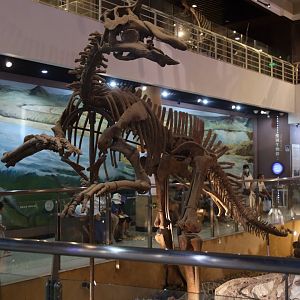
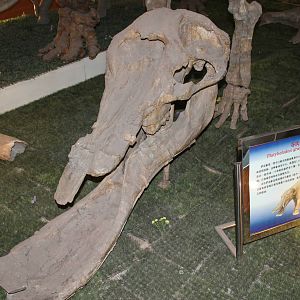
Platybelodon grangeri

skeleton of a shovel-jawed gomphothere, a proboscidean (elephant) from the Miocene of Mongolia. It seems that they used their strange lower jaw to strip branches off trees.

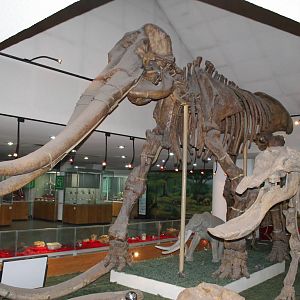
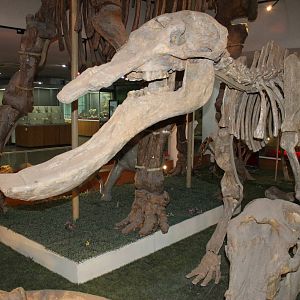
The skull in the lower part of the photo is also a [i]Platybelodon grangeri[/i], the huge skeleton in the back is [i]Stegodon huanghoensis[/i].

For those interested in palaeontology, the Palaeozoological Museum Of China is absolutely outstanding. The museum is on three floors, the lower one for dinosaurs including several fully-mounted skeletons (the displays are a mix of real fossils and casts) and fossil fish, the next floor for more dinosaurs and birds, and the third for mammals. Really fascinating fossils here, although unfortunately all the signage is in Chinese apart for the scientific names.

Visited September 2013.
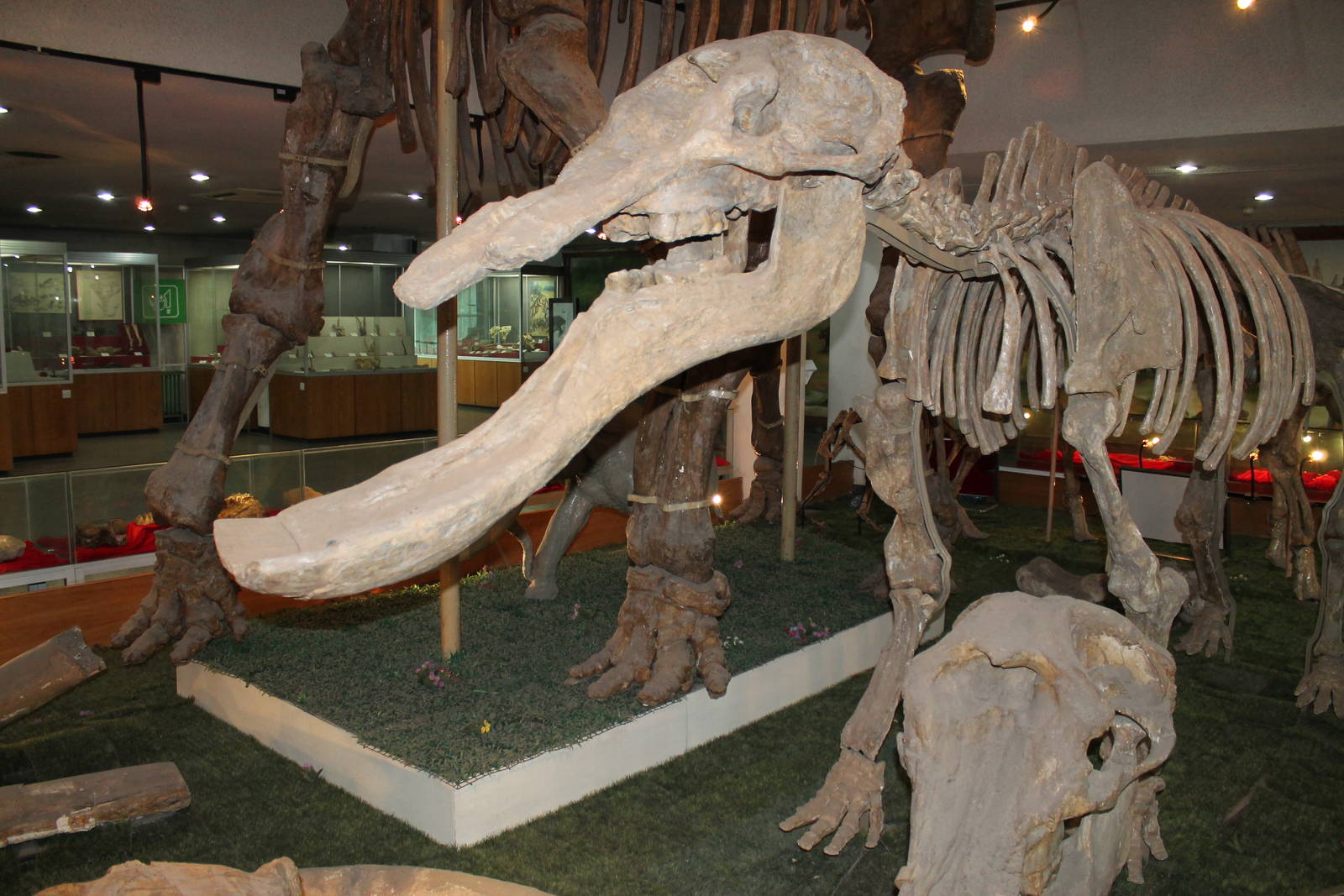
skeleton of a shovel-jawed gomphothere, a proboscidean (elephant) from the Miocene of Mongolia. It seems that they used their strange lower jaw to strip branches off trees.

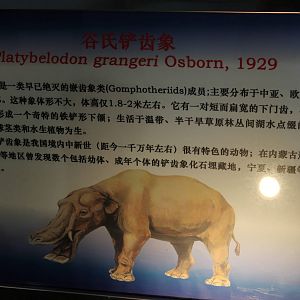
The signage shows what the species would have looked like in life:


The skull in the lower part of the photo is also a Platybelodon grangeri, the huge skeleton in the back is Stegodon huanghoensis.

For those interested in palaeontology, the Palaeozoological Museum Of China is absolutely outstanding. The museum is on three floors, the lower one for dinosaurs including several fully-mounted skeletons (the displays are a mix of real fossils and casts) and fossil fish, the next floor for more dinosaurs and birds, and the third for mammals. Really fascinating fossils here, although unfortunately all the signage is in Chinese apart for the scientific names.

Visited September 2013.
 

Media information

Category
The Paleozoological Museum of China
Added by
Chlidonias
Date added
View count
3,077
Comment count
1
Rating
0.00 star(s) 0 ratings

Share this media

Back
Top