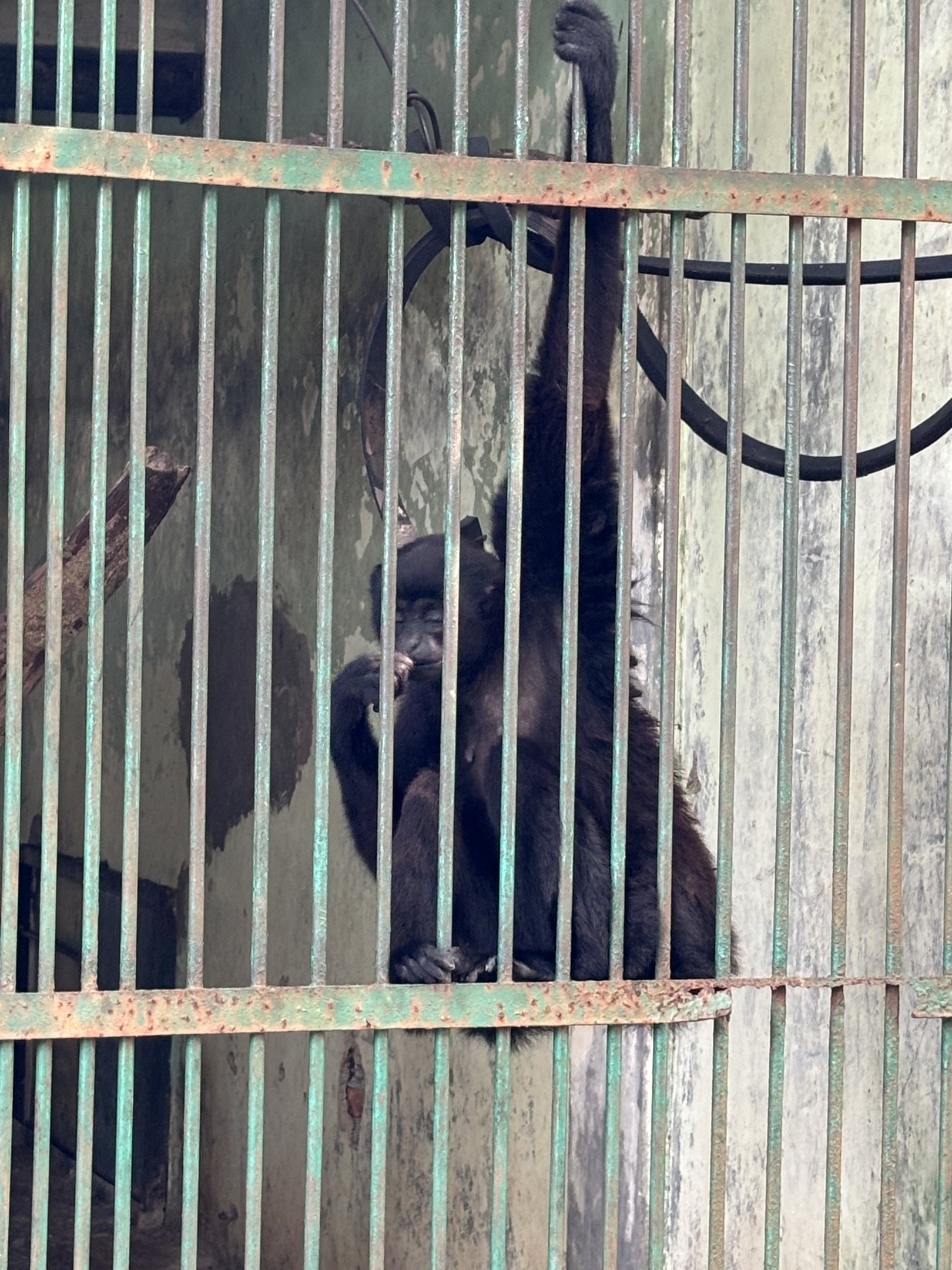
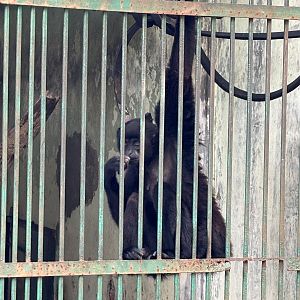
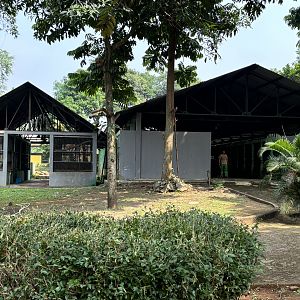
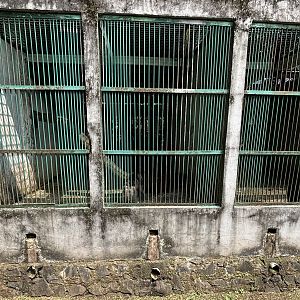
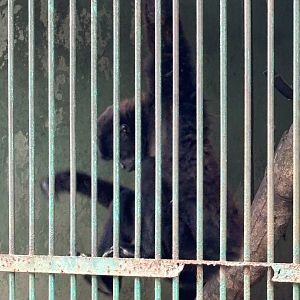
This is the zoo's Kloss's gibbon that have been off-display for a long time. How do you get access to the quarantine area and what species do you see there that you didn't saw in the main, public exhibits?
@Rizz Carlton You cannot get access into the quarantine area, but there's a path that goes directly past it and I was able to take a number of photos of this zone. It's very easy to get some good views as quite a few cages face visitors. Some of the gibbons and macaques are kept in very tiny, old-fashioned cages and there's a huge building packed with primates hooting and hollering while workers feed them and wash out their enclosures. My hunch is that many of the animals live in this area for years.
@snowleopard I see. I think you can visit that part of the zoo if you have the permission, especially if you have some imperatives there. I kinda though you managed to get one.
I definitely had passed the primate quarantine area, but I'm certain that I never saw the Kloss's gibbon from the viewable public pathway (Which is why I thought you and @twilighter have the permission to go inside!). As for how old there are, these are definitely old infrastructures that had been there for a very long time and some animals are definitely very old, but it can safe to say that they rotate frequently to their public exhibit and some might even be sent to other facilities (As in most likely the case with some of the macaques at Gembira Loka).
Most of the native primates have been on-display constantly for a long time, but they still have the Kloss's gibbon (Pictured), crab-eating macaque, and several tarsiers off-display for a while. They also formerly have Siberut macaque, Muna-Buton macaque, and most likely much more local primates before.