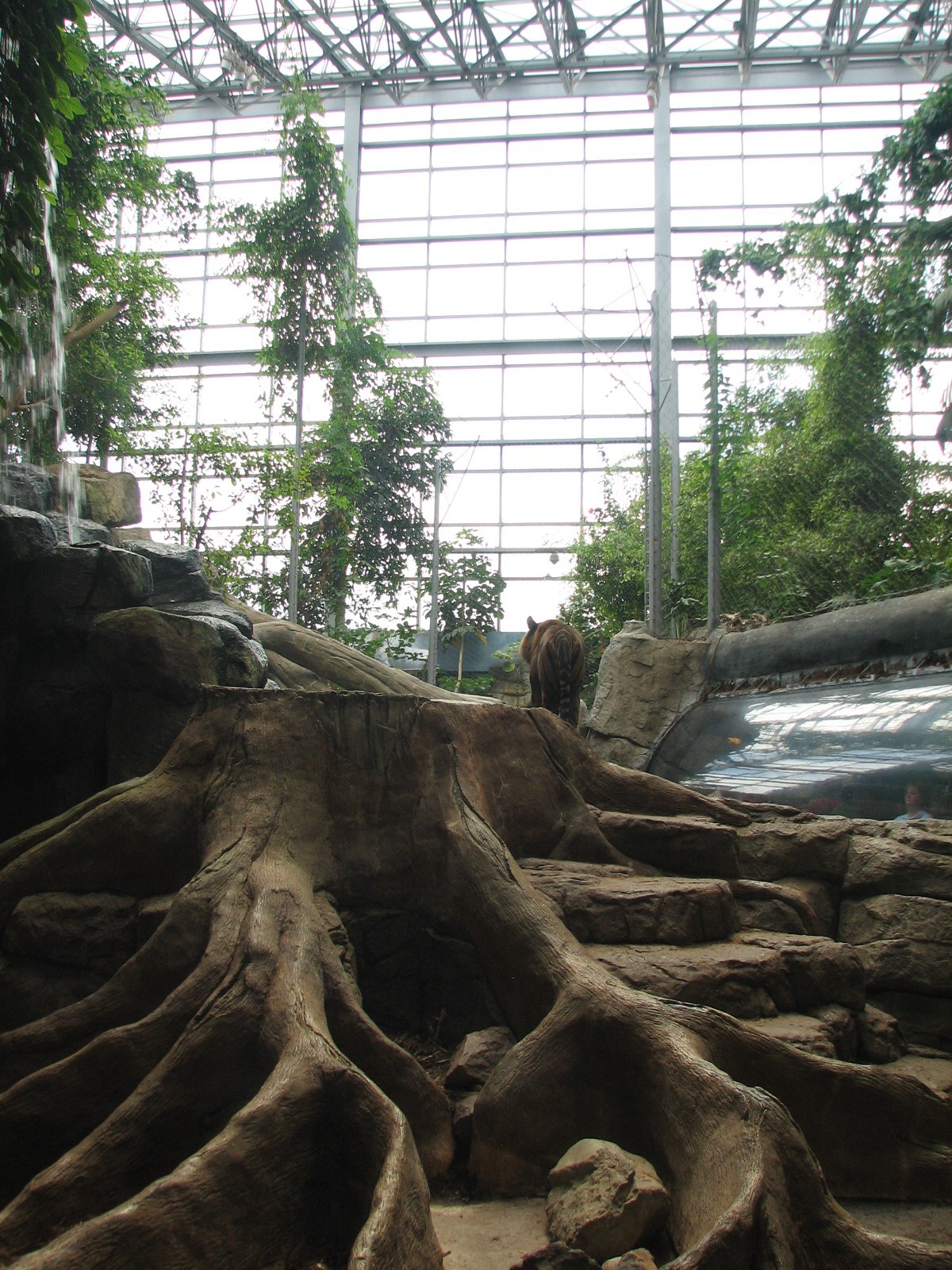
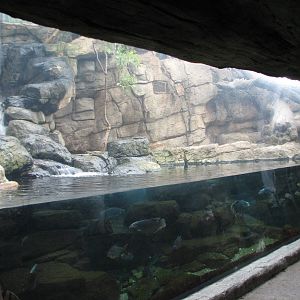
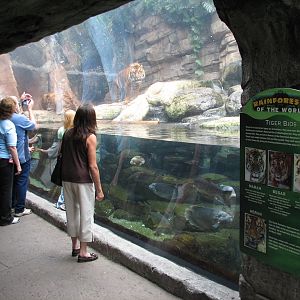
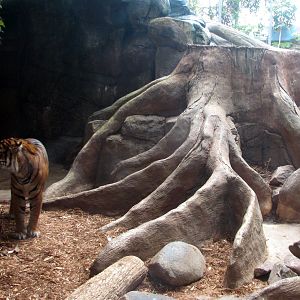
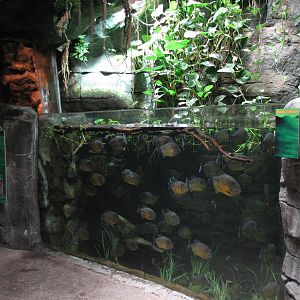
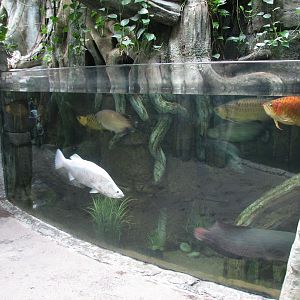
Located in Denver, Colorado, this beautiful indoor facility features aquarium exhibits from around the world, as well as a habitat for Sumatran Tigers. There is also a Downtown Aquarium in Houston, Texas, owned by the same company.
Located in Denver, Colorado, this beautiful indoor facility features aquarium exhibits from around the world, as well as a habitat for Sumatran Tigers. There is also a Downtown Aquarium in Houston, Texas, owned by the same company.
There are rockwork, windows, and aquarium windows to contain the tigers at visitor level. Behind them, there are rockwork ledges they can climb, and lightly visible netting extends the safety area from the rockwork up to the ceiling of the atrium-like room. There are multiple levels and abundant light and the stimulus of fish everywhere, and nearby birds too...so I like this exhibit very much, but I really think there should be an outdoor exercise yard too...
That would mean the end of pretty much all the keeping of amphibians, reptiles, fish and various species of invertebrates in most European and American zoos...
But believe it or not, I tend to agree: permanent indoor housing isn't optimal for most mammals and birds. And several species of the groups mentioned above could benefit from adequate temporary exposure (in the warm seasons) to outdoor conditions.
If this indoor exhibit was accompanied by a nice outdoor exhibit, it might be one of the better tiger enclosures I have seen so far.
You're so keen to get in a completely random and uncalled for dig at British zoos (and, bizarrely, weather) that I can't even make out your point.
Do you think it is inappropriate to keep large animals such as tigers indoors permanently?
Personally I would instinctively say they'd do better with with outdoor areas available, but I'm not sure if I have any logical reason to think that. Is there any data on this sort of thing (longevity, breeding etc)?