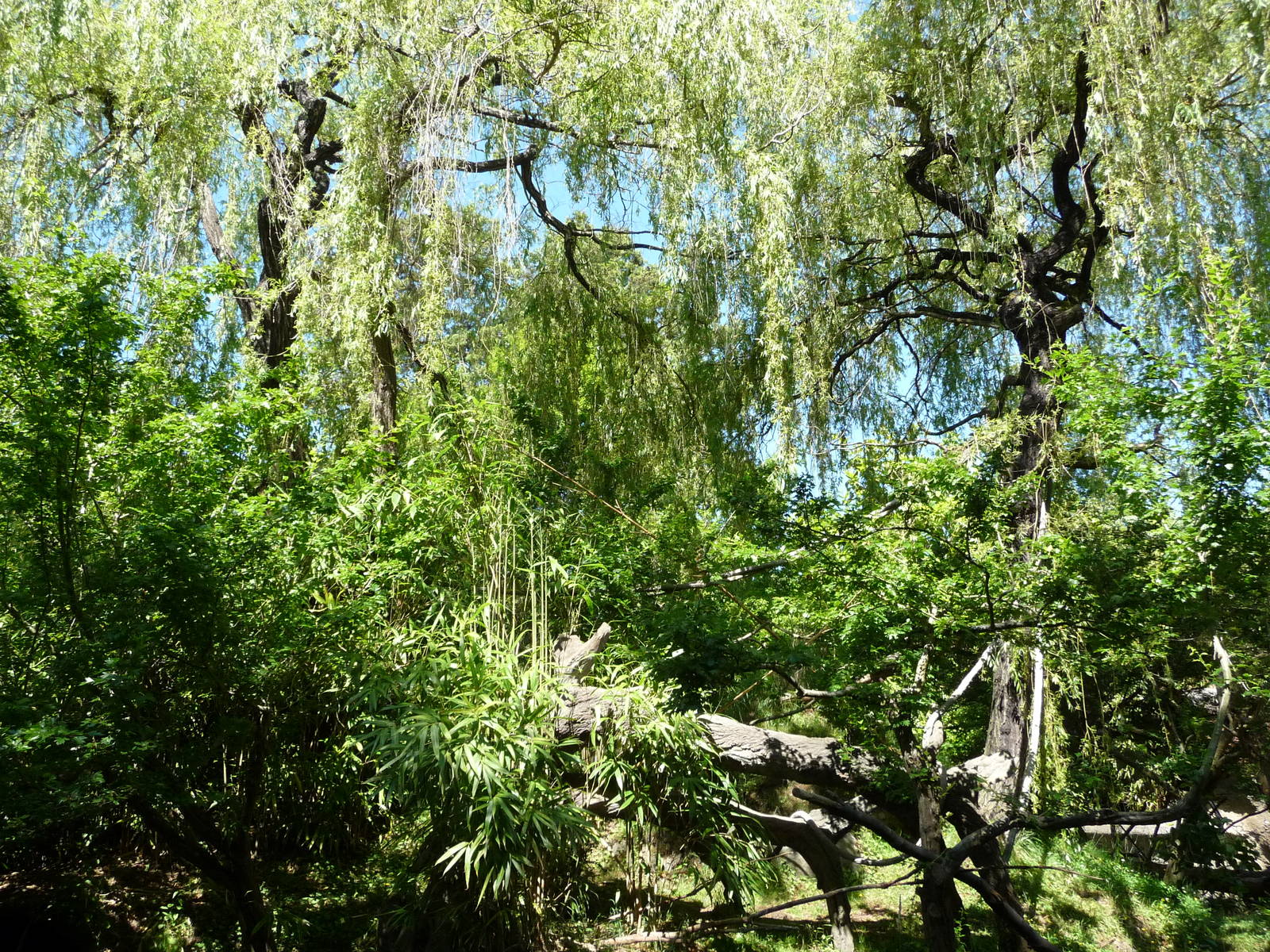
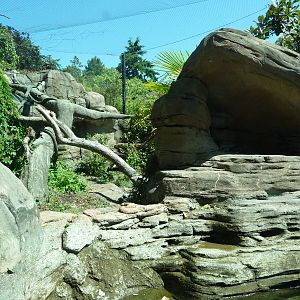
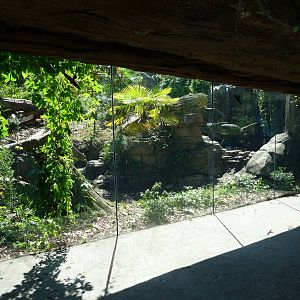
It is truly amazing at how many junky cages are in existence for primates in zoos worldwide. However, there are many exceptions to the rule. This red ruffed lemur exhibit is over 30 years old, was built rather cheaply, and is still one of the best habitats of its kind in any zoo. Woodland Park is packed with spacious, naturalistic enclosures that immerse the human visitors into the marvellous world of endangered wildlife. The 5 red ruffed lemurs that live in this habitat are extremely difficult to locate, but there is no hotwire and they have full access to even the tallest trees. This enclosure is simple and yet beautiful, and there are entire zoos that have nothing that even remotely approaches it in terms of quality. No wonder I heap scorn on collections that still have bars and tiny concrete cells around every corner.
The exhibits from Woodland Park always look stunning, but from following your comments snowleopard I'm a little concerned by a phrase that comes up a lot - and it's this:
I know we've touched on this before in our discussions - but this is definitely a problem. You just can't have such a large proportion of the animals so hard to see and call it good zoo design. Good enclosure design, certainly, wonderful for the animals, but not really good zoo design - because your visitors are paying to see animals.
EDIT: Just a quick edit because, re-reading your post a second time, I noticed a point I agree with very strongly. Throwing cash at an exhibit does not necessarily make it better! For lemurs, the 'fenced off bit of woodland' technique is often by far the best, and can usually be achieved very cheaply.
This is one of the great balancing acts of zoo design! It'll always be a personal judgement, I suppose. But I think I would have to say that when a confident and generally showy species such as the Red Ruffed Lemur is described as 'extremely difficult' to see, then the balance ain't right!
Also, compared to the simple cages used in so many places, it really can't be said this exhibit was done "rather cheaply." In fact, this exhibit was first built as a standard concrete "monkey island" in the 1940s, was extensively renovated in the 1970s (while the neighboring Lion-tailed Macaque exhibit was built from scratch) and was for a time home to squirrel monkeys. This is when the large trees on the island were planted.
In the early 90s, with the development of the Tropical Rainforest building nearby, this exhibit was renovated again, including building a new large off-exhibit holding building for lemurs. So, although this is a money-saving, multiple stage renovation, my guess is more money has been spent on it than on the entire motley assemblage of cages at places like RSCC (for example).
This gorgeous lemur exhibit has an interesting history, and it's nice to see the zoo expand an existing enclosure and create someting natural in the process. I just wish that more zoos would renovate their concrete monstrosities and instead plant real trees for their primates.
@reduakari: the brilliant patas monkey exhibit at Woodland Park Zoo has had that temporary fence taken down, as it was being used to facilitate the introduction of a new monkey to the enclosure.