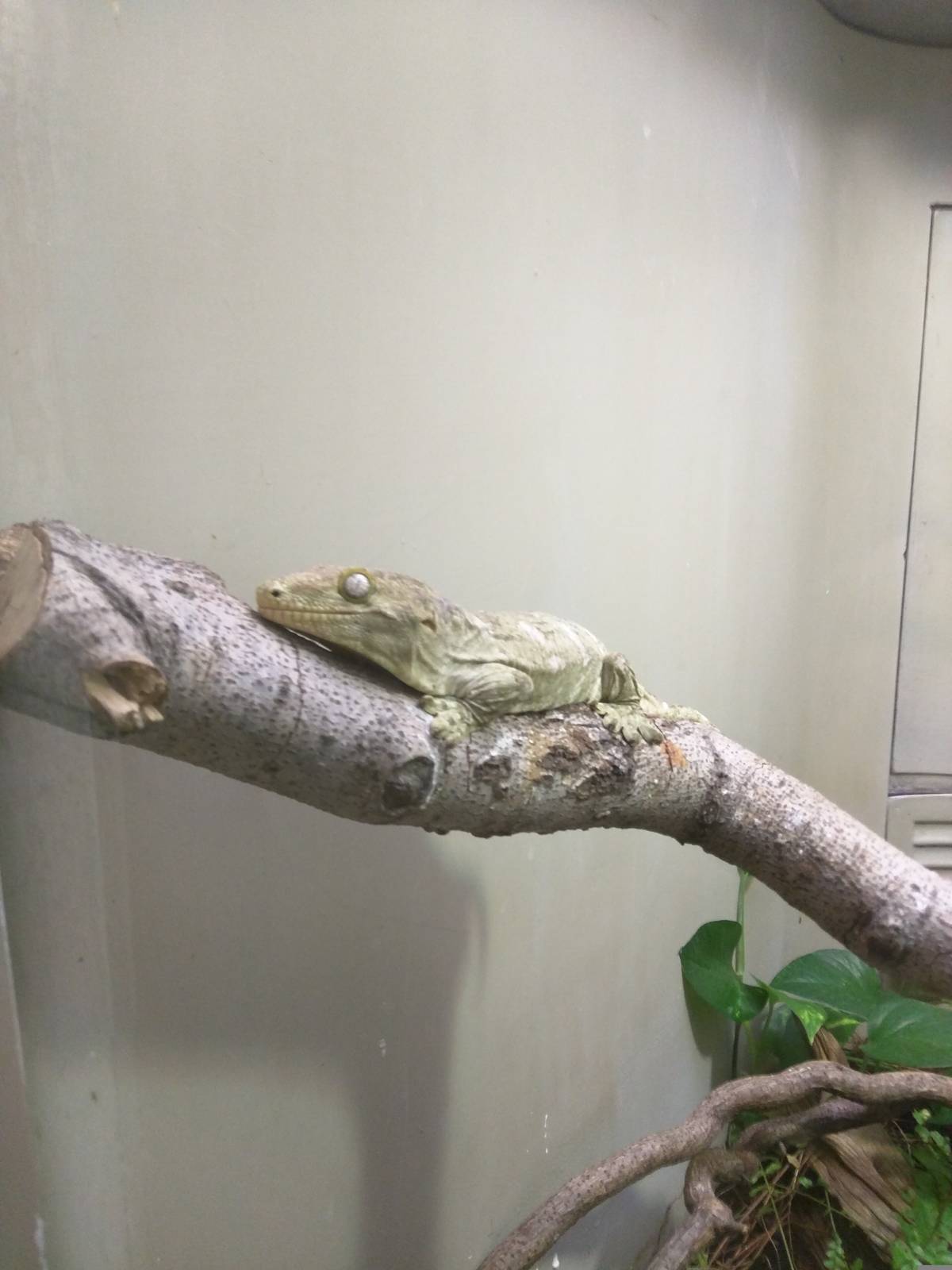
Rhacodactylus leachianus are displayed at Dallas, Fort Worth, Houston, Columbus, Knoxville, Peoria, Brandywine, Saint Louis and Atlanta to name a few. They're also sought after in the Reptile Hobby. If you do an internet search for Rhacodactylus leachianus for sale, many links will show up for purchase. They can run anywhere from $300usd and up. They're quite common in the hobby and still all the rage. Everyone wants a foot-long, giant gecko. Care is simple and they make ok captives. If you like motionless animals that hide in hollows that would rather bite you than be held, that is.
That hasn't stopped people from keeping gaboon vipers, trapdoor spiders or leeches either...
Their camouflage can be quite attractive and they're not that motionless all the time.
@ThylacineAlive: all three subspecies and several local types are actually kept and bred quite regularily in the private sector.
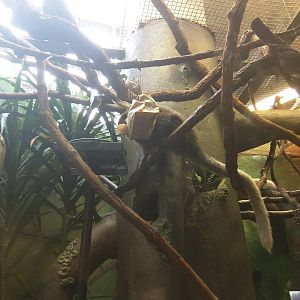
What makes this photo peculiar is that you actually see the animal during bright light, indicating a lack of hiding options or that they just switched on the daylight lighting.
My Fantasy Zoo would have a New Caledonia House with a nocturnal section of at least 10 gecko exhibits. It would also have kagu, horned parakeets, cloven-feathered doves and terror skinks. And there would be a colony of New Caledonian crows, which would give puzzle-solving displays plus very clever keepers to devise new puzzles for them
My Fantasy Zoo would have a New Caledonia House with a nocturnal section of at least 10 gecko exhibits. It would also have kagu, horned parakeets, cloven-feathered doves and terror skinks. And there would be a colony of New Caledonian crows, which would give puzzle-solving displays plus very clever keepers to devise new puzzles for them
Not to mention a greenhouse sporting the endemic flora (as seen in Paris and Frankfurt) as well as an aquarium with fluorescent corals and Nautilus macromphalus.
Not to mention a greenhouse sporting the endemic flora (as seen in Paris and Frankfurt) as well as an aquarium with fluorescent corals and Nautilus macromphalus.