Chlidonias

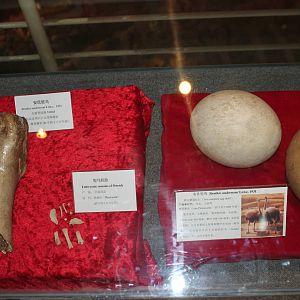
Struthio anderssoni

remains of an ostrich species found in northern China and Mongolia in the late Pleistocene to early Holocene. It is thought to have become extinct within the last 8000 years or so.

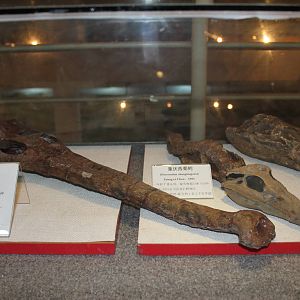
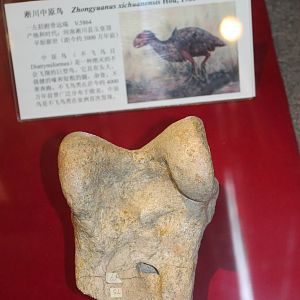
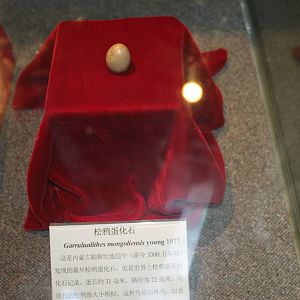
For those interested in palaeontology, the Palaeozoological Museum Of China is absolutely outstanding. The museum is on three floors, the lower one for dinosaurs including several fully-mounted skeletons (the displays are a mix of real fossils and casts) and fossil fish, the next floor for more dinosaurs and birds, and the third for mammals. Really fascinating fossils here, although unfortunately all the signage is in Chinese apart for the scientific names.

Visited September 2013.
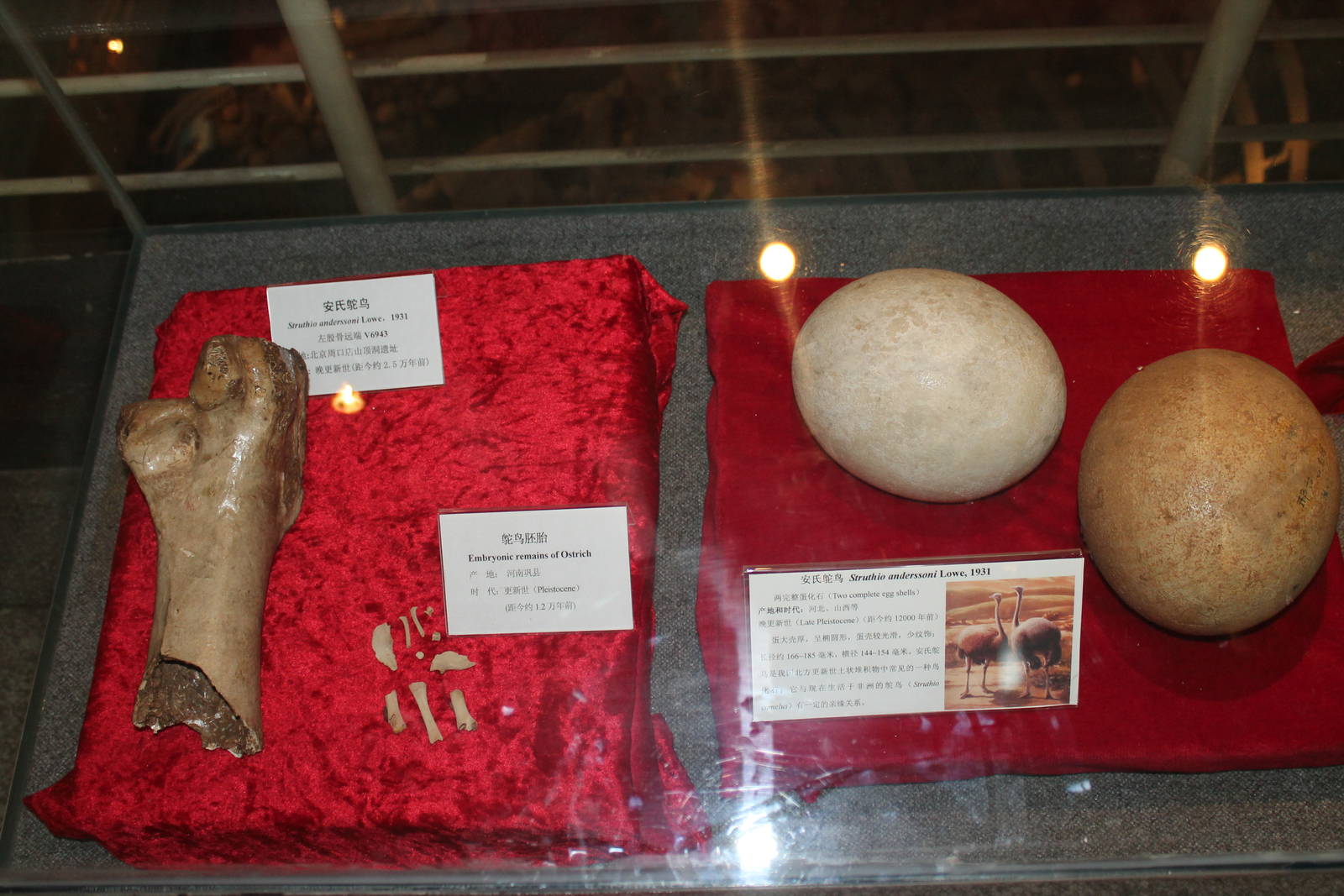
remains of an ostrich species found in northern China and Mongolia in the late Pleistocene to early Holocene. It is thought to have become extinct within the last 8000 years or so.

For those interested in palaeontology, the Palaeozoological Museum Of China is absolutely outstanding. The museum is on three floors, the lower one for dinosaurs including several fully-mounted skeletons (the displays are a mix of real fossils and casts) and fossil fish, the next floor for more dinosaurs and birds, and the third for mammals. Really fascinating fossils here, although unfortunately all the signage is in Chinese apart for the scientific names.

Visited September 2013.
 
Wow, I had no idea there were ever ratites in China (or Asia in general), let alone that recently.
 
The Ostrich lineage is original Indian in origin. Each part of Gondwanaland had its own ratite (except possibly Africa). The Ostriches originated in India and migrated to Africa when the subcontinent collided with Asia.
 
The Ostrich lineage is original Indian in origin. Each part of Gondwanaland had its own ratite (except possibly Africa). The Ostriches originated in India and migrated to Africa when the subcontinent collided with Asia.

Ahh, I knew there were ratites across Gondwana, but didn't know that ostriches were Indian and then went to Africa. Very interesting, thanks. As Africa seperated first, that could explain why it had no ratites initially, yet they are found everywhere else, including Madagascar.
 

Media information

Category
The Paleozoological Museum of China
Added by
Chlidonias
Date added
View count
2,204
Comment count
4
Rating
0.00 star(s) 0 ratings

Share this media

Back
Top