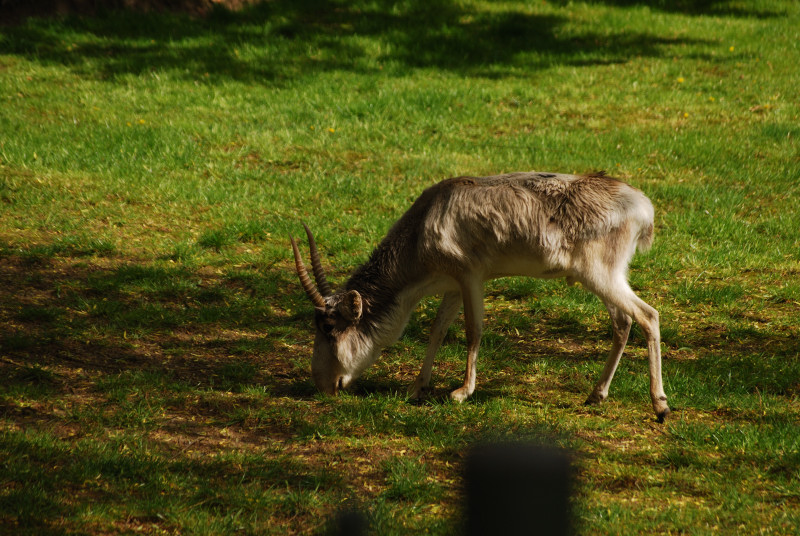
Its not hard to get saigas, but the zoos in germany have recognized, that saigas can't be kept in zoos, so no zoo in germany will import saigas again. Nuremberg had the idea a few years ago, but they will not do it, fortunately. So the last captive saigas in europe are live at Askania Nova, but they still have the problem with wild dogs,which are killing the youngsters...
Its not hard to get saigas, but the zoos in germany have recognized, that saigas can't be kept in zoos, so no zoo in germany will import saigas again...
Daft question, but what's difficult about keeping saigas? Is it their climate/ diet needs It's a shame really, since I wouldn't mind seeing these strange deer.
@Zebraduiker: Now isn't that funny: I'd have also answered that it's not that hard to get Saigas, but rather hard to keep them alive. Yet I wouldn't say it is impossible to keep them in captivity, but at the usual zoo conditions, it's very, very tricky. Future keepers might keep that in mind...
@Jacobea: First of all: A Saiga is not a deer, but a species of antelope.
Saigas are easily frightened and tend to panic. As inhabitants of the wide empty steppe, their first instinct at the sight of danger is to run away. In the confined areas of a normal zoo, however, that results in them running into the fences and breaking leg and neck. So why not keep them in huge paddocks, one might ask? Because large exhibits are terrible when it comes to establishing managable husbandry conditions (including fighting off wild predators). Saigas seem to be rather prone to several parasites; a large enclosure in combination with their flighty nature results in a more than tricky parasite prophylaxis/treatment/control. Additionally, the aggressive and intrusive behaviour of the bucks torwards other males and females (especially during mating season) makes it rather difficult to establish stable social groups.
Does that answer your question?
As far as I know, Saigas are indeed an critical endangerd species...One of the problems is, most of the siagas male survive one or two breeding seasons, because mating all the femals and defense them against other males is very, very stressful, so they have no time for eating,so a lot of the males die after one or two breeding seasons. But poachers, and poaching them is big problem,kill mostly the males with the horns, so there are to less males left for the females...
Not that it would work because of the issue of aggression and them running into the walls still remains, but it seems that if there was just one male with several females in a zoo setting, that might improve male longetivity. Until they bounced off said wall