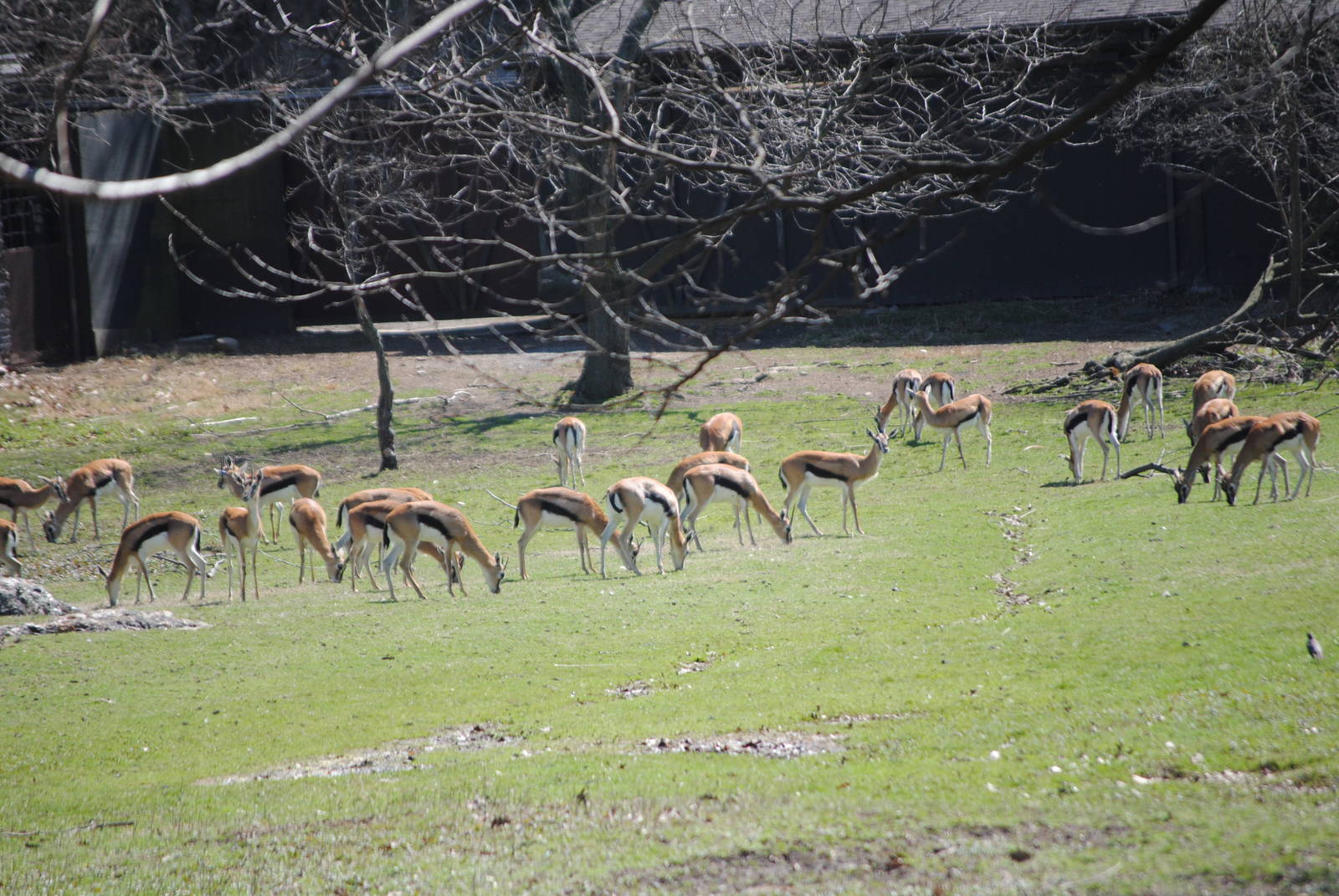
Evidently Eudorcas thomsonii has been split into two species and I've been told that Bronx's are the split species: Serengeti Gazelle (Eudorcas nasalis).
Evidently Eudorcas thomsonii has been split into two species and I've been told that Bronx's are the split species: Serengeti Gazelle (Eudorcas nasalis).
The number of changes and proposed changes in bovids has rocketed in recent years - mainly because there has been some effort put into studying their taxonomy for the first time in years. As well as Thomson's being split into Eastern Thomson's and Serengeti Thomson's, their congener the Red-fronted Gazelle is treated as three species in Handbook of the Mammals of the World Volume 2. I'd strongly recommend that book or the rather more technical Ungulate Taxonomy by Groves/Grubb - both take a very progressive view (the later particularly) and some of the splits are spectacular - in HMW, for example, three species of springbok, eight of bushbuck, five of sitatunga, four of greater kudu (and two of lesser), all the well-known hartebeest and dik-dik forms, split - and eleven species of klipspringer. Groves and Grubb also propose multiple giraffe species, and two species (not subspecies) of white rhino.
Whether all of this gains traction is still a bit of an open question, but it has obvious conservation implications - not least for potentially hybridised captive populations. It's a similar process to what Groves and others did to primate taxonomy - and that certainly has stuck. Their work (genetic and morphological) is certainly thorough.
In the Groves book, the nomenclature is subtly but crucially different. He still refers to them as Thomson's gazelles, but makes the division into Eastern and Serengeti. Or rather - and I don't know if this is a deliberate thing or just a really annoying, entry-level error - he nearly does this, as the Serengeti species is actually described as being a 'Serengeti Thompson's gazelle' - the sort of thing that has any pedantic ungulate nerd gnashing their teeth (unless it is deliberate, and this is what it should be called....).
There are a lot of jumps and assumptions in Groves' splits, and people tend to be either firmly in his camp or outside his camp. I read somewhere that he deliberately fudged data for certain groups to support his splits, but I can't remember where that was (the one specifically mentioned was klipspringers, where he omitted intervening ranges in his maps to make it look like his "separate" species were isolated from one another).
For what it's worth, I think a lot of his splitting is unsupported.
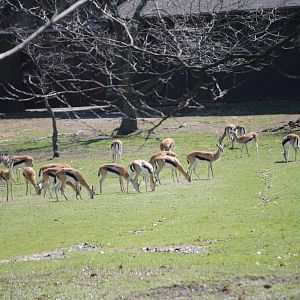
It is indeed. There are a good few more to both the left and right as well. I couldn't find a photo of this enclosure but it's quite huge and could easily fit a lot more animals. Apparently a pair of Lesser Kudu and Blue Cranes also inhabit this space but I've only seen the cranes once and have never seen the kudu. The space, while great for the animals, unfortunately leads to the animals often sticking to the far back of the enclosure and thus too far for decent photos or a good look at the species.
That is exactly my opinion about this work ungulate taxonomy. If you look to the number of individuals sampled it is very weak in many occasions (some splits are based on 1 specimen) and if you look closely intoo all the tables provided in ungulate taxonomy, it is really difficult to find statistical differences, where he proposes there are such differences. His whole book is basically propaganda for the phylogenetic species concept, and not even very good propaganda.
A new book about bovid taxonomy is underway, by Castello (with pictures/ adcivce of some zoochatters). It is in many ways similar in approach as the Colin & Groves, however there are slightly less splits, allthough there are still some debatable ones (especially all the klipspringers)