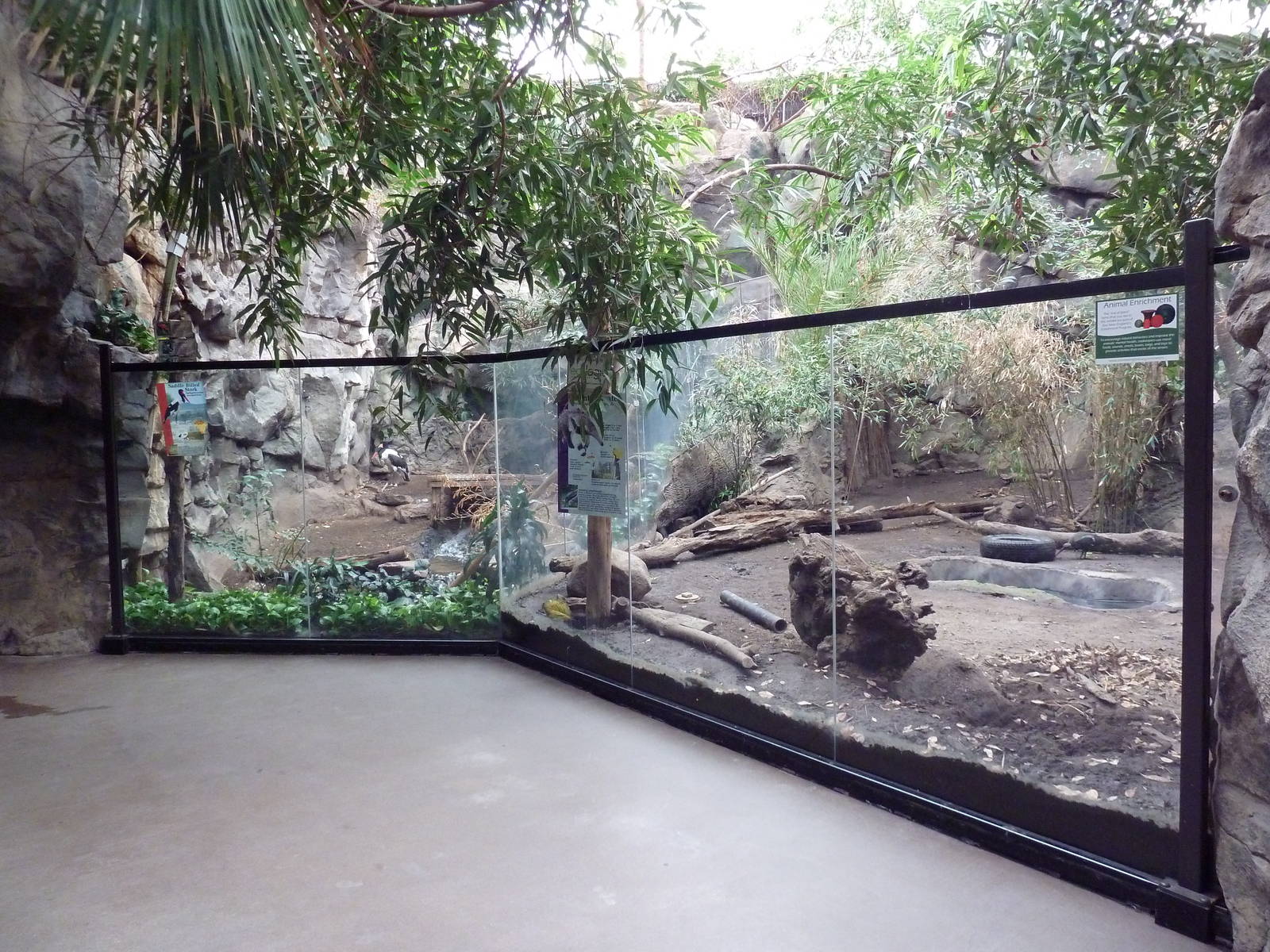
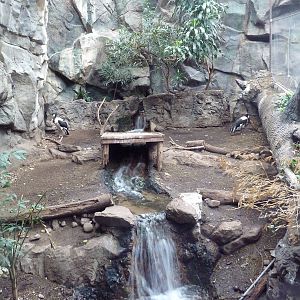
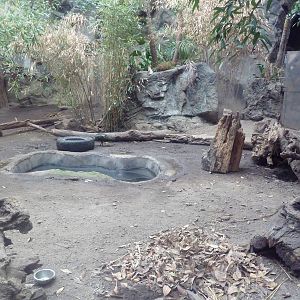
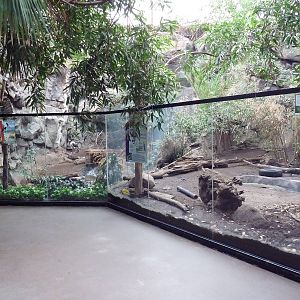
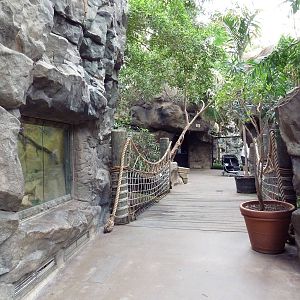
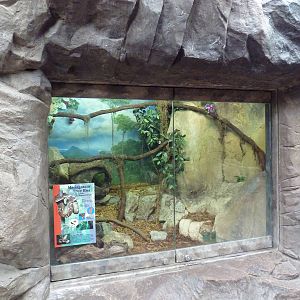
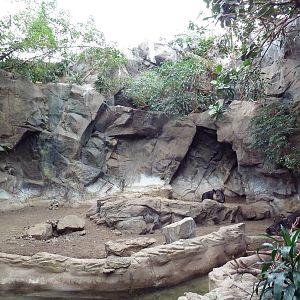
In Vicki Croke's book The Modern Ark: The Story of Zoos: Past, Present and Future (1997) she writes that "Boston's Franklin Park Zoo, which has just regained its accreditation with the AZA, is an example of the worst in indoor rain forests. Because of political battles and money trouble, the project was eleven years in the making and completed at a staggering cost. By the time it was finished, it was already outdated. The publicity department tells us how many acres the structure comprises, but that includes bathrooms, equipment areas, etc. The center habitat for the gorillas is a circle of gunite rock - a very unnatural surface in feel and aesthetic for these primates. The vegetation is carefully placed out of their reach. A deafening artificial waterfall drums all day long and side exhibits are just too small for the leopards or bongos (the largest forest antelope) or pygmy hippos they contain. After all that time and money, the nicest thing is to see the gorillas in mild weather released into an outdoor, totally natural, exhibit."
It is interesting to point out that these days the gorillas do NOT have access to an outdoor exhibit and are actually confined inside every day.
In Vicki Croke's book The Modern Ark: The Story of Zoos: Past, Present and Future (1997) she writes that "Boston's Franklin Park Zoo, which has just regained its accreditation with the AZA, is an example of the worst in indoor rain forests. Because of political battles and money trouble, the project was eleven years in the making and completed at a staggering cost. By the time it was finished, it was already outdated. The publicity department tells us how many acres the structure comprises, but that includes bathrooms, equipment areas, etc. The center habitat for the gorillas is a circle of gunite rock - a very unnatural surface in feel and aesthetic for these primates. The vegetation is carefully placed out of their reach. A deafening artificial waterfall drums all day long and side exhibits are just too small for the leopards or bongos (the largest forest antelope) or pygmy hippos they contain. After all that time and money, the nicest thing is to see the gorillas in mild weather released into an outdoor, totally natural, exhibit."
It is interesting to point out that these days the gorillas do NOT have access to an outdoor exhibit and are actually confined inside every day.
The waterfall is gone now and the concrete surface has been replaced with soil and organic material. My understanding is that one of the gorillas kept escaping so that is why they no longer use the outside exhibit? Seems strange that they don't find a way to make it usable to them - does anyone know why that is?
That escape was serious business and understandable that they would cease using the outdoor exhibit, but surely there must be some way to redesign it to be escape proof?
There were red-crowned cranes in there as of June 2016.
Zoo New England seems to specialize in cranes. I think that there were more crane species at the Franklin Park Zoo than I have seen at any of the other zoos that I've been too. There are whooping cranes and sandhill cranes at the Stone Zoo also from what their website says.
That escape was serious business and understandable that they would cease using the outdoor exhibit, but surely there must be some way to redesign it to be escape proof?