Maguari

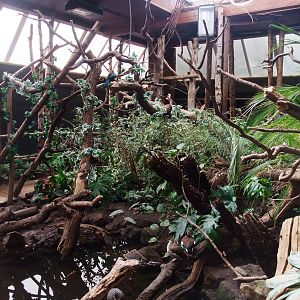
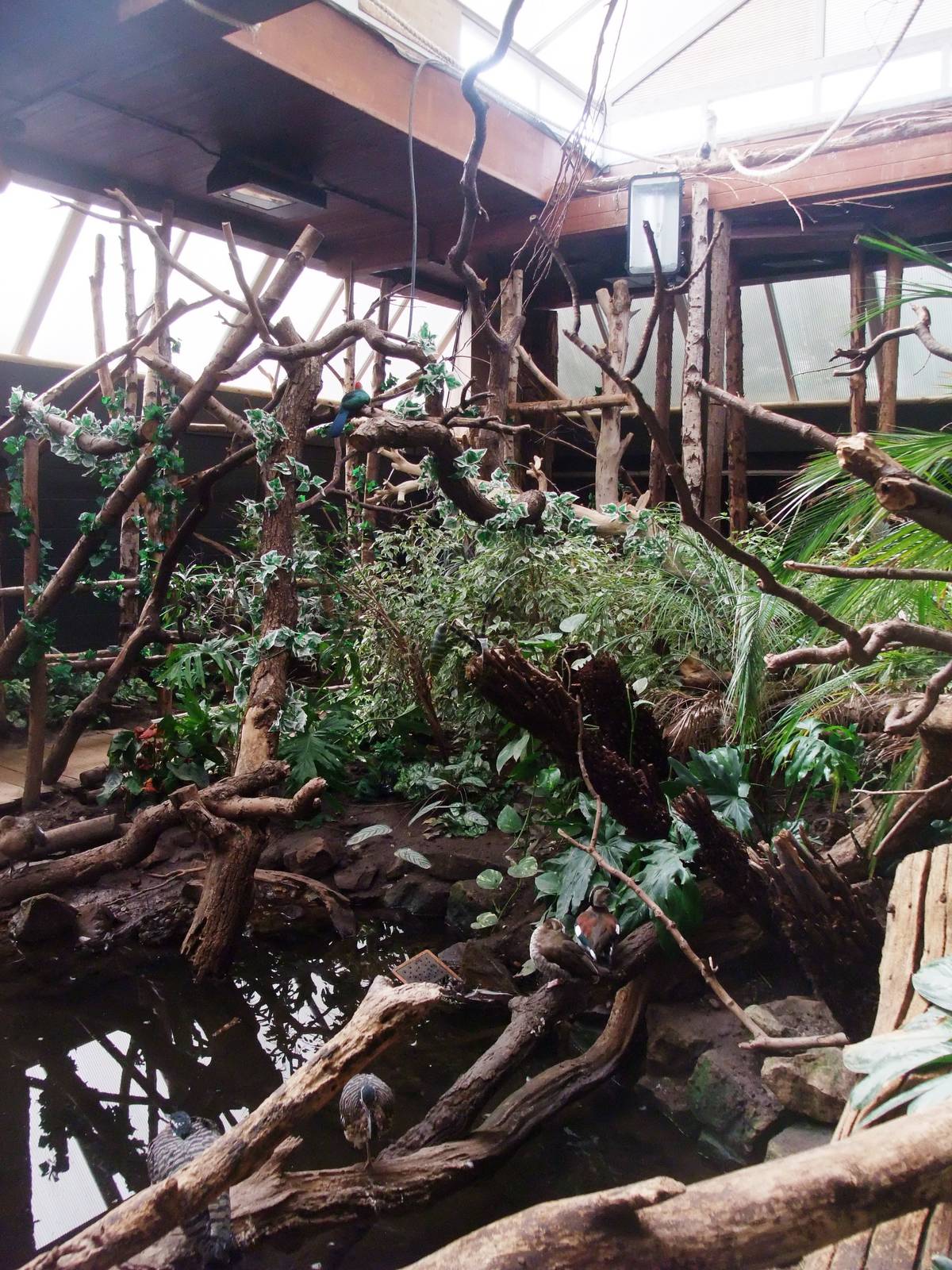
Tropical House at Twycross, 18/05/13

  • Media owner Maguari
  • Date added
With the tour-guide-and-getting-a-ticket-from-guest-services policy finally ditched! Huzzah!

Species free-living in the house include Common Marmosets, Linne's Two-toed Sloths, Seba's Bats, Red-crested Turaco, Sun Bittern, Ringed Teal and Madagascar Teal.
With the tour-guide-and-getting-a-ticket-from-guest-services policy finally ditched! Huzzah!

Species free-living in the house include Common Marmosets, Linne\'s Two-toed Sloths, Seba\'s Bats, Red-crested Turaco, Sun Bittern, Ringed Teal and Madagascar Teal.
 
imho this enclosure would great as a nocturnal house, some small lemur species, exsisting bats ect. Although Joe public wouldn't be happy as the zoo is apparently 'all monkey' and lemurs are 'monkeys'
 
Hi
I was responsible for the original plant spec and planting of the tropical house, it was interesting to see your photograph and how sparse the planting now seems to be. It was a very difficult exhibit to landscape due to the extremely low natural light levels and the original plan i put forward included the use of plants on a rotational basis, 2 weeks to a month turn around on all the smaller plants, ferns, epiphytes, orchids etc with a recovery period in the small greenhouses at the far end of the site. This proposal was not taken up by the management team at the time and so i ended up doing a number of remedial plantings over a 2 year period.
The original plants used were specimen sized "house plants" but even these were unable to survive in the exhibit for more than a few months. I have included some pictures of the original planting for members to see how it looked.
th_09.jpg
[/URL][/IMG] Twycross Tropical House Photos by stevejacobs | Photobucket
 
@ Steve J what you have just said sounds very much like the wisdom used by the mangement in charge at the time this was done!!
 
I have to agree with CanaryBoy about it being more suitable as a nocturnal house and did say this when i first looked at the site.
Artificials were a complete no-no at the time although looking at the picture in the original post it looks like some are now being used (or at least the variegated ivy looks artificial, but its hard to tell without poking it).
Is the exhibit still open or has it been changed as i couldn't see it on the current zoo map ?
 
It was completely closed when we were there Sunday (myself, zoogiraffe and a fair number of others!).
 
It was completely closed when we were there Sunday (myself, zoogiraffe and a fair number of others!).
It can only be a matter of time before they pull the building down,well thats if they can afford the contractors that will be needed to do the job safely!!
 
Artificials were a complete no-no at the time although looking at the picture in the original post it looks like some are now being used (or at least the variegated ivy looks artificial, but its hard to tell without poking it).?

I would Say the ivy is artificial Steve, when you enlarge the shot it is wrapped around the trunks etc and doesn't appear to have any lateral growth at all
I wonder if to much humidity coupled with low light would do for most things, I don't suppose they get the chance to dry off. or possible the reverse and no water at all. The tree ferns which aren't cheap look dead too. Mind you it looks fairly light in the photo.
 
Dean,
Looking at the info on the original photograph it looks like the exposure was pushed a bit which may account for the light.
Here is an excerpt from my original report about the growing conditions in the house, i can send you a full copy if you want.

Temp: 25° C ground level with a gradient up to 50° C in the canopy.
Humidity: +70%
Watering: Carried out daily by keeper using hand held hose, the plants around the pool also receive some overspray from the “rainfall” during the thunderstorm sequence.
Supplementary lighting: This is provided by a mix of fluorescent tube lighting and incandescent “grow lights” these run for 2 x 4hr periods at the beginning and end of the day. With the exception of those in the area immediately surrounding the pool no plants receive any natural daylight.

Initial observations: The soil used in the planted beds appears to be a sandy loam based top-soil. Whilst this is very good for most plants in outdoor cultivation in the UK it is not the best medium to use with tropical plants growing under the conditions imposed by the Tropical house at Twycross. A more open, humus rich compost would be of greater benefit as it would be more moisture retentive whilst still allowing the plant roots to breathe.
The soil appears to be very moist, it may be too moist for some of the plants currently growing in the house, and there is evidence of compaction.
This compaction will reduce root development and may lead to the roots effectively “drowning”. The effects of this are very similar to the effects of drought and to most people the plants will look like they need more watering, it’s exactly the same as many people experience with houseplants. Unfortunately further watering only compounds the problem until the plants eventually die.
The areas at the edge of the Tropical house are in constant deep shade, there are some pockets of artificial light provided by the use of fluorescent and incandescent lighting but this only operates for 4 hours before the exhibit opens and 4 hours after the exhibit closes.

Steve
 
Thanks for the update Steve, It sounds like a typical case of those who don't know, telling those who do know, how to do their job, I have had plenty of that in my professional life too.
 

Media information

Category
Twycross Zoo
Added by
Maguari
Date added
View count
3,369
Comment count
10
Rating
0.00 star(s) 0 ratings

Share this media

Back
Top