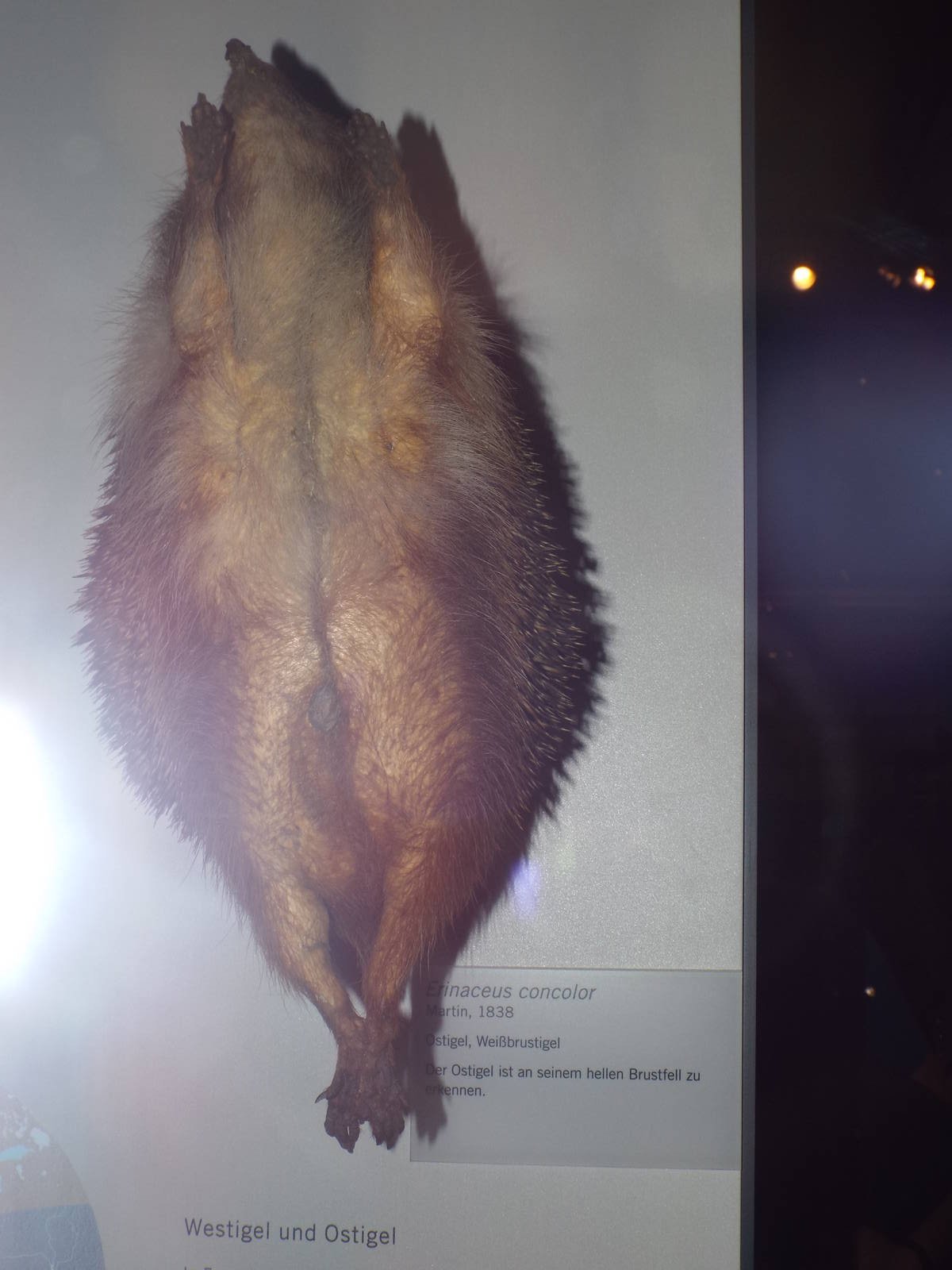
Part of a display on the different species found in Western and Eastern Europe within the Evolution in Action exhibit, this taxon is native to Eastern Europe and Western Asia. As the taxon was split in the 1990's, it is possible this specimen in fact represents [i]Erinaceus roumanicus[/i].