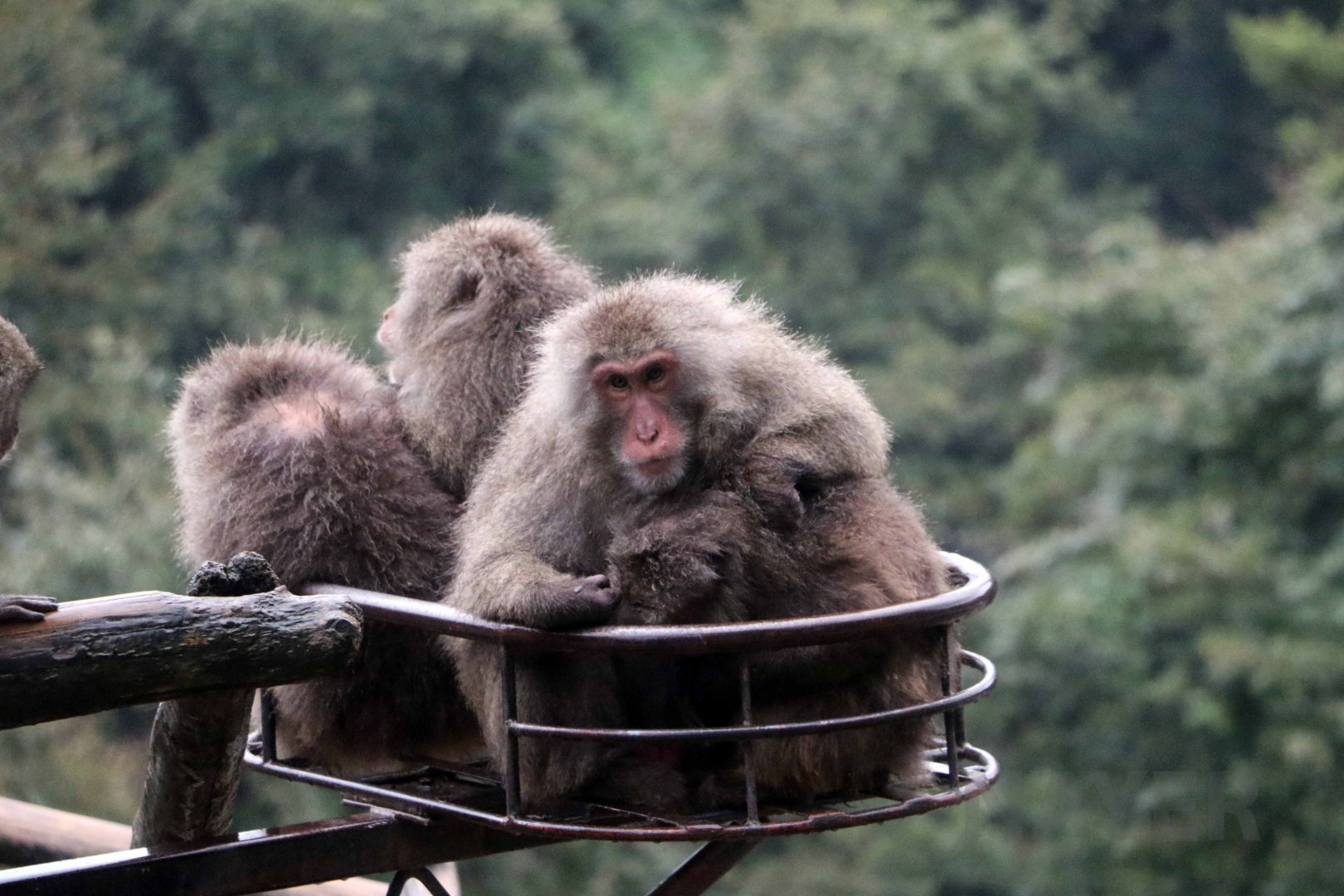
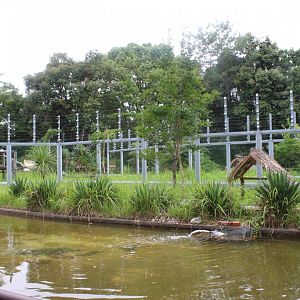
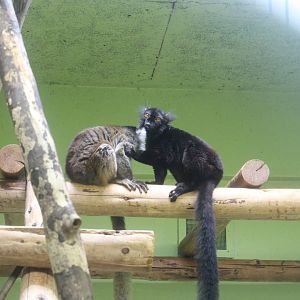
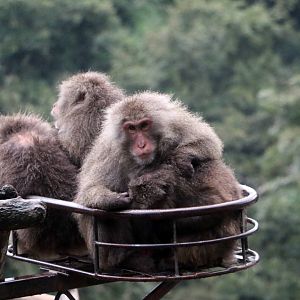
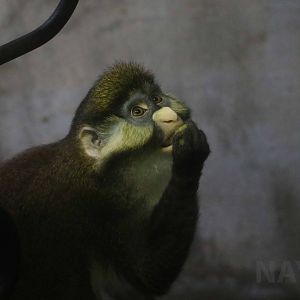
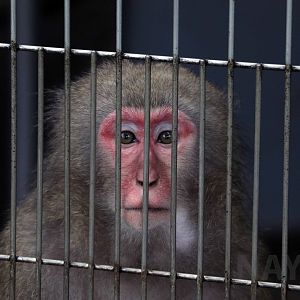
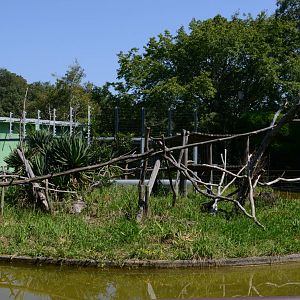
The collection is most impressive, but it feels like it's past its prime. There have been quite a few recent deaths (including the last Santarem marmosets outside Brazil in May), and quite a few of the animals are getting old, with many taxa down to single animals, or very small groups. Some animals I expected to see - like the malbrouck - I couldn't find either. It's still a very impressive collection, with a good range of species. Housing is very impressive in some places, like this enclosure which looks out over a valley, or the squirrel monkey island, or the innovative climbing structures for spider monkeys and Siamangs (I saw 9 siamangs separated into two groups). In other places, the housing is poor. Bleak, outdated rows of cages, which, although clean and the animals are well-cared for, can be a little unpleasant considering the size of some of the groups or the monkeys inside. There are a few 'benefits' to these old-fashioned rows arranged outside continental houses: it's interesting to see bonnet and toque macaques side-by-side, for instance, and it's said that these enclosures are better to conduct the monkey centre's research - its primary aim - but it's not somewhere I'd be rushing back to. Looking at number of taxa displayed, I can't think of anywhere which competes, and the numbers of specimens in some cases (black-tufted marmosets, olive baboon, Yakushima macaque..) surely push the total numbers very high - the centre claim they hold 950 primates; I would be surprised if the number is much smaller than that.