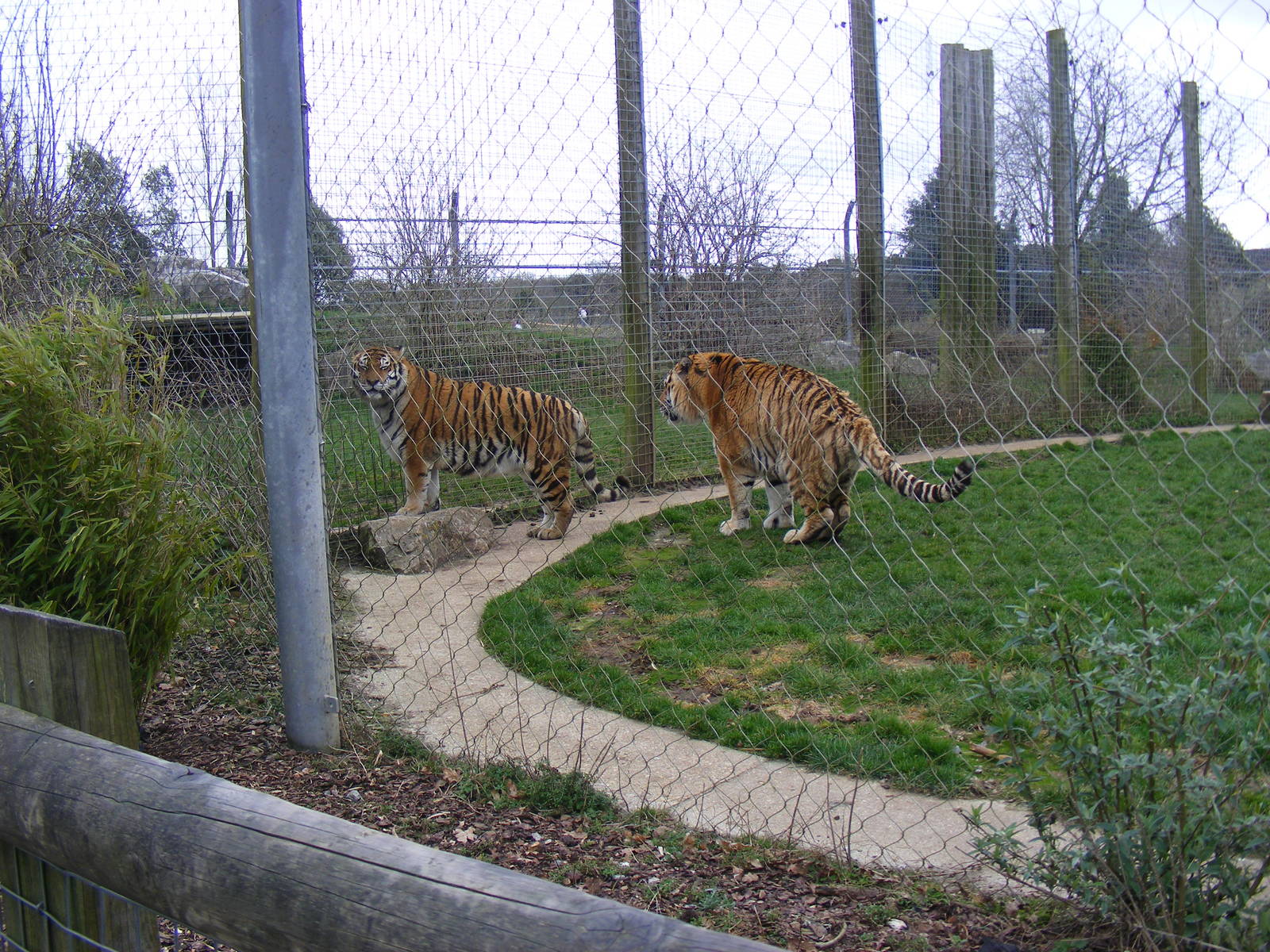
I know that I often make myself very unpopular on this forum by putting forward uncomfortable views and questions, but nevertheless - watching this picture I just can´t help myself but to put this question to you all:
An argument one often gets from anti-zoo activists is that the cemented paths at the outskirts of zoo enclosures (as in this picture) are there to hide away the fact that the animals enclosed pace around the perimeters to the point that if the cemented paths had not been threre, there would have been a ditch instead.
Maybe this exhibit was built for something else or maybe when the were building it they had a brainwave and thought maybe we should make this exhibit secure just in case we need to keep wolves in here one day. I wasn't saying maybe they do it because...I know that's why they do it and I was answering Dan's question.
This exhibit is good enough, and was renovated to it's current state in 2001. There isn't really much more that can be done cept the odd new feature.
This space has always held amur tigers since the zoo opened in 1972, so it was another designed for any other animal be it in the past or future. The concrete 'paths' are a bit of a Marwell tradition in the older carnivore enclosures, and whilst I'm not certain I believe this is indeed a security measure. Another possible reason would be to keep claws trimmed, as Marwell is very aware of hardstanding for hoofstock, so there'd likely be a carnivore equivalent.
They use concrete for the foundations of the poles holding the fence and its much easier to just concrete all the way around than concrete a post every few metres.
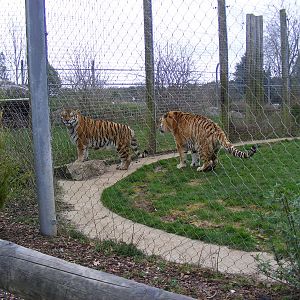
I know that I often make myself very unpopular on this forum by putting forward uncomfortable views and questions, but nevertheless - watching this picture I just can´t help myself but to put this question to you all:
An argument one often gets from anti-zoo activists is that the cemented paths at the outskirts of zoo enclosures (as in this picture) are there to hide away the fact that the animals enclosed pace around the perimeters to the point that if the cemented paths had not been threre, there would have been a ditch instead.
And to be honest, you probably won't find many (if any) Tigers that DON'T pace in captivity. I've never seen one who doesn't, even if it's only for a small amount of time.
And they are also probably there for a security measure; to stop potential digging, and that steel netting is probably buried in it.