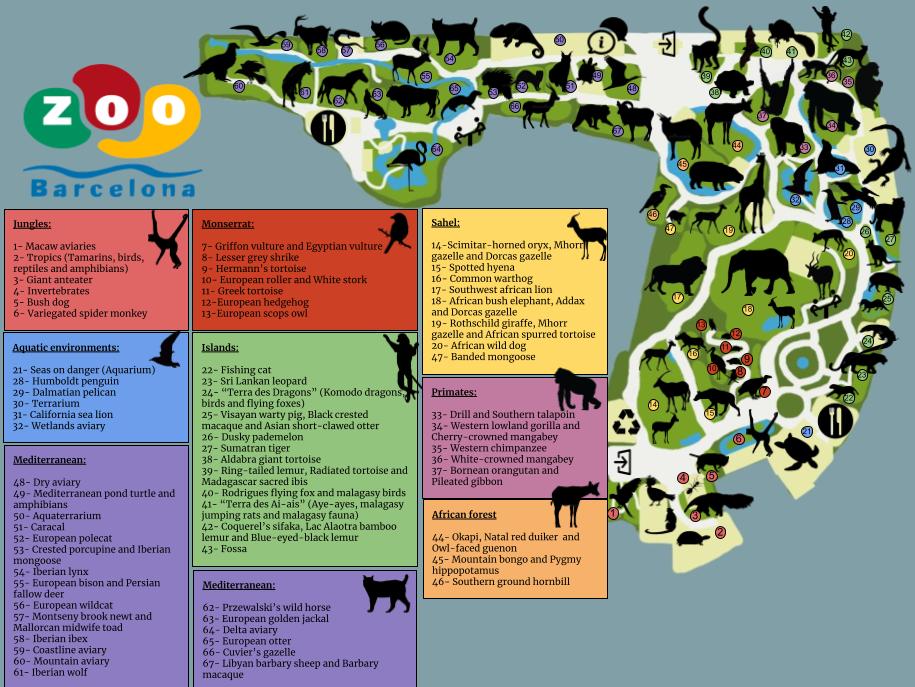
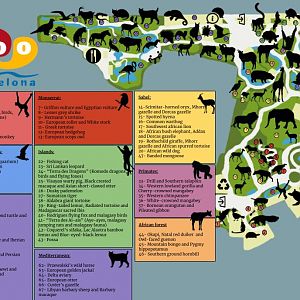
Based on recent masterplan ideas and in how I'd give it my own spin. I realize that some species might not be too realistic but I don't think it's that out there of an idea.
Yellow pond-turtle, Pied imperial pigeon, Miandano bleeding-heart and
Bali mina, Crested partridge, Victoria crowned pigeon, White-rumped shama and Southeast Asian box turtle
Collared kingfisher and Black pond turtle
Javan green magpie
Black-naped fruit dove, and Elongated tortoise
Blue-breasted kingfisher and Red-headed barbet
Mountain chicken
Utila island iguana
Philippine mouse deer and Superb fruit dove
Hispanolan rhinoceros iguana and Socorro dove
3- Giant anteater
4- Invertebrates:
Coconut crab and Land hermit crab
Leafcutter ant
Mexican red-knee tarantula
Goliath birdeater
Vampire crab
Sunburst diving beetle, Water strider and Silk orb weaver
Polynesian tree snail
Rhinoceros beetle
Velvet ant
Giant prickly stick insect
Huntsman spider
Dead leaf mantis
Giant centipede
Tanzanian whip scorpion
Darkling ground beetle
Giant cave cockroach
White-toed tarantula
White-eyed assassin bug
Blackback land crab
Chinese mantis
Brazilian black tarantula
5- Bush dog
6- Variegated spider monkey Monserrat:
7- Western Egyptian vulture and Western Eurasian griffon vulture
8- Lesser grey shrike
9- Western Hermann's tortoise
10- European roller and European white stork
11- Greek tortoise
12- West European hedgehog
13- Common scops-owl Sahel:
14- Scimitar-horned oryx, Mhorr gazelle and Kordofan dorcas gazelle
15- Spotted hyena
16- Common warthog
17- Southwest African lion
18- African bush elephant, Addax and Kordofan dorcas gazelle
19- Rothschild's giraffe, Mhorr gazelle and African spurred tortoise
20- African wild dog
47- Banded mongoose Water environments:
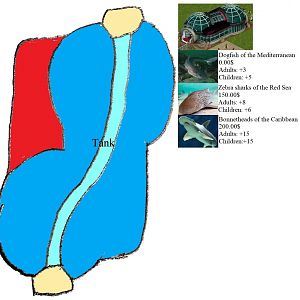
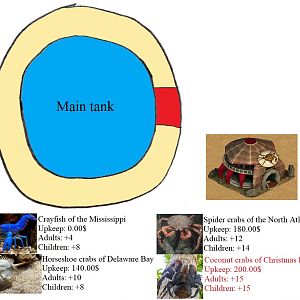
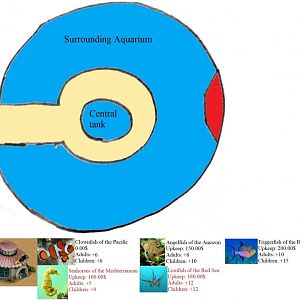
21- Seas on danger (Aquarium) (Aquariums are not my strong point and this really shows it ahahaha):
Loggerhead sea turtle, Zebra shark, Whitetip reef shark, Undulate ray and Cownose ray
42- Coquerel’s sifaka, Blue-eyed-black lemur and Lac Alaotra bamboo lemur
43- Fossa Primates:
33- Drill and Northern talapoin
34- Western lowland gorilla and Cherry-crowned mangabey
35- Western chimpanzee
36- White-crowned mangabey
37- Bornean orangutan and Pileated gibbon African forest:
44- Okapi, Natal red duiker and Owl-faced guenon
45- Mountain bongo and Pygmy hippopotamus
46- Southern ground hornbill Mediterraneo:
48- Dry aviary:
Waldrapp, European bee-eater, European thick-knee, Golden oriole, Stock dove, Barbary partridge, Iberian azure-winged magpie, Little bustard and Pin-tailed sandgrouse
49- Mediterranean pond turtle and amphibians:
Mediterranean pond turtle, Mediterranean tree frog, Perez's frog and Common carp
50- Aquaterrarium:
Common sturgeon
European eel
Spanish toothcarp
Cobitis paludica
Spanish minnowcarp
Iberian barbel
Valencia toothcarp
European crayfish
Common chameleon
Iberian asp viper
Iberian ribbed newt and European tree frog
Ocellated lizard and Greek tortoise
Iberian emerald lizard and Hermann’s tortoise
Gran Canaria giant lizard
Mediterranean house gecko and Common wall gecko
Horseshoe whip snake
Montpellier snake
Southwestern water vole
Garden dormouse
51- Caracal
52- European polecat
53- Iberian mongoose and Crested porcupine
54- Iberian lynx
55- European bison and Persian fallow deer
56- European wildcat
57- Life Tritó:
Montseny brook newt
Mallorcan midwife toad
58- Iberian ibex
59- Coastline aviary:
Audouin’s gull, Common tern, Common ringed plover, Kentish plover, Eurasian oystercatcher and Ruddy turnstone
60- Mountain aviary:
Lammergeier, Cinereous vulture and Red-billed chough
61- Iberian wolf
62- Przewalski’s wild horse
63- European golden jackal
64- Delta aviary:
Greater flamingo, Eurasian spoonbill, Glossy ibis, Black-crowned night heron Black-winged stilt, Black stork, Little bittern, Little egret, Pied avocet, Western swamphen, Northern lapwing, Ruff, Great cormorant, Common crane, Water rail, Bearded reedling, European pond turtle, Marbled teal, Common pochard and White-headed duck
65- European otter
66- Cuvier’s gazelle
67- Barbary macaque and Libyan Barbary sheep
----------------------------------------------------------------------------------------
If you want to see a better quality image of the map, here is a link: file:///C:/Users/W10/Downloads/yeah%20inglish.pdf
Wonderful job! I really like the changes you made and, in my opinion, you managed to do the impossible; you made a Mediterranean area that's truly varied and interesting! (Unlike what the people who are actually in charge want to do). It's extremely impressive overall; I especially like the inclusion of the bush dogs, the Visayan exhibit and the African forest area.
I think the Mediterranean area has a great potential of being the best part of the Barcelona zoo, but it has to be done right! And thanks! Great to hear these words from Barcelonese partners!
@SivatheriumGuy I believe a common error when designing the Mediterranean area is just focusing on the Iberian Peninsula; highlighting species from the Southern and Eastern Mediterranean really helps bring this zone into its own; one wouldn't expect to see caracals, Cuvier's gazelles and Przewalski’s wild horses in such an area, but when you really think about it, it all makes perfect sense. It's all about thinking outside the box, at the end of the day!
@SivatheriumGuy Very nice map and I really like your species selection too. Very nice and well done, I enjoyed this submission.
I guess the inclusion of the Przewalski's horses in the Mediterranean zone references and/or serves as a replacement for the extinct European tarpan wild horse?
@KevinB Yes! It's also a good species to showcase zoo conservation success stories. I know it might not be the most geographically accurate species, but I did want to add an equid species. I also thought of a good alternative being the Persian onager, but I ended up going for the horse.
@SivatheriumGuy Aside from the domestic horse the Przewalski's horse is the closest relative of the tarpan, and it might well be the last truly wild (not feral) horse in the world, so it is a good choice. Also an interesting zoo-related conservation story with the Przewalski's (although one could also tell interesting conservation stories with wild donkeys).