Grand Zoo Parc de Dion

While you are all waiting for the final section of ‘Wonders of Europe’, I want you to present this.

Ta-dah!!!


Credits to @Mr Gharial for the design!

This is our logo for Grand Zoo Parc de Dion. Royalty, grotesque, grand, … Superlatives! The moment Mr Gharial sent this to me I was like: ‘’Yup, this is it!’’

The pre-design began with a wolf, a tiger, a bear and a snake. So… we ended with a lion, the king of all beasts.

After all, Dionysus, being in the old name of the zoo (Zoo Park Dyonyssus), was the Greek god of festivities, fertility, religious ecstacy, etc… after all. So we can give it a godly status as well.

And as the name of the park says, it’s grand, big, enormous, just as the status of a lion. And what is more royal than gold? Right!

I hope you do like the design of the logo!
 
Last edited:
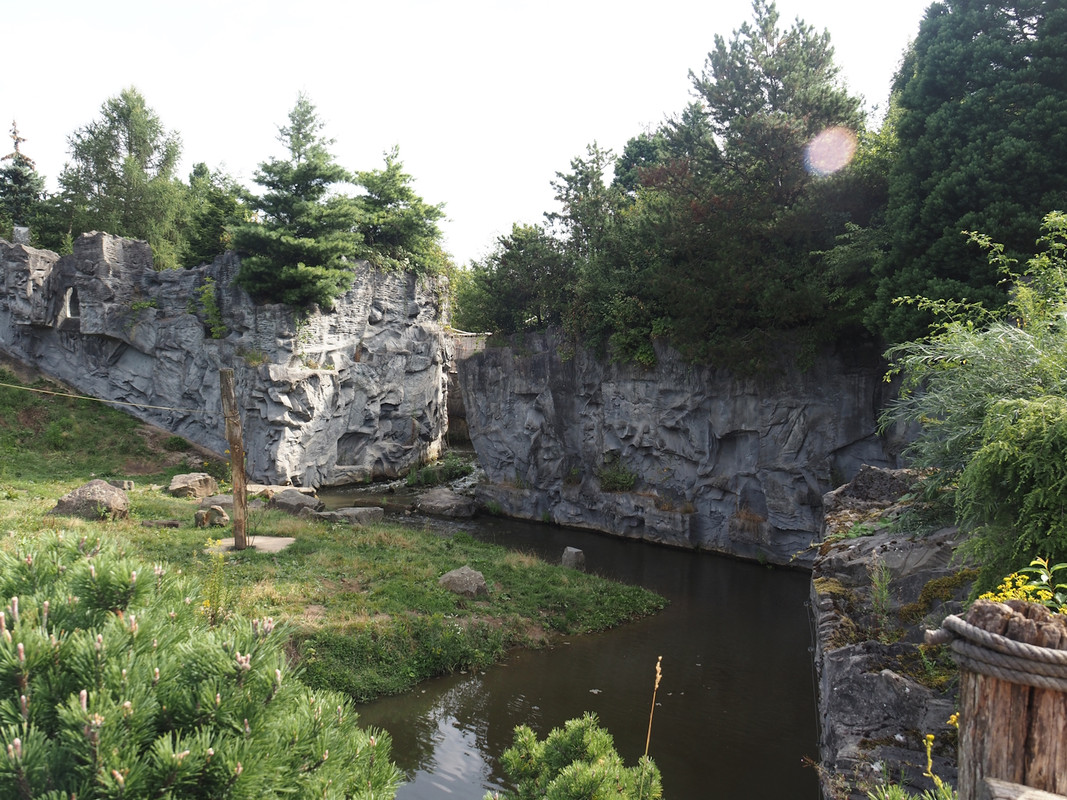
Here's another inspiration picture of the alpine ibex exhibit by the way.

full


Credits to @Philipine eagle

Alpine ibex enclosure - ZooChat

Next up, probably tomorrow or Saturday, the fourth and final section of 'Wonders of Europe'.
 
Hello, here’s another update for Grand Zoo Parc de Dion. :)

We’ve come at the final section of the ‘Wonders of Europe’ theme world. Let’s head into the forest again. But now we will discover the forests of Scandinavia. So the final phase is going to be the landscape of Sweden, Denmark, Norway, Finland, …

The question is: what animals will we meet at the Scandinavian section? Up to you to find out, I would say. Also, don’t be afraid to get your shoes dirty, because we will also head into the swampy areas of Scandinavia.

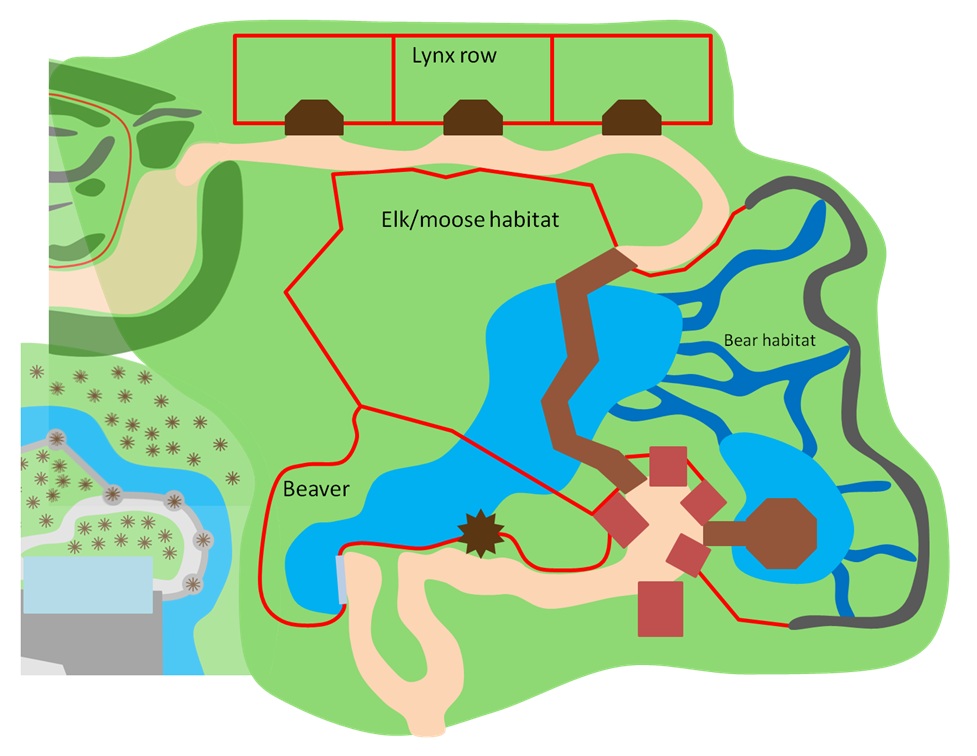
This is the standard designed map.


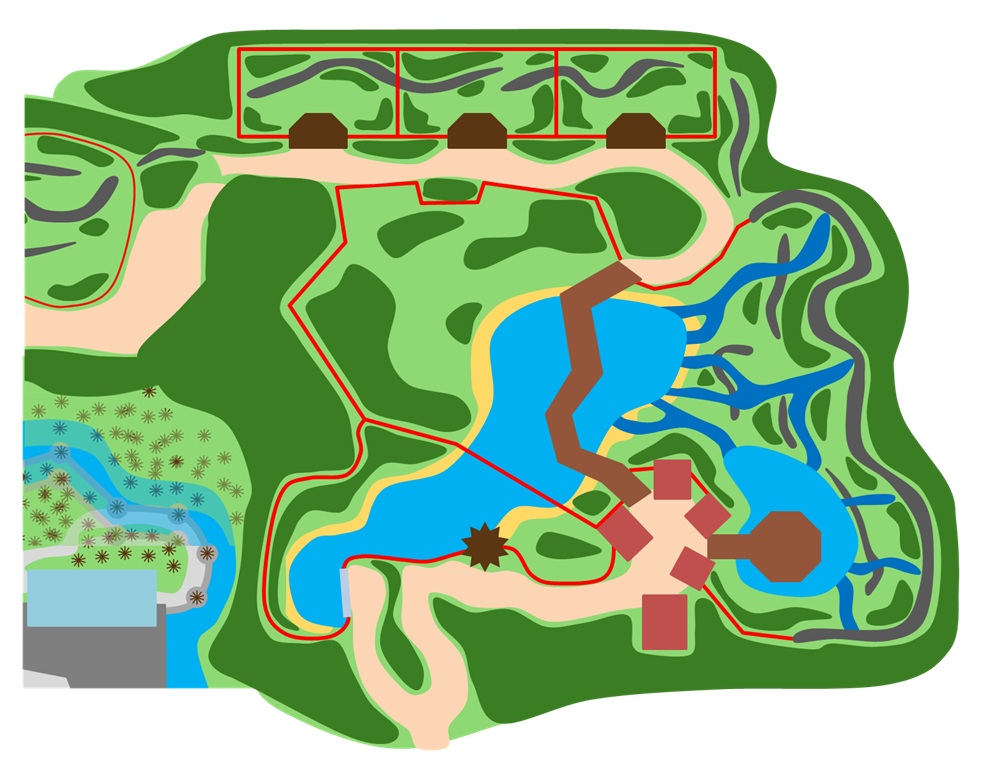
And here is the detailed version again.


To begin, after leaving the Alpine section, we enter the Scandinavian landscape. The first thing we see, when we turn to the left, is a row of three seperate exhibits. These can be connected to each other for breeding purposes for example. Here is the northern lynx, the subspecies of the Eurasian lynx that you can find in the Fennoscandian Peninsula. We have one male and two female lynxes at Dion. Our visitors can take a good look at the felids through the glass barriers of each enclosure, that is both very green and also a bit rocky. All three living spaces are covered with a net, knowing that a Eurasian lynx can jump up to 2 meters (6.5 feet) high. You don’t want any of these three to escape!

Then, we have a very interesting animal exhibit we’re going to look at. If we follow the path and look to the left side, you see a big, wooded enclosure. On this paddock lives a group of 1.4 Eurasian elk, also known as the Eurasian moose. This enclosure is also a popular landing spot for our European white storks, but also for wild grey herons. These gentle giants don’t care for the birds at all…

Next, we have THE apex predator of the European continent to present. After you pass the third exhibit of the lynxes, you can see a big forest. A lot of trees, bushes, rocks, grass, hollow tree trunks, moats… the perfect habitat for a group of Eurasian brown bears (2.4). Grand Zoo Parc de Dion can say they got a ‘state of the art’ bear forest. A nice thing to know: the brown bears have a feeding session, in which their zookeepers do an animal talk. The menu of the bears can be meat, fish, fruit or vegetables.

Then, it's time to cross a decking bridge over the water. From the decking you are also able to watch the elks (left) and the bears (right). If you take a good look into the water, through the water plants, you can see why there is sometimes a stork or heron wandering in the European elk's exhibit. Fish! We have eight different kinds of fish in the elk’s lake: tench, common rudd, common bream, European perch, common barbel, Maraena whitefish, lake trout and sterlet. How much fish there are exactly in the pond we can’t say. All depends of the fish spawning and the baby fish that grow up, and also of the storks and herons…

When we leave the decking bridge we enter a small Norwegian village with some typical houses that you can see when you go to Norway.

When you walk between two of the houses, you get another viewing point on the bear forest, this time from a decking. If you look down, you also have a big swimming part for the bears, which they use eagerly, especially on hot days.

Besides, when it's pretty warm, there is also an ice cream parlour named 'Iskald'. It's actually just Norwegian for 'ice cold', so quite easy. In this ice cream parlour it is possible to get an ice cone with one to three balls of ice cream. We have vanilla, chocolate, strawberry, banana, pistaccio, mocha, smurf and speculaas flavour. We also got lemon and raspberry sorbet. After doing a stop at 'Iskald', let's go to the last animal exhibit in the Scandinavian section, next to the elks.

The neighbours of the Eurasian elks are the Eurasian beavers (1.1). The elks and beavers are separated by very strong grids in the water. And… the grids have big enough gaps for the fish to swim through. So it’s also possible to see the fish here. For beavers, this is also a pretty big enclosure. The area is pretty flat, to give the Scandinavian swamp atmosphere. The beavers made themselves a very pretty beaver dam, and they also have a nice land part. There's also a small waterfall that flows through the exhibit.

Almost there! At a certain point you can choose what to do... Follow the path if you want another view of the beaver's swamp, or you can go on to the next world. But I'm sure, you want to get a better look at the fish, isn't it?

So, this was section 4 and also the last part of ‘Wonders of Europe’. I hope you enjoyed our first world of Grand Zoo Parc de Dion. Let us say this first one was a gem already!

Here’s an overview of the animals of our last section of ‘Wonders of Europe’.

Mammals:
Northern lynx (Lynx lynx lynx)
Eurasian elk (Alces alces alces)
Eurasian beaver (Castor fiber)
Eurasian brown bear (Ursus arctos arctos)

Fish:
Tench (Tinca tinca)
Common rudd (Scardinius erythrophthalmus)
Common bream (Abramis brama)
European perch (Perca fluviatilis)
Common barb (Barbus barbus)
Maraena whitefish (Coregonus maraena)
Lake trout (Salmo trutta lacustris)
Sterlet (Acipenser ruthenus)

As usual, @Mr Gharial will post some inspiration pictures and the species picture again. After that, I will also add some extra inspiration pics.

I will also give a summary of all the animals we have seen after going through each world. I will do this in another post.

The next world that we are going to show you, will be the ‘Kid’s Farm’, in which we will also see the famous dog & birds of prey show.
 
The row of Northern Lynx aviaries are built onto a natural rocky ledge to give the animals some climbing space. There's also some smaller climbing structures for the animals to lounge on.

full

(Photo by @British explorer)

The enclosures are viewable through small viewing huts containing some education about the wild cats.
full

(Photo by @TinoPup)

The Elk marsh habitat, viewable from a tall, raised boardwalk, is filled with both adult and young pine trees (same goes for the bear enclosure). The Elk are allowed to graze on the young trees and every year around february, guests can exchange living christmas trees for free entry into the park. The younger trees are planted into the enclosure at spots where last year's trees didn't survive the elk's grazing habits.

full

(Photo by @remar)

This does mean that the enclosure is a lot more lush earlier in the year, and the young trees are usually eaten or removed later in the year. This habitat is also often frequented by the ever-returning colony of European white storks
full

(Photo by @MClaeys :D)

The enclosure includes multiple viewing points in the forested section, but the animals are best seen from the boardwalk, as they do enjoy the water.
full

(Photo by @Philipine eagle)

The brown bear habitat looks pretty similar, although it also includes multiple rocky ledges and small waterfalls, and has large logs forming climbing structures for the bears.
full

(Photo by @ralph)

The bear enclosure also includes a rather large aquatic area. Similar to the barrier between the beavers and elk, there are rosters under the bridge that allows the fish to get to both enclosures. However, the rosters between the bears and elk are much smaller, only allowing juvenile fish to move to the bear area. Making sure to keep the adult, breeding fish on the non-predatory side of the Scandinavian marshland.

The bear forest ends in a small Scandinavian village including education about the brown bear in Europe.
full

(Photo by @KevinB)

The beaver enclosure includes two viewing points. One showing the forested shore of the enclosure, where the beavers can get in and out of the water. Just like the moose habitat, young and unprotected trees are planted here occasionally throughout the year, allowing the beavers to show their natural behaviour and cut down trees to build their nest.
full

(Photo by @lintworm)

A smaller pathway leads around the corner and down to the Beaver underwater viewing point
full

(Photo by @Ituri)

Species in the Scandinavian forest:
Scandinavia.png
 

Attachments

  • Scandinavia.png
    Scandinavia.png
    949.6 KB · Views: 132
@Mr Gharial Great inspiration pictures again! My turn! :)

IMG-1139.jpg


Second Eurasian lynx exhibit, 2024-06-08 - ZooChat

Here is another sight of one of the northern lynx exhibits. A picture from a little closer as you can see, and from the glass barrier, you can see the lynxes from close range if you are lucky.

Credits to @KevinB

IMG-1138.jpg


Water area and waterfall crevice in the Kamchatka brown bear exhibit, 2024-08-05 - ZooChat

This is a nice one for the water area of our Eurasian brown bears. Like said, during the feeding sessions the zookeepers like to trigger them to jump into the water for their food. And if they see a fish they can grab, they won’t hesitate!

Credits to @KevinB


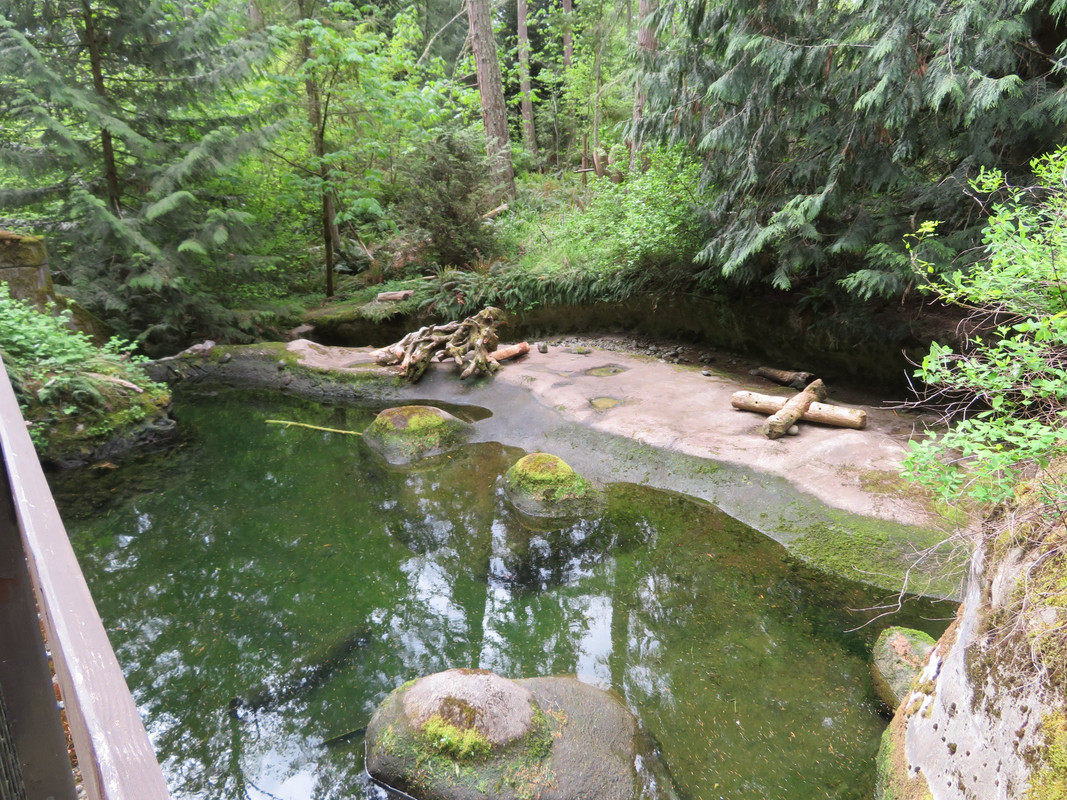
Otter or Beaver Pool - ZooChat

Here’s another look of the Eurasian beaver exhibit. Their island, logs, rocks in the water, … a very nice exhibit!

Credits to @Coelacanth18

Like I promised, here is the full animal list of ‘Wonders of Europe’!

Mammals:
Central European wild boar (Sus scrofa scrofa)
European badger (Meles meles meles)
Central European red squirrel (Sciurus vulgaris cinerea)
European mink (Mustela lutreola)
Alpine marmot (Marmota marmota)
Alpine ibex (Capra ibex)
Northern lynx (Lynx lynx lynx)
Eurasian elk (Alces alces alces)
Eurasian brown bear (Ursus arctos arctos)
Eurasian beaver (Castor fiber)

Birds:
European white stork (Ciconia ciconia ciconia)
Great cormorant (Phalocrocorax carbo)
Black-necked grebe (Podiceps cristatus)
Barnacle goose (Branta leucopsis)
Northern shoveler (Spatula clypeata)
Northern bullfinch (Pyrrhula pyrrhula pyrrhula)
European quail (Coturnix coturnix)
Long-eared owl (Asio otus)
Western barn owl (Tyto alba)
Common black kite (Milvus migrans migrans)
European kestrel (Falco tinnunculus)
Western capercaillie (Tetrao urogallus)
Eurasian eagle-owl (Bubo bubo)
Red crossbill (Loxia curvisrostra)
Alpine rock partridge (Alectoris graeca saxatilis)

Reptiles:
Sand lizard (Lacerta agilis)

Amphibians:
Banded fire salamander (Salamandra salamandra terrestris)
Natterjack toad (Epidalea calamita)

Fish:
European carp (Cyprinus carpio)
European bitterling (Rhodeus amarus)
Ninespine stickleback (Pungitius pungitius)
Tench (Tinca tinca)
Common rudd (Scardinius erythrophthalmus)
Common bream (Abramis brama)
European perch (Perca fluviatilis)
Common barbel (Barbus barbus)
Maraena whitefish (Coregonus maraena)
Lake trout (Salmo trutta lacustris)
Sterlet (Acipenser ruthenus)

Invertebrates:
Great diving beetle (Dysticus marginalis)
European crayfish (Astacus astacus)
 
Last edited:
Hello, like all of you know it’s World’s Animal Day today at the 4th of October!

I hope all of your pets had a great day! I must say, my animals had. I gave my two dogs a nice, juicy bone, my bearded dragon and leopard gecko got themselves some fresh desert locusts and wax worms.

And of course… for our Spec. Zoo thread for Grand Zoo Parc de Dion, our animals got some nice treats.

At this weekend (at the 4th and 5th of October), we’re also doing a very nice event, and especially for our youngest visitors.

We have some special feeding sessions, with questions you can ask to our zookeepers, and also a special show at Stork Castle (Wonders of Europe) at the end of the day with dancers, special effects, music, etc…

That’s not all: at one of our playgrounds (not going to spoil which one) we got a game that can be played, where you and your children can win prizes, like gadgets from Grand Zoo Parc de Dion (dolls, key rings, a sandwich box for example), but also day tickets and resort passes. But the most interesting one is…

One year of Grand Zoo Parc de Dion for free! That’s right, you read it well. You can win a subscription for the zoo.

If you already have a subscription of Grand Zoo Parc de Dion for your kid, we take a look at the day you started and refund you for your remaining period of your current and start up your free one immediately.

When your kids win a free day ticket, resort pass or subscription, you will get a voucher that you can exchange at the souvenir shop at the entrance of the zoo.

This event will also take place tomorrow. So if you plan on coming to Grand Zoo Parc de Dion, good luck with the game! There are still 11 day tickets, 4 resort passes and 2 year subscriptions left to win.
 
Last edited:
Hello, soon I’ll post the first part of the ‘Kids’ Farm’. So, it’s time for a teaser… And we got a name for the dog and birds of prey show: ‘Canines and Wings’! In French: ‘Canines et Ailes’.

upload_2025-10-21_11-17-45.png

Credits to @Mr Gharial for the design.

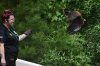
The Swiss White Shepherd that you can see, was my own dog that passed away at the age of 12 years old, almost one year ago now.

The bald eagle is the famous Lady Maya of Safaripark Beekse Bergen. Not easy to ‘shoot’ her mid-air, but I did it.

So this means one race of dog and one species of bird got spoiled on purpose. What will the other ones be…

Soon I’ll post the description of the demonstration. The show will be divided in two parts, first the dogs, second the birds of prey.
 

Attachments

  • upload_2025-10-21_11-17-45.png
    upload_2025-10-21_11-17-45.png
    863.3 KB · Views: 107
Hello, dear followers. It is time for another update for Grand Zoo Parc de Dion!

So, after months of waiting, we got through ‘Wonders of Europe’, our first theme world. We saw a lot of wild animals already. But now, we’re going to take a look what domesticated animals we have at the zoo. We’re going to the cities, towns, and especially, we’ll take a look at the farms and agriculture. I assure you, this is THE place to be when you bring your kids with you to Grand Zoo Parc de Dion. Let’s take a step into the ‘Kids’s Farm’!

For the ‘Kids’s Farm’ we designed only one map. So the different parts of this world will be the dogs & birds of prey show arena, alias the Colosseum, the farm, etc…

The map of this world will be posted later on.

When we leave ‘Wonders of Europe’ we stay in a pretty wooded area and as we go further we get an urban feeling. Then, we see the first eye-catcher and where this post is going to go about. An arena, designed for dogs & birds of prey shows, that is accessible all the time.

Welcome to the Colosseum, where the spectacle ‘Canines & Wings’ ( in French: ‘Canines & Ailes’) will take place. When the show is taking place the gates are closed. We have stands at the arena where the people can take place when the show is going on. It is obliged to stay seated when the dog & bird trainers are working with their animals. During your visit, this is a ‘must-see’.

Normally, ‘Canines & Wings’ will take place thrice a day. First from 10:30 AM to 11:15 AM, then from 1:30 PM to 2:15 PM and the last one from 4:30 PM to 5:15 PM. Make sure to be there in time.

Everything depends of the weather of course. When it’s raining too hard for example, the shows will be canceled or when it’s too hot for the dogs to work, we’ll only do the bird show. Safety for our animals first of course. During the winter, we’ll only do the dog demonstration, as it will be too cold for some of the birds that will participate in the demonstration. While the demonstration goes on, our ‘ringmaster’ will give some education in French, Dutch, English and German.

During the show we will also make use of some fitting music or themes, like they do at Safaripark Beekse Bergen for example.

The first part of the show, if everything goes according to plan, will be the dog demonstration, that normally takes around 20 minutes. All of our dogs we’re using in the show are female. Every dog has its own trainer.

We also ask to not touch the dogs, only if allowed by the trainers. If a dog flinches and bites, Grand Zoo Parc de Dion is not responsible. We also ask to not use flashing cameras or selfiesticks during the show. Another important thing is no food during the show, as this could lure the dogs away from their trainers and so ruin their training habits.

The first dog race that we’re going to show you will be the Belgian Shepherd type Malinois, or just the Belgian Malinois. These two dogs have participated multiple times for the Belgian championships, with one of them becoming second at the Belgian Obedience Championship twice. The trainers of this Belgian dog breed will show you how to walk your dog in freedom and will also give some of the commands (sit, down, stand up, come) during their parcours. After this, the trainers will also give their dogs a ‘place’ on a certain point of their parcours, call them and then send them back to the place they’ve been given.

After the Belgian Malinois dogs and their trainers leave the arena, it’s time for another shepherd breed to join the Colosseum. As there are also some objects like some show tables, three trainers are entering the field and call their majestic Swiss White Shepherd dogs and let them jump on a grooming table and than give them the command to sit, so they can observe them properly. Then they let the wolf-like dogs do some slaloms around ninepins, walk over a dog seesaw and let them jump over some dog cavaletti. Swiss White Shepherds are a perfect dog breed for beauty contests, but also for obedience training. They leave the arena after fetching a ball at the end of their excercise.

The next dogs that will enter the arena is one that is very famous for sheep farmers: the Border Collie, which we have four of. All of them are in the traditional black-and-white colour. These herding dogs have no sheep to look after, but they do like to do ‘agility’. The Border Collies and their trainers do the entire parcours at walking pace and after they’re at the end they let their dogs sit, lay down and stand up.

Then after the Border Collies leave the Colosseum, the fourth dog breed enters the field. This dog is portrayed as an agressive, bloodthirsty and dangerous breed, but when raised properly and if it has a selfconfident owner, this dog is just a friendly and calm companion for its family. It’s the Dobermann. Grand Zoo Parc Dion has a black and tan colour and a brown and tan colour of this German dog breed. The ‘ringmaster’ explains how the ears and tail of the Dobermann got chopped because of their role as guard dog, but this was forbidden years ago in Belgium. So our two ‘dobers’ got a long tail and flappy ears. We’re going to show you their strength as a ‘protection dog’. So for this excercise we got a third person, who is the target for the manwork. Like you see the ‘target’ has a special ‘manwork sleeve’ that the Dobermanns have to take a run for and grab the sleeve. After showing their speed and huge bite force, they have to let loose on command.

Last but not least, it’s the Golden Retriever. This dog is the perfect portrayal of men’s best friend. And also the moment the kids have been waiting for. These dogs can be petted by the visitors and we let them walk in the stands and if you are lucky, they even give you a high five or a lick. We have two Golden Retrievers, both light coloured animals. This was the part with the dogs.

So, this was part 1 of ‘Canines and Wings’. Here’s the list for all the races of dogs that participated in the show.

Belgian Shepherd (type Malinois)
Swiss White Shepherd
Border Collie
Dobermann
Golden Retriever

Enjoy!
 
Last edited:
Hello folks, dear followers!

So, in the previous post we saw a lot of Canis lupus familiaris (dogs… let’s keep it simple). I hope you enjoyed part 1!

Time for part 2 of the show: the birds of prey. The birds of prey demonstration takes around 25 minutes of your time.

We have about the same rules as for the dogs: no food in the stands, stay seated, no flashes when you take photos and don’t touch the birds.

The meaning of this part of the demonstration is to show their hunting abilities and their behaviour per species.

After been given some instructions by the ringmaster again, it’s time for the first two birds to enter the Colosseum. It’s the western barn owl (1.0) and Verreaux’s eagle-owl (1.0). The falconers let the owls fly over the head’s of the visitors and let them hunt for their prey. In the education is said that owls don’t make any sound while flying and also why. When it sits on one of the perches, you can take a look at its beauty. After this, we make place for the next set of birds.

The next group of raptors are falcons. First we see a falconer with the fastest bird on the planet: the peregrine falcon, - being almost like a fighter jet - demonstrating its insane speed flying over and then grabbing ‘a fake rat’ and then getting its reward. The subspecies we have is the European peregrine falcon (0.1). The second species of bird we show here is the saker falcon (0.1).

Next up, it’s time to show some scavengers. First a couple of Eurasian griffon vultures enter the stage, and then two male common ravens join in too. Not a real bird of prey, but it also likes to eat meat. Their trainers let them fly over a few times and then show the visitors their nature as a scavenger giving them their food.

The animals we are going to see after the vultures and ravens, are the red-tailed hawk and the Harris’s hawk, both male. The hawks are challenged to go after a fake rabbit and then they fly over about two times.

Round 5: our eagles. To begin we show you the national bird of the USA, the bald eagle (1.0), followed by another fantastic specimen, the golden eagle (0.1). Both eagles show their great tricks in the air, showing their agility to grab their prey. Like you have seen, there is also a little swimming pool. Now things get interesting, because the bald eagle is known to eat fish. We throw a fish above the water and before touching the pool, the bald eagle grabs the fish.

We end the show with another pescivore and also some parrots. The swimming pool will be taken use of by the Dalmatian pelicans (0.3), which get some fish as a treat. Then three colourful blue-and-yellow macaws (3.0) and a little corella little corella (1.0) fly into the arena, landing on the perches for some fruit and peanuts.

This was ‘Canines & Wings’! Thank you for joining us at the Colosseum for this great spectacle! After the show you can take a closer look at the blue-and-gold macaws and the little corella. The Golden Retrievers and the Swiss White Shepherds are coming at the terrain again. You can also let us take a photo - with your mobile phone - of you or your kids with some of the animals.

Here is the list of birds we have seen in our demonstration of ‘Canines & Wings’.

Western barn owl (Tyto alba)
Verreaux’s eagle owl (Ketupa lactea)
European peregrine falcon (Falco perigrinus perigrinus)
Saker falcon (Falco cherrug)
Red-tailed hawk (Buteo jamaicensis)
Harris’s hawk (Parabuteo unicunctus)
Eurasian griffon vulture (Gyps fulvus)
Common raven (Corvus corax)
Bald eagle (Haliaaetus leucocephalus)
Golden eagle (Aquila chrysaetos)
Dalmatian pelican (Pelicanus crispus)
Blue-and-yellow macaw (Ara ararauna)
Little corella (Cacatua sanguinea)

Next up, @Mr Gharial will post the species pictures of the whole show. And of course we will also post some inspiration pictures of the Colosseum and the demonstration.

The next part will be about all the animals that live in our farm and petting zoo. And maybe also a good moment to show the map of ‘The Kids’s Farm’.

Enjoy!
 
Last edited:
The Canines and wings show of the Kid's Farm, the first thing you see when entering this region.

The main setup is a typical bird show setup, with arena seating and a grass meadow in the middle, this can also be used as a picnic and seating area when they're not doing a show.

Arena.jpg

Camouflaged on the field are multiple boxes covered in fake grass and tree bark, for the birds to perch on for feeding and tricks. All combined with education on, for example, how Ravens and Griffon vultures are often found together when scavenging in the European mountains, or how you can tell if an owl is nocturnal or diurnal by the colour of their eyes.

The boxes on the field aren't always there, though. As they can be lifted to reveal the colourful dog course, with tunnels, see-saws, hoops and hurdles. Due to the more colourful nature of the obstacles, we want to camouflage them during the bird show, as to not distract the birds too much.

Areena.jpeg

Species from the show:
Dog show.png Bird show.png
 

Attachments

  • Areena.jpeg
    Areena.jpeg
    279.4 KB · Views: 94
  • Arena.jpg
    Arena.jpg
    200.6 KB · Views: 92
  • Dog show.png
    Dog show.png
    888.6 KB · Views: 75
  • Bird show.png
    Bird show.png
    816.1 KB · Views: 74
Hi folks!

Here are some of our birds at work during the show.

upload_2025-10-31_13-45-24.jpeg

Credits to @Panthera9

Western barn owl (Tyto alba) - ZooChat

Here is the western barn owl.

upload_2025-10-31_13-59-31.jpeg

Credits to @KevinB

Meeting The Animals show - Verreaux's eagle-owl (Bubo lacteus), 2022-09-15 - ZooChat

And here is the Verreaux’s eagle owl.

upload_2025-10-31_13-37-48.jpeg

Credits to @TheGerenuk

Peregrine falcon - ZooChat


upload_2025-10-31_13-39-59.png

Credits to @StellarChaser

Ricky the male Peregrine Falcon - ZooChat

Here is the peregrine falcon in action.

upload_2025-10-31_14-3-54.jpeg

Credits to @KevinB

Meeting The Animals show - Saker falcon (Falco cherrug), 2022-09-15 - ZooChat

And this our saker falcon, sitting on its trainer’s hand.

upload_2025-10-31_14-12-37.jpeg

Credits to @Moebelle

Aug. 2025 - Wings of Wonder - Harris's Hawk - ZooChat

This is our Harris’s hawk taking flight.

upload_2025-10-31_14-9-55.jpeg

Credits to @vogelcommando

Bird of Prey show : Bald eagle - ZooChat

Here is the bald eagle, flying over the water.

upload_2025-10-31_13-57-29.jpeg

Credits to @Parrotsandrew

Blue and Yellow Macaws in flying display 19th May 2013 - ZooChat

Two of our blue-and-yellow macaws in action.

Enjoy!
 

Attachments

  • upload_2025-10-31_13-37-48.jpeg
    upload_2025-10-31_13-37-48.jpeg
    97.3 KB · Views: 85
  • upload_2025-10-31_13-39-59.png
    upload_2025-10-31_13-39-59.png
    892 KB · Views: 67
  • upload_2025-10-31_13-45-24.jpeg
    upload_2025-10-31_13-45-24.jpeg
    79.3 KB · Views: 89
  • upload_2025-10-31_13-57-29.jpeg
    upload_2025-10-31_13-57-29.jpeg
    179.5 KB · Views: 90
  • upload_2025-10-31_13-59-31.jpeg
    upload_2025-10-31_13-59-31.jpeg
    136.3 KB · Views: 89
  • upload_2025-10-31_14-3-54.jpeg
    upload_2025-10-31_14-3-54.jpeg
    77.6 KB · Views: 87
  • upload_2025-10-31_14-9-55.jpeg
    upload_2025-10-31_14-9-55.jpeg
    73.3 KB · Views: 83
  • upload_2025-10-31_14-12-22.jpeg
    upload_2025-10-31_14-12-22.jpeg
    138.6 KB · Views: 4
  • upload_2025-10-31_14-12-37.jpeg
    upload_2025-10-31_14-12-37.jpeg
    138.6 KB · Views: 91
Last edited:
Hello, dear followers!

Here am I again with another update for Grand Zoo Parc de Dion. After some weeks, we’re going to pick up the pace again.

Time to see what is more about the 'Kids's Farm'. I hope you enjoyed our dogs and birds of prey demonstration 'Canines & Wings'.

What do you think about we go further with the path after leaving the Colosseum? Let's head over to the farmyard, so we can take a look at what breeds of pet animals we've got.

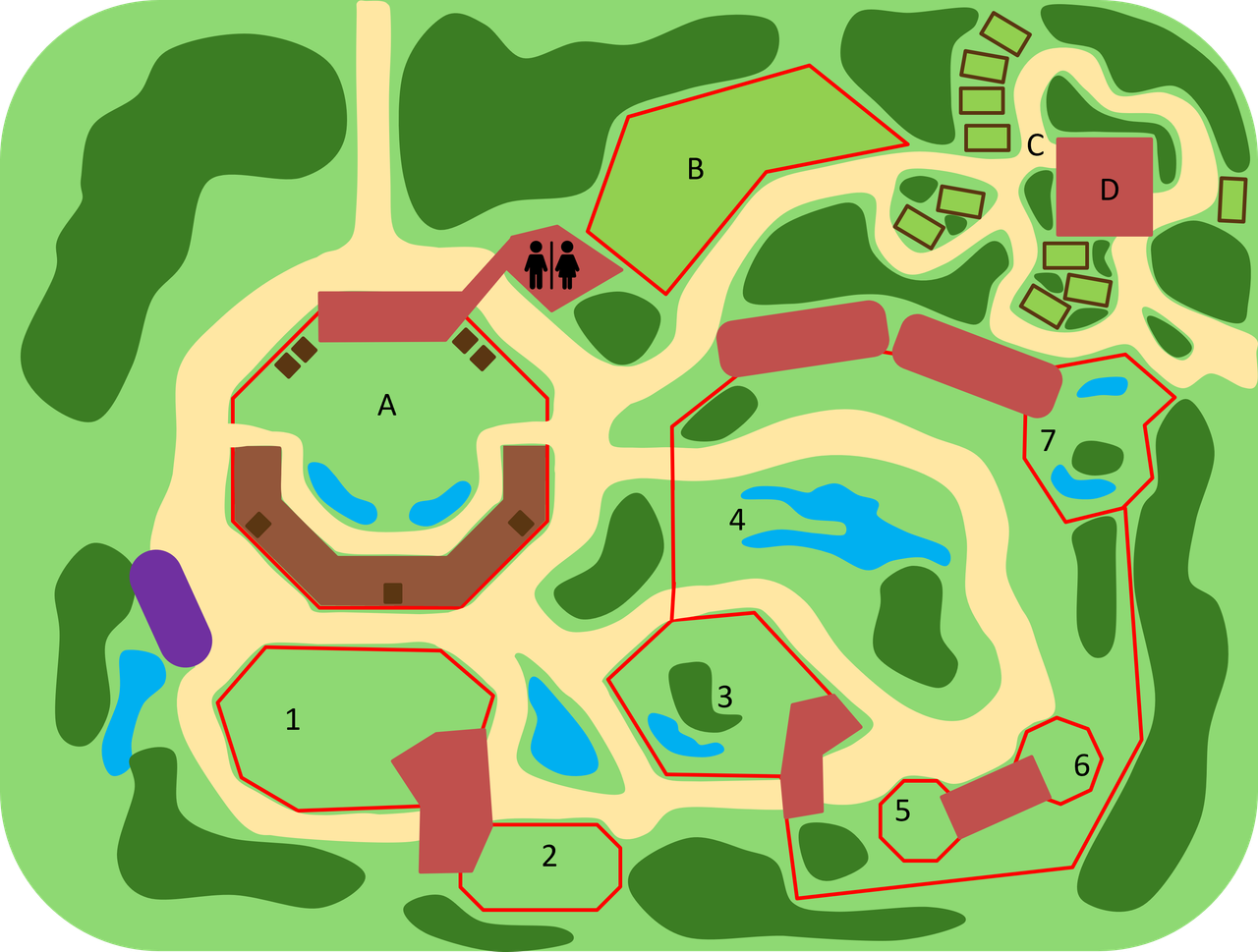
Here’s the map of the ‘Kid’s Farm’.


After you've seen the show, and especially if you took your kids with you to Grand Zoo Parc de Dion, we encounter our second food truck, or should we say 'candy and ice cream truck'? You can find the food truck at the right side of the path. Here we’ve got cones with soft serve (vanilla, cholocate, stracciatella or strawberry), and cotton candy or candy floss. Why wouldn't you take one of these!? And... there's also a toilet near the Colosseum for who needs one.

Ready to go on? When you walk under the arc of the toilets, you can also go through, but if we want to follow the main route, we return back to the Colosseum and follow the right side around the arena.

The idea of this farmyard is to show our visitors breeds that are mostly from Europe. Of course, there a lot of pet breeds that have their origin from Africa, North and South America or Asia, but we chose to keep the focus on Europe at this part of the ‘Kid’s Farm’.

The first animal exhibit we encounter, is the pony meadow, with a herd of six Shetland ponies. All of them are mares (females). A large enclosure where the ponies have a lot of space to run around and a shelter when needed, for when it rains for example. There’s also a second animal in this enclosure, seven Polish chickens (one rooster and six hens). These crested fowl breed has an own chicken coop for the night or when it’s too cold for example.

The second exhibit we see, is the exhibit of our rabbits. The rabbit breed we have is the French Lob rabbit (5.0). As we know rabbits are able to dig and break out. We made sure this won't happen because we got a floor made of concrete, under the natural grassy environment. So if you think to take a walk around the farmyard, don't even think about it, bunnies... The rabbits also got some hiding houses when they want to retreat themselves.

Near the pony meadow there is also a well-planted pond, also bedded with some water lilies. In this pond you are able to find goldfish and golden orfe. This is also an attraction for frogs and toads. So, the croaking of a green frog is no unknown sound at this part of Grand Zoo Parc de Dion. It’s also not uncommon to spot grey herons or an European white stork at this pool of water.

Next; we have gotten a spacious, grassy paddock for two Poitou donkeys (1.1). Bien sûr, like you can hear, these donkey breed comes from France. These big donkeys also got their own shelter. But there's also some other animals that can enter this enclosure.

The following guests can pay a visit to our donkeys: Malines chickens (0.15), Dindon Rouge des Ardennes turkeys (1.6), Belgian forest ducks (1.6), and Flemish geese (3.5). All of those birds’s wings are trimmed, so they can't fly away. There are also some trees and small part of water. Another interesting thing is: all these breeds have a Belgian origin.

And now... the biggest exhibit of this 'section' of the 'Kids's Farm'... We have our big walkthrough meadow, something that cannot be missed on a kid's zoo. There's a sign board that the visitors always need to close the gates after entering the meadow. Also not feeding the animals, no chasing and that you also need to stay on the path. This is also the main enclosure for the free-roaming poultry we saw earlier.

At the beginning of the meadow, there are two octagonal aviaries. The first one houses some couples of budgerigars (10.10) in quite different colour breeds. Some perches, seating ropes, nest boxes, toys, … all you need for budgies is present in this exhibit. The second aviary is home to a flock of Homing pigeons (5.5). A fun element in this aviary is an old coach for the pigeons to rest on. Both aviaries have a night cage, divided in two separate pens.

Our hoofstock in this big enclosure are the Belgian fawn (0.10) and the Houtland sheep (0.13). For some shadow our animals and also lay under the trees on their paddock. A nice detail is that you can also see the donkey paddock, while walking through this exhibit. There is also a pond for some of the free-Belgian forest ducks and Flemish geese. In these ponds you can also spot goldfish and golden orfe.

Before leaving the walkthrough meadow, you can also see the pig exhibit of our farm. Meet the Piétrain domesticated pigs (1.3), a Belgian breed of pigs actually. Like you see at the map, their enclosure lays a bit of the walkthrough path you need to stay on. If you want to take a closer look at the pigs, this will be possible later on. There are also possibilities for the chickens, turkeys, ducks and geese to say hello to the pigs.

After we leave the walkthrough meadow, with almost all species from Belgium, we got another sight on the Colosseum. Don’t forget to close the gates again!

If we follow the path, we can take another stop at the toilet when needed (maybe if you forgot to?) or we go on to the next part of this theme world… What will we see there? Up to you to find out… later on of course.

So, this was our farmyard. I hope you like this collection of farm animals and maybe you have discovered some new pet animal breeds you didn’t know about.

Here’s a list of all the animals we’ve seen on the kids’s zoo’s exhibits.

Mammals:
Shetland pony (Equus ferus caballus)
French Lob rabbit (Oryctolagus cuniculus domesticus)
Poitou donkey (Equus africanus asinus)
Belgian fawn (Capra aegagrus f. hircus)
Houtland sheep (Ovis orientalis f. aries)
Piétrain pig (Sus domesticus)

Birds:
Polish chicken (Gallus gallus domesticus)
Malines chicken (Gallus gallus domesticus)
Dindon Rouge des Ardennes turkey (Meleagris gallopavo domesticus)
Belgian forest duck (Anas platyrhynchos f. domestica)
Flemish goose (Anser anser domesticus)
Budgerigar ‘’mutations’’ (Melopsittacus undulatus)
Homing pigeon (Columba livia domesticus)

Fish:
Goldfish (Cassius auratus auratus)
Golden orfe (Leuciscus idus melanotus)

As usual, @Mr Gharial will post the pictures with all the species we’ve encountered and we will post some inspiration pictures again.

In the next update we will see what part B is going to be. Since we’ve had part A and a lot of animals already. I can give you guys a hint for part B actually. You just heard the name of the main animal that is coming up. ;)

Enjoy reading!
 
Last edited:
Mr Gharial here to assist with another post of Grand Zooparc de Dion! Welcome to subregion two (out of three) of Dion's European district: The Children's farm.

Not only home to the famous Canines&Wings show, but also a charming petting zoo with various domesticated species. With the exception of the Scottish Shetland pony, the Australian budgie and the Chinese goldfish, all domesticated species shown here are either from Belgium or its neighbours.

Right after walking past the dog and bird arena, we first come across a small plaza with the food truck location and some seating areas. From here we can also see the first few exhibits
full


Similar to GaiaZOO's Limburg-based farm area, the Children's farm includes a natural landscape and various charming houses and barns:

full

full


The stables and houses spread throughout the Children's farm are medieval-inspired, with some education on how various species bred in Central Europe are quite different from their wild counterparts. The Budgies also serve as an example of a more recently domesticated species, and how they more closely resemble their wild family members.
full


This farm design also extends to the pigeon and budge aviaries, which have a small farm house in the middle
full

full


The only exhibit that isn't all that green would be the pig enclosure. Due to their behaviour, they'll get rid of most plants rather quickly. The chickens are technically allowed to come here, but the fence isn't designed to let them through, as pigs are omnivores. They'll often sit on the fence, but won't go inside unless the pigs are in the barn.
full


(All photo's either by me or @KevinB )

Now for our species list:
Children's farm.png
 

Attachments

  • Children's farm.png
    Children's farm.png
    900.3 KB · Views: 46
Last edited:
Hello guys, here we are again.

Since the inspiration pics look pretty good already and in my point I don’t need to add anything anymore for section A, we will go on to part 2 of this theme world.

Hopefully you enjoyed our petting zoo section of the ‘Kids’s Farm’ theme world. It’s time to take a look at the rest of this theme world.


Here’s the map again, to make it more visual for everyone.

To be honest, you saw most of our animals of the ‘Kids’s Farm’. So we had section A with the Colosseum and our collection of farm animals. Like you’ve seen, we had a lot of European animal breeds.

And it’s time buzz of to section B. Yep, you’ve read it… Welcome to our bee valley! Go to the right and turn to the left and there you’ve got the home for our colony of bees.

Discover our nice composition of flowers, brushes, bee hotels, beehives, … A fantastic place for these important insects. The species of bee we have chosen is the western honeybee, the species you can find in Belgium. To be more specific, we got the subspecies Apis mellifera mellifera, also known as the European dark honeybee. It’s also not an uncommon thing to spot butterflies at the bee valley, who greatly enjoy the big variety of flowers.

Bees are very useful animals in in the world’s ecosystems. And why would we skip our small, hairy, brown-and-yellow striped friends here at Grand Zoo Parc de Dion? At the contrary, we also give our visitors some education of the western honeybees.

Then we have section C, the food forest. Walk past the barn of the Piétrain pigs we saw at section A, and there it is… An interesting and more environmently friendly way of farming. The food forest is situated around a farmer’s house.

We got some crab apple and pear trees, brushes of strawberries, blackberries and redberries, a small barley field, some crop plots with cabbage lettuce, red cabbage, leek, onions, European wild ginger, chives and rosemary. So, there’s actually a lot to see at section C, isn’t it? Maybe no animals, but lots of agraric education.

Of course our crops aren’t sprayed with pesticids or insecticids, since we choose for an ecological way of farming. Walk around for a while in this section, so you can take a look at all the things we are growing in our food forest. Everything is situated around a farmer’s house.

Some rules… no plucking, don’t eat the crops and don’t walk the fields. We are counting on our visitors to respect those simple norms.

Last, but not least… section D. Here we have got our farmer’s house, where we give some education about ecological agriculture. Sometimes, we give a possibility to buy some self-grown strawberries when it’s the right season of the year. When you leave the farmer’s house, you’re at the food forest again. When you go through with the path, you can see the next theme world already.

Well, I guess we’re through our second world of Grand Zoo Parc de Dion already. I hope you also enjoyed this part of the zoo. There is a lot more to come of course.

And just like we’ve done before… a species list of the sections we saw, so more specific section B, the bee valley. With only one species.

Invertebrates:
European dark honeybee (Apis mellifera mellifera)

@Mr Gharial will show the species picture again of the bees, because there’s not much to show else. And also some inspiration pictures again.

The next theme world after this, and also the last European theme world before we go on to the next continent, will be ‘The Beach’.

I will also post the full species list of the ‘Kids’s Farm’ again to be complete, later this week.

Enjoy reading!
 
With multiple bee and insect hotels strewn around the insect valley, as well as a whole lot of native wildflowers, this section of the Kid's farm is filled with native insects. Beetles, Butterflies, Crickets, as well as spiders and dragonflies, creating a big ecosystem full of life.

There's also multiple small education boards on the importance of the various arthropods and what they do. Detritivores, pollinators, predators, all with their own role in the ecosystem.
full


20250722_164246.jpg

full


full


full


Among the regular field of wildflowers there's multiple planters only holding one or two species, with signage indicating their species, which species benefit from them, and how and where to plant them in your own garden (wether they're sun or shadow plants, etc) to promote more native plants in Belgian gardens.

full


20250722_164258.jpg

Some more general inspo pictures:
full


full


Similarly, the food forest section includes education on more sustainable farm practices, and advocates for people to have their own, small 'moestuintjes' as they say in Dutch. Growing your own herbs, spices, veggies and fruits at home will overall have a positive impact on both local ecology, and the environment overall with less fruits being imported from other continents.

With more crop rotation and less monoculture, food forests put less of a strain on the soil and are much less vulnerable to disease and pests.

20250722_164353.jpg

20250722_164301.jpg

20250722_164235.jpg

In the middle of the food forest we have a house with not only more education, but also a seed- en sprout shop for wildflowers, crops and herbal plants, there are also workshops on weekends. On making seed bombs, maintaining your own crop gardens, and building your own insect hotel. These can be booked by schools, companies and even elderly care homes, but are also run on weekends without bookings, where people can join in for themselves.

full
 

Attachments

  • 20250722_164353.jpg
    20250722_164353.jpg
    326.7 KB · Views: 43
  • 20250722_164301.jpg
    20250722_164301.jpg
    332.7 KB · Views: 43
  • 20250722_164258.jpg
    20250722_164258.jpg
    355.4 KB · Views: 42
  • 20250722_164246.jpg
    20250722_164246.jpg
    328.8 KB · Views: 43
  • 20250722_164235.jpg
    20250722_164235.jpg
    317.8 KB · Views: 43
Hello hello,

So, after my trip to Pairi Daiza, it's time to post some of the inspiration pics from my side. Great ones by @Mr Gharial once again.

My own picture, from Wildlands Adventure Zoo Emmen for some of the bee hotels.

full


Bee-‘n-Bee - ZooChat

Here some pictures of the insect valley from my point of view.

full


Wildlife pond and aquatic native wildlife education area, 2025-05-22 - ZooChat

Credits to @KevinB.

full


https://www.zoochat.com/community/media/example-of-aquatic-micro-invertebrate-education-signs-in-the-wildlife-pond-and-aquatic-native-wildlife-education-area-2025-05-22.846104

Credits to @KevinB again.

Here's one of the honeybees in action, gathering some nectar.

full


European Honeybee - ZooChat

Credits to @WhistlingKite24.

Here's a nice educational picture for the kids.

full


Area for wild bees 13.7.25 - ZooChat

Credits to @felis silvestris.

Here's some inspiration for our food forest. Some herbs and vegetables in one of our crop plots we use for growing our ecological farming crops.

full


"Petting plants" - Planter with herbs and vegetables, 2025-05-22 - ZooChat

full


Planter with herbs and vegetables, 2025-05-22 - ZooChat

Credits to @KevinB for both pictures.

So, that's going to be it.

Enjoy looking at the pictures.

Coming up next, probably next week, 'The Beach'.
 
Last edited:
Back
Top