You are using an out of date browser. It may not display this or other websites correctly.
You should upgrade or use an alternative browser.
You should upgrade or use an alternative browser.
Taronga Zoo Taronga Zoo News 2025
- Thread starter Osedax
- Start date

It's great to have Who's Zoo at the Zoo back and with relatively recent content (ie from earlier this year) like the departure of the elephants.
I agree. Auckland Zoo’s latest TV series covered Burma’s departure several months after the event and I wasn’t that interested to see it after so much time had passed. I followed every update on socials and news articles; and half of ZooChat was tracking the plane. I doubted there was anything the TV series could tell me that wasn’t old news.
One thing that intrigued me was Taronga neglecting to announce the hatching of a Fiordland crested penguin earlier this year (which we only learned about via the media). I’m wondering if this is to have some surprises up their sleeve for the series as it was otherwise a notable achievement.

Thanks for sharing @steveroberts.
My thoughts:
The narrator is going to wear us out with all these puns.
The highlight was the pinniped segment, with a nice transition between rescued Taronga seal Bondi to a population count of fur seals in the wild. However, an opportunity was missed to cover the births of Australian sea lion pup (Bair) and New Zealand fur seal pup (Pea). I also would have appreciated an insight into how Taronga manages 16 pinnipeds across four pools, namely the BOH facilities used to house those off display.
Every series features a marine animal rescue (usually something with a fishhook stuck in its gullet) and this episode brought us the pelican with the suspected neck injury. Credit to the veterinary team, they do amazing work and it was evident how invested they were in trying to save this bird.
The lions getting piñatas as enrichment was an underwhelming storyline that surely took airtime away from something more interesting. They should have gone for a marine themed episode and replaced this segment with something about the hatching of the Fiordland crested penguin chick earlier this year.
Thanks for sharing @steveroberts.
It was a quick turn around considering they went from monitoring the gorilla troop with the view of transferring out the adolescent males (in particular Mjuuku) to completely disbanding the troop with the transfer of the females to Melbourne Zoo a few months later.
Melbourne’s situation obviously required addressing; though I wonder if tensions increasing in the interim to contribute to this decision. Given his age (11 years old this year), Mjukuu couldn’t have remaining in the troop indefinitely.

Haliaeetus
Well-Known Member
Taronga: Who's Who in the Zoo - Episode 5
I’m afraid it’s all criticisms from me this week.
First of all, the elephants are back at Taronga Zoo. No, not really. But whoever directed this series thought four episodes on from the episode that bid Pak Boon and Tang Mo a fond farewell would be the perfect time to drop content of them on exhibit as if they’d never left. I’m sure many of you enjoy elephant content as much as myself; but they literally have a herd of them over at Dubbo. Why not update us on Anjalee’s pregnancy?
This was preceded by a segment of somebody driving the truck that transports the browse to Taronga’s gates. When I complained pre-screening that we all always get a requisite browse collection storyline in every series, never did I imagine we’d get two such segments in the space of five episodes...
It was good to see the red pandas as small mammals are sometimes neglected in these series in favour of megafauna, browse collection and wildlife rescue/conservation content. The continued reference to the value of the last set of cubs born on site was very over-stated however. They were the result of an accidental father/daughter mating, but were described as ‘miracles’ within the context of adding to the population of this endangered species; with repeated reference made to them breeding. They’ve since transferred together as a non-breeding/sibling pair to a privately owned zoo. There’s been one such incidence of inbreeding in the past (at Auckland Zoo) and the cubs were both transferred to private zoos/designated non-breeding, so it wouldn’t surprise me if this was the fate of these cubs.
I’m afraid it’s all criticisms from me this week.
First of all, the elephants are back at Taronga Zoo. No, not really. But whoever directed this series thought four episodes on from the episode that bid Pak Boon and Tang Mo a fond farewell would be the perfect time to drop content of them on exhibit as if they’d never left. I’m sure many of you enjoy elephant content as much as myself; but they literally have a herd of them over at Dubbo. Why not update us on Anjalee’s pregnancy?
This was preceded by a segment of somebody driving the truck that transports the browse to Taronga’s gates. When I complained pre-screening that we all always get a requisite browse collection storyline in every series, never did I imagine we’d get two such segments in the space of five episodes...
It was good to see the red pandas as small mammals are sometimes neglected in these series in favour of megafauna, browse collection and wildlife rescue/conservation content. The continued reference to the value of the last set of cubs born on site was very over-stated however. They were the result of an accidental father/daughter mating, but were described as ‘miracles’ within the context of adding to the population of this endangered species; with repeated reference made to them breeding. They’ve since transferred together as a non-breeding/sibling pair to a privately owned zoo. There’s been one such incidence of inbreeding in the past (at Auckland Zoo) and the cubs were both transferred to private zoos/designated non-breeding, so it wouldn’t surprise me if this was the fate of these cubs.
Taronga: Who's Who in the Zoo - Episode 5
I’m afraid it’s all criticisms from me this week.
First of all, the elephants are back at Taronga Zoo. No, not really. But whoever directed this series thought four episodes on from the episode that bid Pak Boon and Tang Mo a fond farewell would be the perfect time to drop content of them on exhibit as if they’d never left. I’m sure many of you enjoy elephant content as much as myself; but they literally have a herd of them over at Dubbo. Why not update us on Anjalee’s pregnancy?
This was preceded by a segment of somebody driving the truck that transports the browse to Taronga’s gates. When I complained pre-screening that we all always get a requisite browse collection storyline in every series, never did I imagine we’d get two such segments in the space of five episodes...
It was good to see the red pandas as small mammals are sometimes neglected in these series in favour of megafauna, browse collection and wildlife rescue/conservation content. The continued reference to the value of the last set of cubs born on site was very over-stated however. They were the result of an accidental father/daughter mating, but were described as ‘miracles’ within the context of adding to the population of this endangered species; with repeated reference made to them breeding. They’ve since transferred together as a non-breeding/sibling pair to a privately owned zoo. There’s been one such incidence of inbreeding in the past (at Auckland Zoo) and the cubs were both transferred to private zoos/designated non-breeding, so it wouldn’t surprise me if this was the fate of these cubs.
Fair enough. Gonna watch now.

Osedax
Well-Known Member
Quite a few updates from today!
- The pelicans are currently being housed in the former saltwater crocodile exhibit.
- Two new Capybaras have arrived and are kept in the former “first pygmy hippo exhibit” (with the Egyptian Goose). Looks like a male and a female to me but I’m not certain.

- I saw the young male giraffe Ebo repeatedly attempting to mount the elderly female Zarafa, which I found odd as he is castrated. A display of dominance perhaps?
- A new baby Long-nosed Potoroo has been born to 0.1 Penny and 1.0 Chip in the Taronga Institute of Science and Learning.
- Not that this will effect most people on here, but there are now Painted Finches in the Taronga Institute’s Woodland Immersive Classroom.
- Two male Mulga Parrots have moved into the Finch Aviary.
And, the most exciting news…
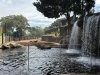
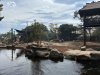
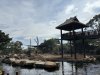
- Rhino Reserve: the barriers are down and the exhibit is fully landscaped with new trees, gardens and mulching! Didn’t manage to spot the buffalo, but hopefully this means Hari will arrive quite soon!
Photos attached.
- The pelicans are currently being housed in the former saltwater crocodile exhibit.
- Two new Capybaras have arrived and are kept in the former “first pygmy hippo exhibit” (with the Egyptian Goose). Looks like a male and a female to me but I’m not certain.
- I saw the young male giraffe Ebo repeatedly attempting to mount the elderly female Zarafa, which I found odd as he is castrated. A display of dominance perhaps?
- A new baby Long-nosed Potoroo has been born to 0.1 Penny and 1.0 Chip in the Taronga Institute of Science and Learning.
- Not that this will effect most people on here, but there are now Painted Finches in the Taronga Institute’s Woodland Immersive Classroom.
- Woodland: Long-nosed Potoroo, Superb Parrot, Red-whiskered Bulbul, Chiming Wedgebill, Variegated Fairy Wren, Painted Finch, Diamond Firetail
- Desert: Greater Bilby, Australian Zebra Finch
- Rainforest: Cotton-top Tamarin, Nicobar Pigeon, Luzon Bleeding-heart Dove, Elongated Tortoise, Chaco Tortoise, Ornate Box Turtle
And, the most exciting news…
- Rhino Reserve: the barriers are down and the exhibit is fully landscaped with new trees, gardens and mulching! Didn’t manage to spot the buffalo, but hopefully this means Hari will arrive quite soon!
Photos attached.
Attachments
Quite a few updates from today!
- The pelicans are currently being housed in the former saltwater crocodile exhibit.
- Two new Capybaras have arrived and are kept in the former “first pygmy hippo exhibit” (with the Egyptian Goose). Looks like a male and a female to me but I’m not certain.
View attachment 846308
- I saw the young male giraffe Ebo repeatedly attempting to mount the elderly female Zarafa, which I found odd as he is castrated. A display of dominance perhaps?
- A new baby Long-nosed Potoroo has been born to 0.1 Penny and 1.0 Chip in the Taronga Institute of Science and Learning.
- Not that this will effect most people on here, but there are now Painted Finches in the Taronga Institute’s Woodland Immersive Classroom.
- Two male Mulga Parrots have moved into the Finch Aviary.
- Woodland: Long-nosed Potoroo, Superb Parrot, Red-whiskered Bulbul, Chiming Wedgebill, Variegated Fairy Wren, Painted Finch, Diamond Firetail
- Desert: Greater Bilby, Australian Zebra Finch
- Rainforest: Cotton-top Tamarin, Nicobar Pigeon, Luzon Bleeding-heart Dove, Elongated Tortoise, Chaco Tortoise, Ornate Box Turtle
And, the most exciting news…
- Rhino Reserve: the barriers are down and the exhibit is fully landscaped with new trees, gardens and mulching! Didn’t manage to spot the buffalo, but hopefully this means Hari will arrive quite soon!
Photos attached.
It’s great to hear the Indian rhinoceros exhibit is close to completion. They’re presumably wanting Hari on site and the exhibit open in time for the summer holidays. It’s nice to see one of the four city zoos that phased out elephants in the past year has been proactive in sourcing a decent replacement; though I acknowledge the advantage Taronga had in having a surplus bull Indian rhinoceros at their sister zoo.
It’s funny you should mention Ebo the giraffe’s attempts to mount Zarafa, as I observed similar behaviour on my visit in November 2024:

If a male of any species is castrated after they’ve reached sexual maturity, they will sometimes still display behaviours you’d expect of an intact male; but Ebo was castrated before reaching sexual maturity. I’d agree with your assessment it’s a dominance thing. Within the agricultural industry, heifers have been reported to mount each other - which although is primarily incited by estrus, can also be asserting dominance.

Quite a few updates from today!
- The pelicans are currently being housed in the former saltwater crocodile exhibit.
- Two new Capybaras have arrived and are kept in the former “first pygmy hippo exhibit” (with the Egyptian Goose). Looks like a male and a female to me but I’m not certain.
View attachment 846308
- I saw the young male giraffe Ebo repeatedly attempting to mount the elderly female Zarafa, which I found odd as he is castrated. A display of dominance perhaps?
- A new baby Long-nosed Potoroo has been born to 0.1 Penny and 1.0 Chip in the Taronga Institute of Science and Learning.
- Not that this will effect most people on here, but there are now Painted Finches in the Taronga Institute’s Woodland Immersive Classroom.
- Two male Mulga Parrots have moved into the Finch Aviary.
- Woodland: Long-nosed Potoroo, Superb Parrot, Red-whiskered Bulbul, Chiming Wedgebill, Variegated Fairy Wren, Painted Finch, Diamond Firetail
- Desert: Greater Bilby, Australian Zebra Finch
- Rainforest: Cotton-top Tamarin, Nicobar Pigeon, Luzon Bleeding-heart Dove, Elongated Tortoise, Chaco Tortoise, Ornate Box Turtle
And, the most exciting news…
- Rhino Reserve: the barriers are down and the exhibit is fully landscaped with new trees, gardens and mulching! Didn’t manage to spot the buffalo, but hopefully this means Hari will arrive quite soon!
Photos attached.
So I've actually known about this since Tuesday but had decided not to say anything just yet hoping either them or you would announce the news but....
Attachments

Osedax
Well-Known Member
That is exactly what it looked like. That photo could have been taken today and I wouldn't question it!It’s funny you should mention Ebo the giraffe’s attempts to mount Zarafa, as I observed similar behaviour on my visit in November 2024:

Exciting!!!So I've actually known about this since Tuesday but had decided not to say anything just yet hoping either them or you would announce the news but....
- I forgot to mention that of the 5 Capybara brothers imported from NZ in 2019, just 2 remain at Taronga.Two new Capybaras have arrived and are kept in the former “first pygmy hippo exhibit” (with the Egyptian Goose). Looks like a male and a female to me but I’m not certain
- Also confirmation that the two young male lions are no longer being housed with their parents and sisters.
Not sure if these two pieces of news were already known, so I apologise if I'm repeating what others have already said.

Wonder where they're from - both look mature, although Capybara's mature at just a year old so there's countless options. I'd guess these are two of Sydney Zoo's Capybara born last year.- Two new Capybaras have arrived and are kept in the former “first pygmy hippo exhibit” (with the Egyptian Goose). Looks like a male and a female to me but I’m not certain.
Is this a permanent move? I'm assuming there's no Pelicans in the former exhibit then too?- The pelicans are currently being housed in the former saltwater crocodile exhibit.
I'd seen comments on socials that Hari had arrived last week but was too awaiting confirmation. Glad to know he's on site and settling in. I assume with luck, he'll be able to spotted on display!So I've actually known about this since Tuesday but had decided not to say anything just yet hoping either them or you would announce the news but....
Not surprising. I wonder what the plan is for these two boys. Rotating with the rest of the pride long term doesn't really work, so a transfer stands as a good possibility. Regionally, at the moment there isn't any obvious options. Dubbo has the capacity to accommodate an additional grouping though to my knowledge.- Also confirmation that the two young male lions are no longer being housed with their parents and sisters.
Any idea on what two males remain? It seems two have passed within the last few years.- I forgot to mention that of the 5 Capybara brothers imported from NZ in 2019, just 2 remain at Taronga.
- I forgot to mention that of the 5 Capybara brothers imported from NZ in 2019, just 2 remain at Taronga.
Any idea on what two males remain? It seems two have passed within the last few years.
Of the original group of five Capybara from NZ:
Sanchez transferred to Sydney Zoo
Rodney transferred to Altina Wildlife Park
That left Pedro, Guillermo and Carlos.
Assuming one of the pair that’s recently cropped up isn’t one of these males paired with a female from elsewhere, it would appear one of them has died/transferred out.
- Also confirmation that the two young male lions are no longer being housed with their parents and sisters.
Not surprising. I wonder what the plan is for these two boys. Rotating with the rest of the pride long term doesn't really work, so a transfer stands as a good possibility. Regionally, at the moment there isn't any obvious options. Dubbo has the capacity to accommodate an additional grouping though to my knowledge.
I agree there’s a strong possibility the two young male lions will transfer out.
Dubbo have two prides already and with multiple young adult females in their main pride, may experience conflicts necessitating separation in the next couple of years - as has occurred at Monarto, Paradise Valley etc.
It wouldn’t surprise me if they went to the National Zoo. They previously held three prides, which have been reduced two following the death of two elderly males. One of the two remaining prides is an 18 year old sibling pair; the other is a breeding pride of 1.2 (parents and daughter), so not only do they have/will have capacity, they’ll presumably be looking to acquire a mate for their young female within the next year or so. The Taronga males are a distant relation, with inbreeding of closer relatives previously permitted.
Osedax
Well-Known Member
No, it is a temporary move while the pelican exhibit is undergoing maintenance.Is this a permanent move? I'm assuming there's no Pelicans in the former exhibit then too?
Not surprising. I wonder what the plan is for these two boys. Rotating with the rest of the pride long term doesn't really work, so a transfer stands as a good possibility. Regionally, at the moment there isn't any obvious options. Dubbo has the capacity to accommodate an additional grouping though to my knowledge.
They are looking for options to transfer them out.I agree there’s a strong possibility the two young male lions will transfer out.
Dubbo have two prides already and with multiple young adult females in their main pride, may experience conflicts necessitating separation in the next couple of years - as has occurred at Monarto, Paradise Valley etc.
It wouldn’t surprise me if they went to the National Zoo. They previously held three prides, which have been reduced two following the death of two elderly males. One of the two remaining prides is an 18 year old sibling pair; the other is a breeding pride of 1.2 (parents and daughter), so not only do they have/will have capacity, they’ll presumably be looking to acquire a mate for their young female within the next year or so. The Taronga males are a distant relation, with inbreeding of closer relatives previously permitted.