Crossroads between continents
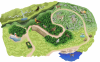
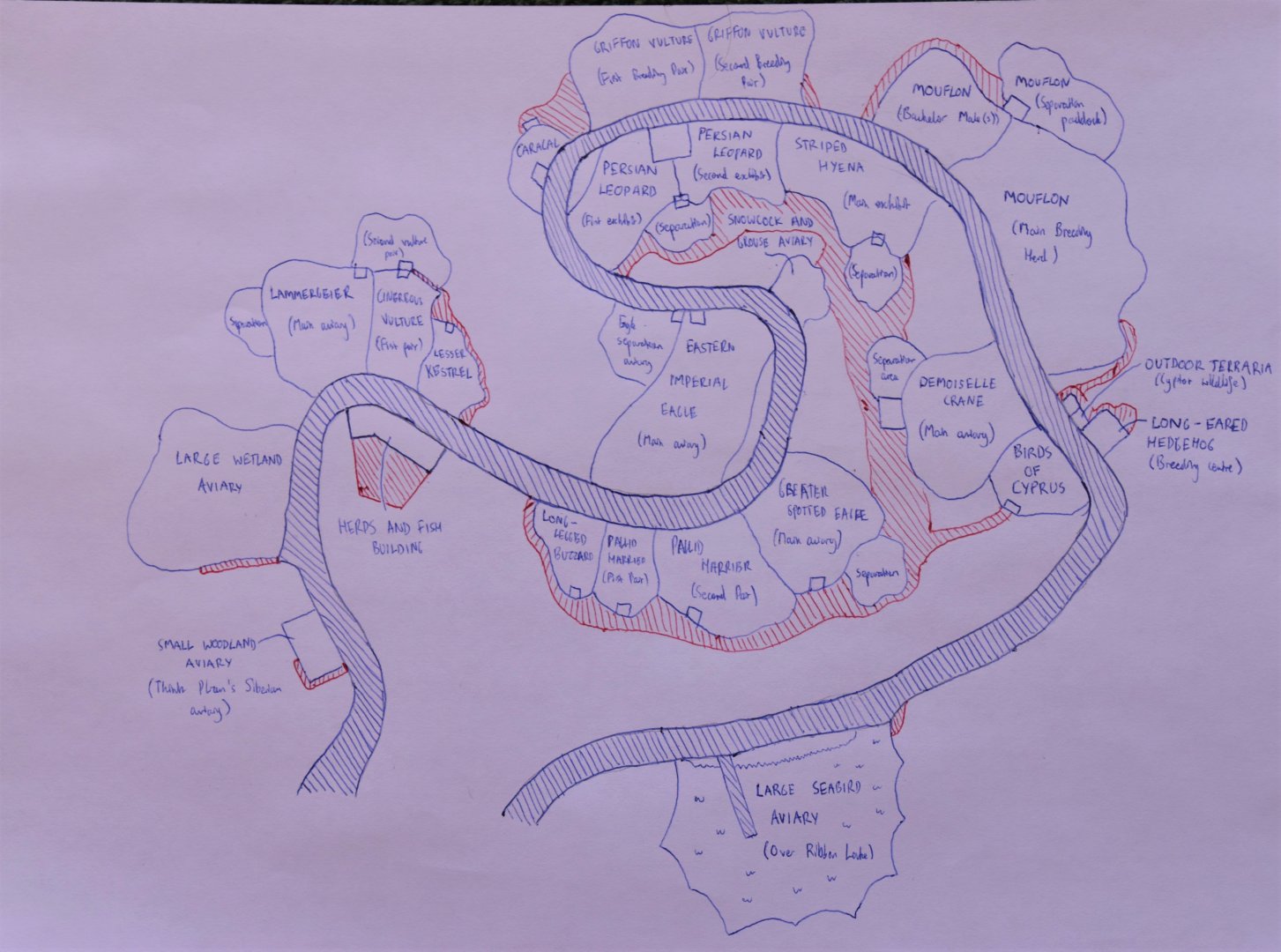
The first exhibit is split into two halves: an area devoted to the Western, Aegean region of Turkey, and another area for the Northern and Eastern more Caucasian region. The loop starts off with the Caucasian area. The visitors start on a limestone path, with colourful flowers planted either side of the path. Around the pathways of the Turkish exhibit are predominantly planted Leopard's bane, Crocus flavus, Pink primroses and Grape hyacinths. In between the more common alpine Bog pines are planted Turkish pines.
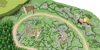
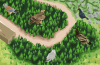
The visitors start around the edge of the line where the pine trees begin. As they pass the tree line, they are plunged into relative darkness. They go up a steadily-climbing ramp, which takes them up the small mountain in steady increments. They find themselves on a boardwalk above the undergrowth soon, and enter a well-disguised aviary. It is similar to Plzen's Siberian aviary in the sense that it is essentially a large shed-like structure with a mesh roof to let in sunlight. The visitors walk in and are instantly greeted by a
European green woodpecker. These birds have several holes in the pine trees to nest in them along with the other species of woodpecker in the enclosure - the
White-backed woodpecker. Inside the aviary with them are the small
Alpine accentor, the
Isabelline whetear, the
Red-fronted serin and the
Krueper's nuthatch. A burst of red appears through the trees and two
Common crossbills appear. And if the visitors are lucky, they can see a
Short-toed treecreeper scuttling up a pine. On the floor,
Chukar partridges scuttle around the aviary.
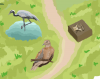
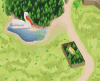
The visitors leave the aviary and find themselves walking towards another aviary, this time made of mesh and quite a lot bigger. It encloses a natural lake set in the surrounding pine forests. Around the lake is a muddy bank and soft substrate beach. A few trees are planted around the edge of the clearing. Inside the aviary are large
Dalmatian pelicans, tall
Black storks, and the smaller
Pygmy cormorants and
Kentish plovers. Finally, a small flock of
White-headed ducks paddle around in the centre of the lake and among the reeds. These birds live along the shores of the Mediterranean and in the Aegean region of Turkey.
The path continues to climb up the mountain towards the rockier areas. They emerge from the tree line and find themselves on a rocky outcropping, looking down into a small, rounded valley covered over with mesh. They peer down from behind a barrier. Inside the aviary are
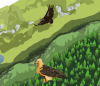
Lammergeiers, or Bearded vultures. The vultures are free to soar in the ravine as they would in the wild. Right next to it, another aviary is home to
Cinereous vultures, who can also soar in the ravine. The ravine ascends all the way up to the top of the mountain where a glacier slid down from the peak. The path turns sharply in order to keep the gradient of the path low and manageable without difficulty. To the left again is another bird of prey aviary for
Lesser kestrels. It is a large mesh area with long reeds, a few wooden fences and a bit of forest.
To the visitors' left is a medium sized-building and then a slightly larger one further along. They enter it and find that it is full of reptile and small mammal terrariums. They are all around 2 metres in height, giving the inhabitants lots of space to climb. All the reptiles and small mammals are endangered and in need of conservation programs so the facility holds multiple pairs of each species to facilitate mass breeding to boost population numbers. Many of these species are only found in one small area of Turkey and surrounding countries, so it is important that they are conserved in situ as well as out of it. The first terrarium is for the
Van Lake lizard (Darevskia bendimahiensis), an Endangered species. Most of these species are also endemic to Turkey or Cyprus, meaning that their ranges are very restricted. The terrarium imitates a portion of a cliff in Turkey, with small tufts of grass, an overhang and a hidden nest as well as a lamp for basking. The lizards can run along a small tunnel which takes them to another exhibit in another section of the house, making it easy for lizards to run away from others of their kind if they don't get along. Because their habitats in the wild are often very mountainous, these animals are adapted to climb steep areas, which is why the exhibits are so tall. The tunnels are like a crack through a pile of rocks that leads to another cliff-face. The exhibits are not dangerous for the animals if they fall, and piles of hay are placed at the bottom of the cliff-like exhibits to soften their landing in the unlikely event that they do fall.
The next terrarium is home to a species that hunts the other lizards in the neighbouring terraria. The
Anatolian meadow viper has a multi-levelled exhibit as well as a tunnel. The tunnels provide enrichment by forcing the vipers to slide through them to get to their food. In order to make this work, the keepers place the food in alternating exhibits so that the snakes never know where it will come. Next to the meadow vipers are an equally-endangered species - the
Central Turkish mountain viper. These vipers spend most of their time on the larger ledge in their exhibits under the lamp, and then retreat into the shadows when they have finished regulating their temperatures. Moving on, the next exhibit holds the Critically endangered
Charnali lizard. They, and the next few exhibit for
Wagner's vipers and
Pontic adders have similar exhibits to previous set-ups in the house. The last two exhibits are for small mammals, both endemic to Turkey. A few juniper branches decorate an exhibit for
Woolly dormice, who have the same tunnel system as the reptiles to get from one exhibit to another. The final exhibit is for
Asia Minor spiny mice who have the largest terrarium of all which simulates a rocky outcropping. There are several dens and a tunnel system that the visitors can peer into. Just as the visitors leave, they can peer into the breeding centre built behind the reptile house. Large tupperwares used for transportation of the lizards and snakes from exhibit to exhibit are piled neatly on a metal shelf, and smaller exhibits are lined up behind the scenes for temporary isolation.
The visitors exit the house and enter another neighbouring building for fish. It also acts as a sort of conservation house, with lots and lots of species. The exhibits are all similar, with the tanks depicting a small stretch of a Turkish stream, with pebbles and freshwater plants on the bottom and a small bank on the side. I will give the species list later.
Now directly in front of the visitors as they exit the building is a massive aviary they goes up the mountain until it reaches the path (which winds around again to a point directly above of where the visitors are now. It holds a pair of
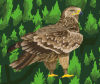
Eastern imperial eagles. These massive birds of prey have an exhibit full of fir and pine trees, making it hard to see the eagles although exhibit can be seen from almost ever angle. A small treehouse-like structure allows visitors to climb up to the eagles' level and observe them more easily.
The limestone path continues to climb and to turn. Along the curve are a number of bird of prey exhibits. The first is home to
Long-legged buzzard, the next two are home to two pairs of
Greater spotted eagles and the last is home to
Pallid harriers. The buzzard and harrier exhibits are more grass-orientated than the eagle exhibit, which is concentrated on woodland. The path has now fully curved around to be almost directly above the fish house. There is a smaller
Barred owl exhibit with lots of birch and fir trees to simulate their habitat and next to a large prairie-like exhibit housing
Caspian snowcocks and
Caucasian grouse. These birds share an area of land where the tree line stops and the grass sets in before the rocky ground nearer to the top of the mountain. Once again, the visitors can peer into the Eastern imperial eagle aviary where it touches the higher path. The birds' shelter is at the top of the exhibit so visitors are more likely to see them from the higher ground.
Now, the exhibits for larger mammals start to set in. Another large mesh structure looms up ahead, but this time it is not for birds - it houses one of the two pairs of
Persian leopards in the zoo's care. There are four exhibits, of which 2 are easily viewable for the visitors. Multiple glass panes inlaid into the mesh provide an opportunity to observe the leopards at close quarters. No landscaping was required to make the exhibits - the areas were just fenced off. The terrain is rocky and interspersed with tufts of grass peering out from between the boulders. A large cliff in the second exhibit provides an area to climb for the leopards. The cats are rotated and breeding is encouraged because the subspecies is Endangered. The two off-show exhibits are for breeding and isolation purposes so that the cats are safe, but most of the time both pairs will be on-show. The visitors can follow the path around to a building on their right to see the leopards from a closer perspective. Here, there are the leopards' indoor quarters and the shelter for easier viewing. The visitors can also view the leopards from a higher level on the second floor of the indoor housing for a better view over the whole exhibits. The heated rock for the leopards is right next to the glass, which encourages the leopards to come nearer to the visitors. There are keeper talks and feedings of the leopards every day. Both exhibits have pools.
To the left of the path is a much smaller but very similar exhibit under a mesh canopy for
Asiatic Caracals. The viewing is again on two levels, although the second level is closed most of the time and only used for keeper demonstrations to show how high the caracal can jump whilst catching a piece of meat on a stick held by the keeper from the second level. The exhibit is even steeper than the leopard exhibit, which in turn allows the caracals to show off their agility and athletic ability.
Further along, the visitors come across the ravine from the vulture and lammergeier exhibits down below. This time, the exhibit houses three pairs of the Critically Endangered population of
Griffon vultures found in Cyprus. There are two exhibits on-show and a third behind the scenes. This allows for breeding, which is gravely needed for the population to have pure genetics given they have slightly different morphological features to other Griffon vulture subspecies. The vultures can soar in the ravine, which is covered over with mesh which serves the double purpose of also breaking somebody's fall if they were to climb over the wooden railing that separates the visitors and the ravine.
Another large rocky enclosure appears to the visitors' right. Here,
Striped hyenas are exhibited. The visitors, for the most part, view the hyenas from the path, which is much higher than the exhibit. However, as the exhibit is sloped, at the end of the exhibit, the hyenas are at the same level as the visitors, who can observe them through a window pane. The hyenas have extensive and spacious indoor housing given they spend a good amount of time in there in the winter. The same goes for the caracals.
The final large mammal exhibit of the joint Turkish and Cypriot exhibit is a massive, sloping and rocky exhibit for
Cypriot mouflon. This distinct subspecies of the familiar caprid is Endangered in Cyprus due to competition with the almost equally endangered feral goats and hunting for their horns, meat and hides. The exhibit is full of immense boulders for these agile mountain-dwellers to climb over and starts at the very peak of the mountain, descending almost as far as the tree line. As the visitors follow it down, they see another exhibit to their right. A large, sweeping grass and dirt exhibit is home to a massive flock of
Demoiselle cranes. Underneath a massive mesh canopy, they can fly around. In the middle of the exhibit is a large corrie (mountain lake) where the cranes can drink. Signage around the exhibit tells the visitors how these cranes migrate from the Middle East down to Asia and how they face many challenges on their way from the arid lands they pass through.
The mouflon exhibit ends as the tree line begins and to the left is a small outdoor terrarium for
Cyprus whip snakes. These Endangered snakes are bred at the zoo to bolster their numbers in the wild, where they are only found over a small area in the Troodos mountains. To the right is another, smaller aviary for
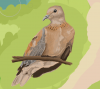
Laughing doves,
Western black francolins and
Calandra larks, all of which are found in Cyprus despite being mainly Asian species.
A small building to the left is the final building in this area of the exhibit. It is entirely devoted to
Long-eared hedgehogs. Multiple glass-fronted exhibits linked with tunnels that the visitors can see into. A blackboard to one side tells visitors about recent births as the hedgehogs breed frequently due to their large exhibits and the high numbers the zoo holds. A window offers visitors a brief view into the off-show breeding area. All the exhibits simulate the Cypriot mountainous desert environment in the centre of the island.
Finally, the last exhibit represents the marine bird-life off the shores of Cyprus and in the Aegean Sea. Large flocks of Audouin's gulls crowd a cliff-face on the edge of the large ribbon lake the zoo is situated around. Scopoli's and Yelkouan shearwaters circle over the water.
And so ends all 2400 words of the 'Crossroads between continents' exhibit! Next up, Greece!

This is just a sneak peek into the biodiverse paradise that is the European continent (just joking, I'm not going to go
that far

)